56 cards · 4 suits
The Minor Arcana
Fifty-six cards in four suits. If the Major Arcana describe the chapters, these describe the days: the argument, the invoice, the idea you had in the shower, the friend who keeps not calling back.
Each suit owns a domain. Cups feel, Pentacles build, Swords think, Wands want. Learning which suit dominates a spread tells you what kind of problem you are looking at, often before you read a single card.
That is only half of the address, though, and it is the half everybody learns first. Every minor card also carries a number, and the number is the part that says what stage the situation has reached. The fifty-six are a grid, fourteen deep and four wide, and almost everyone reads it in one direction only.
Cups
Water. Emotions, relationships, intuition.
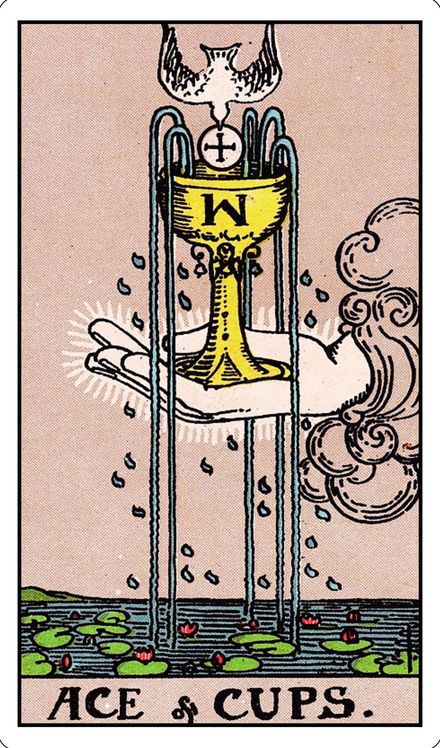
- Ace of Cupslove · new feelings
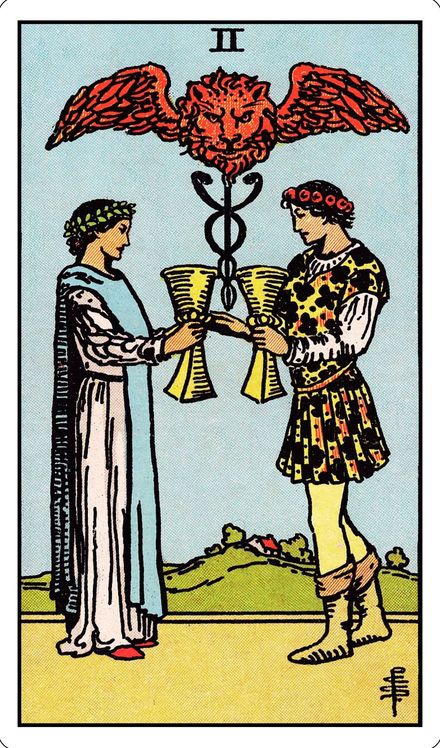
- Two of Cupspartnership · unity
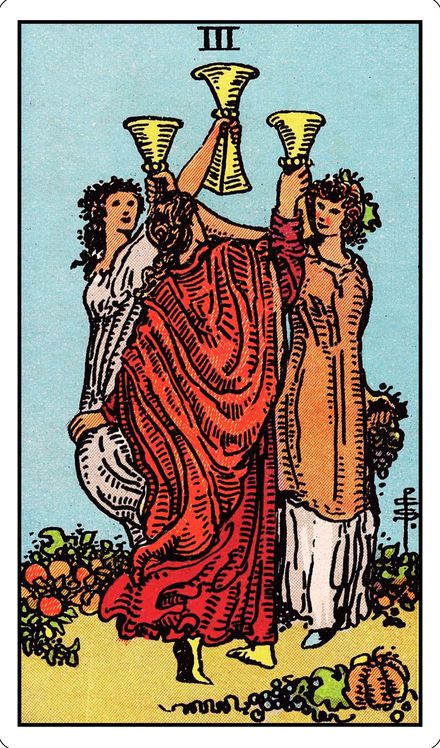
- Three of Cupscelebration · friendship
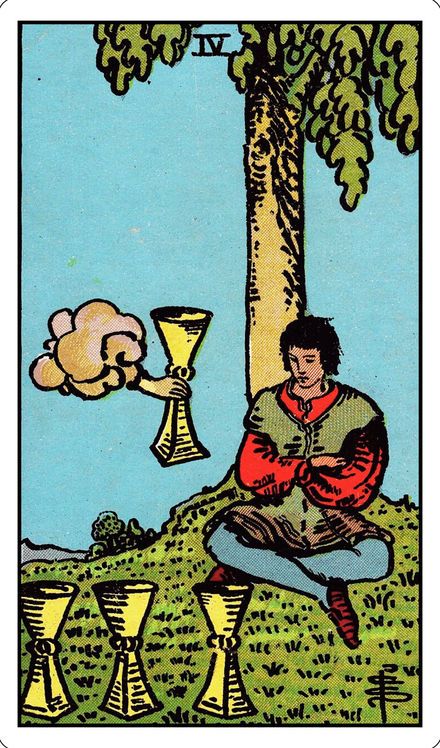
- Four of Cupsapathy · contemplation
- Five of Cupsloss · grief
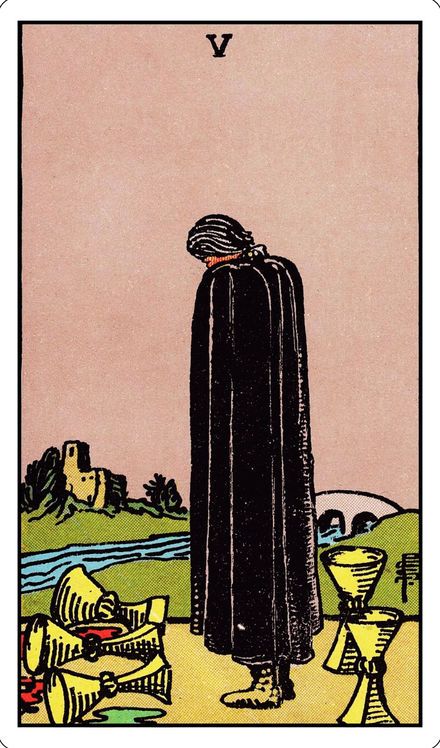
- Six of Cupsnostalgia · childhood
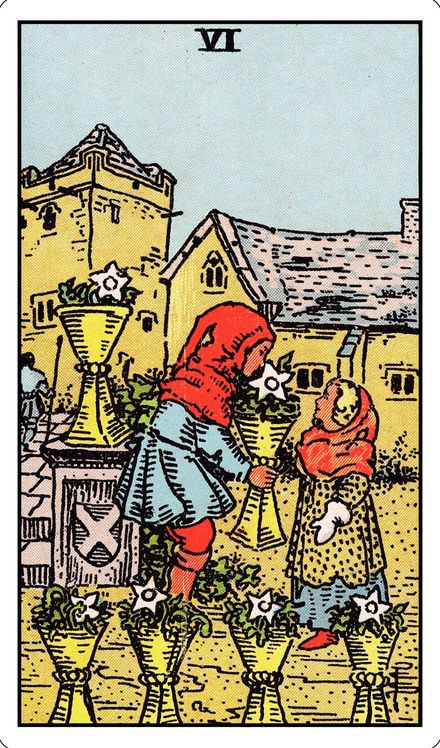
- Seven of Cupsillusion · choices
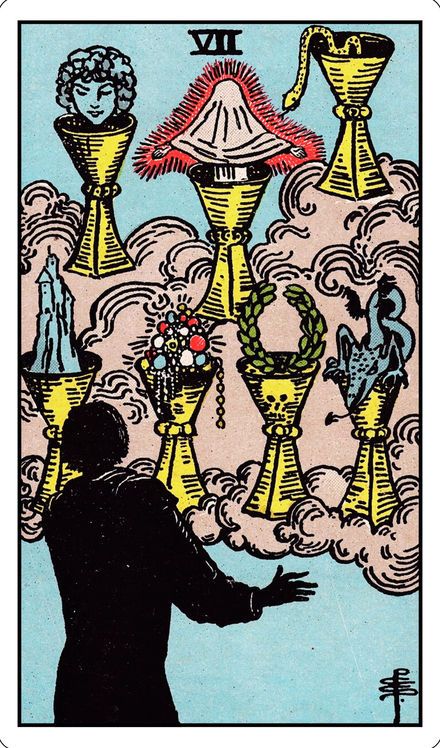
- Eight of Cupswalking away · disillusionment
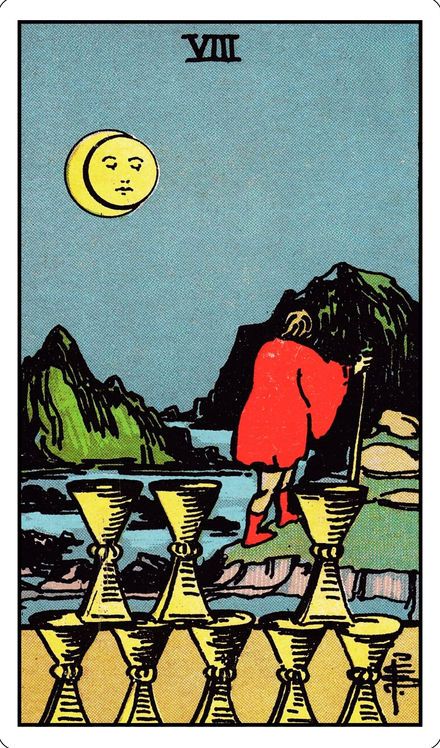
- Nine of Cupswishes fulfilled · satisfaction
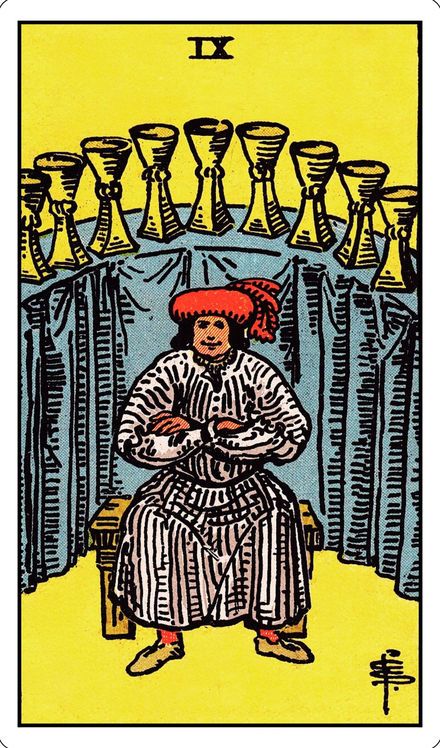
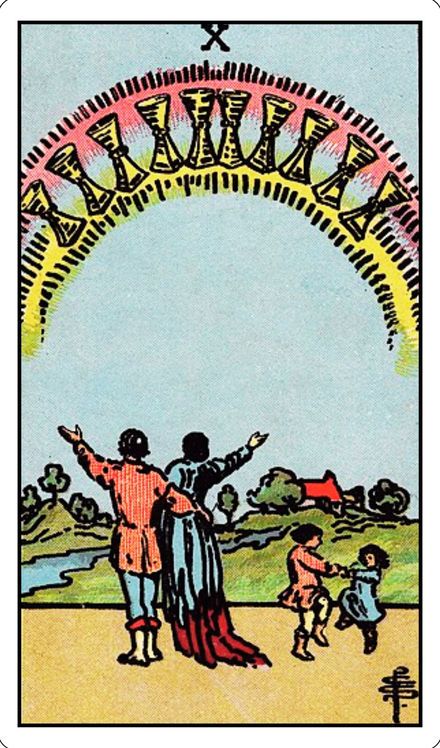
- Ten of Cupsharmony · family
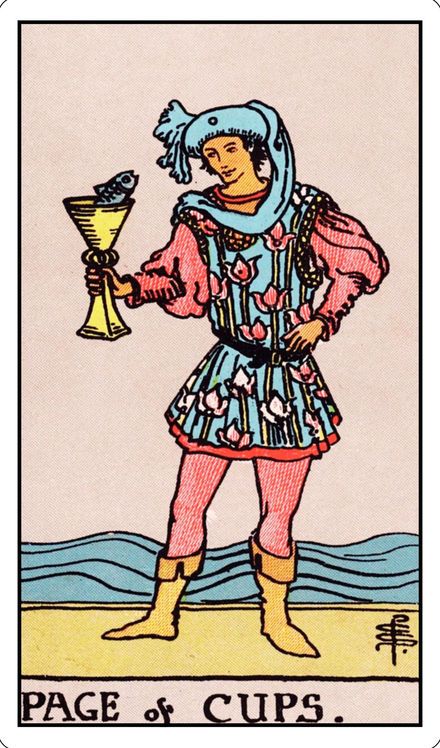
- Page of Cupscreative opportunity · curiosity
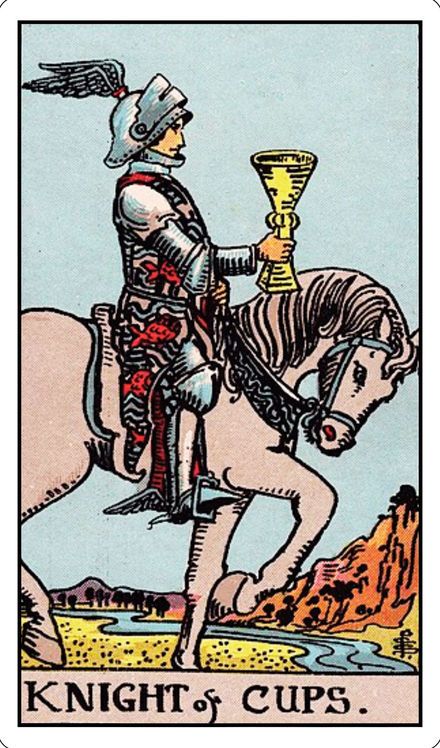
- Knight of Cupsromance · charm
- Queen of Cupscompassion · calm
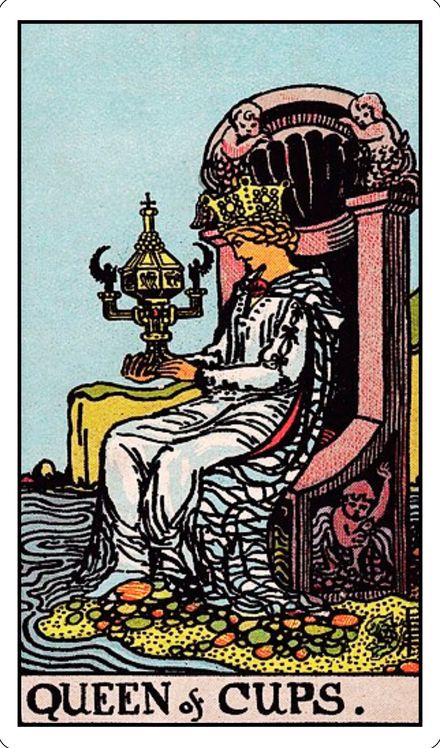
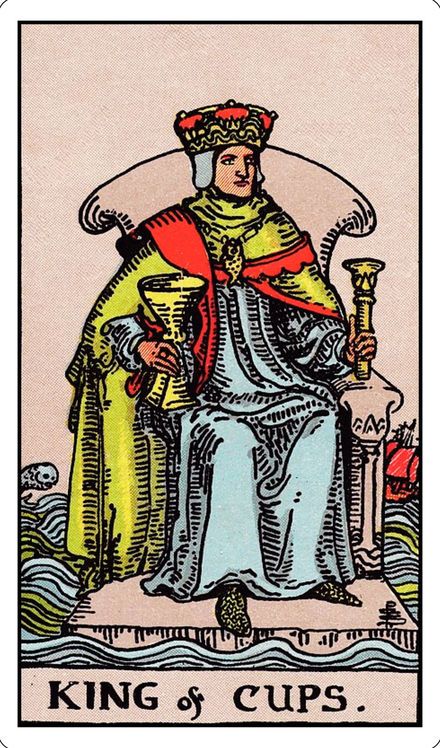
- King of Cupsemotional balance · diplomacy
Pentacles
Earth. Material world, wealth, career.
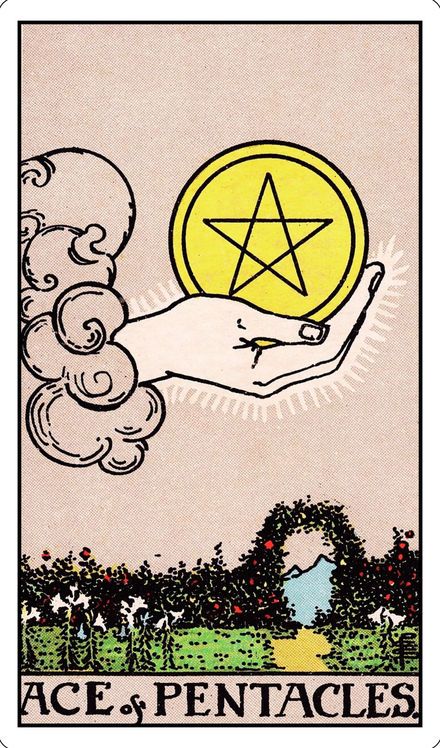
- Ace of Pentaclesopportunity · prosperity
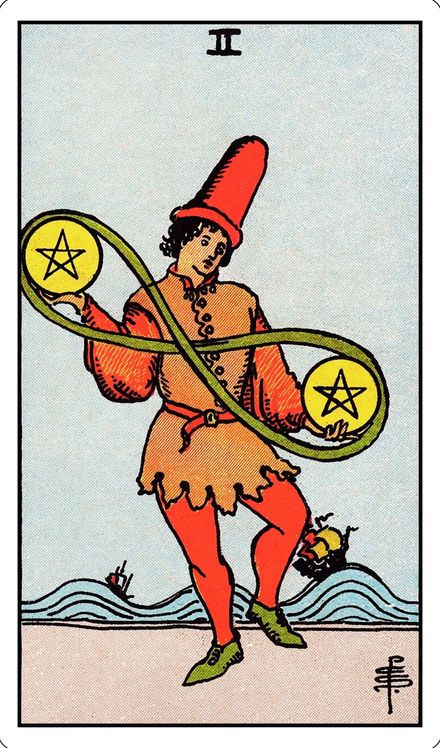
- Two of Pentaclesbalance · adaptability
- Three of Pentaclesteamwork · craftsmanship
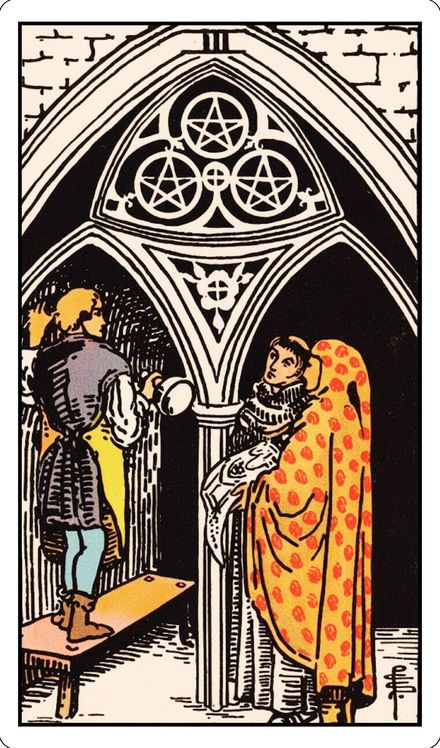
- Four of Pentaclessecurity · conservation
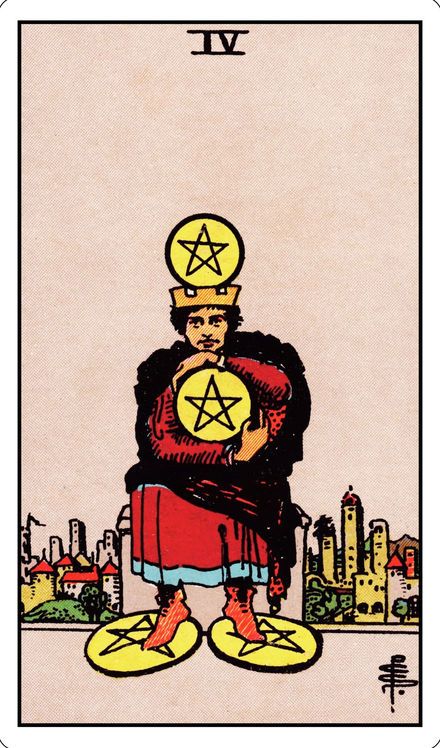
- Five of Pentacleshardship · loss
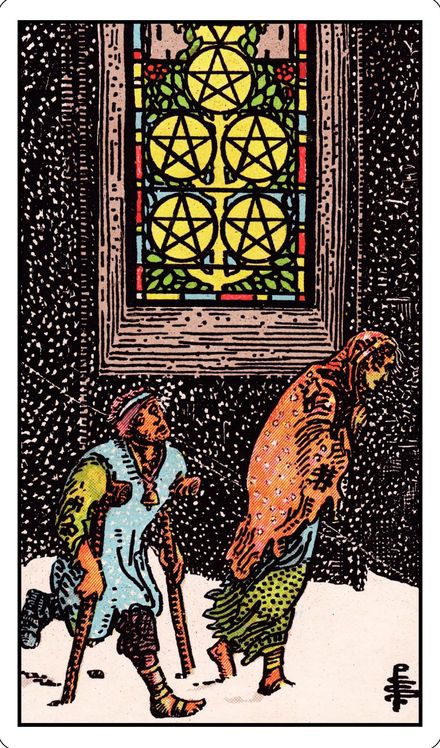
- Six of Pentaclesgenerosity · charity
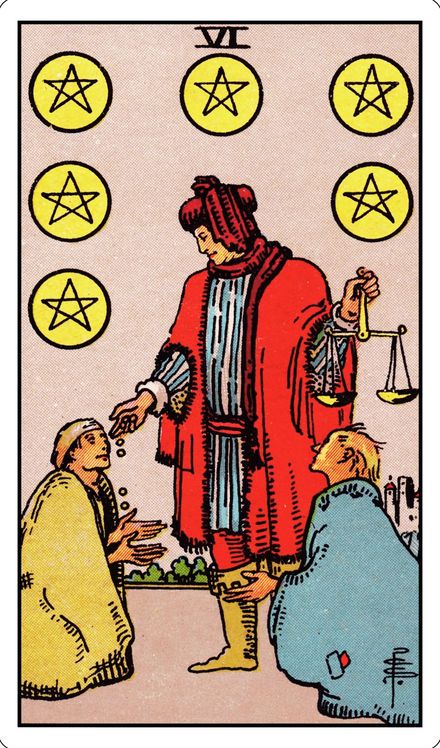
- Seven of Pentaclespatience · long-term investment
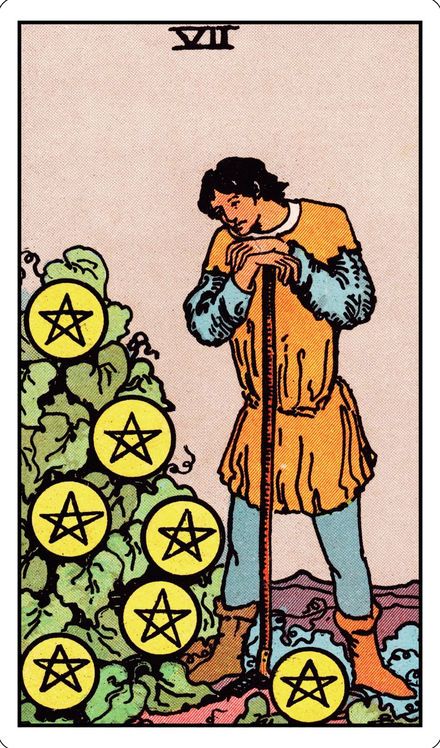
- Eight of Pentaclesskill · dedication
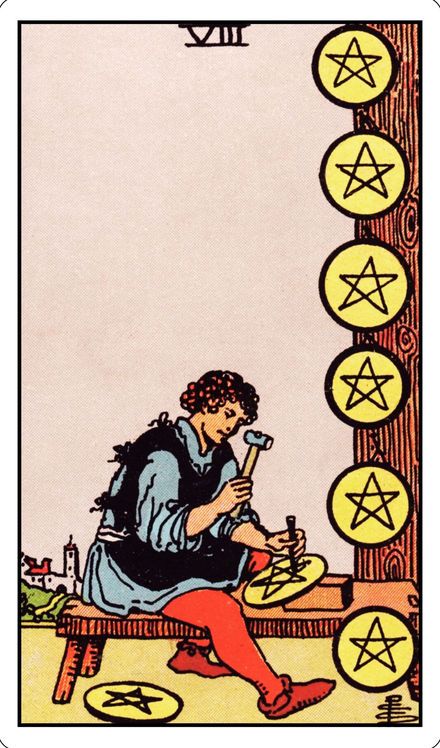
- Nine of Pentaclesluxury · self-sufficiency
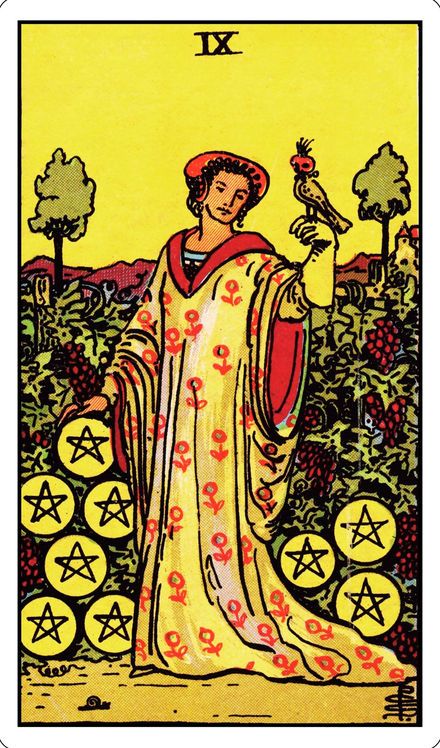
- Ten of Pentacleswealth · inheritance
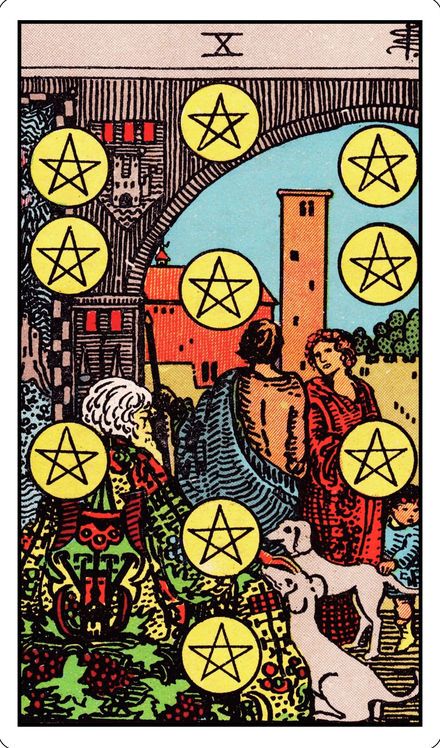
- Page of Pentaclesambition · new skill
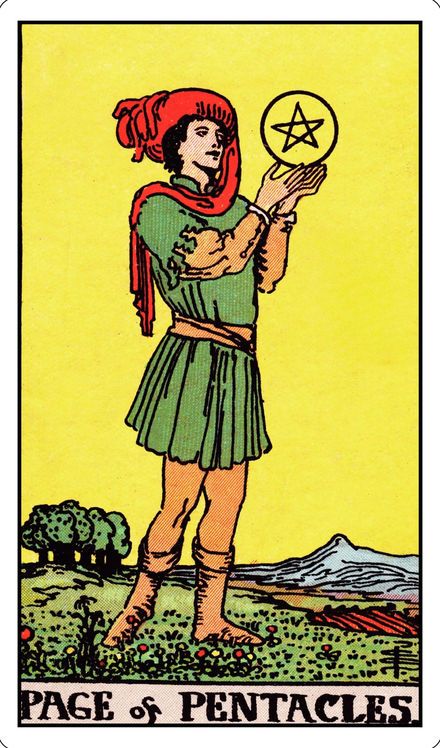
- Knight of Pentacleshard work · routine
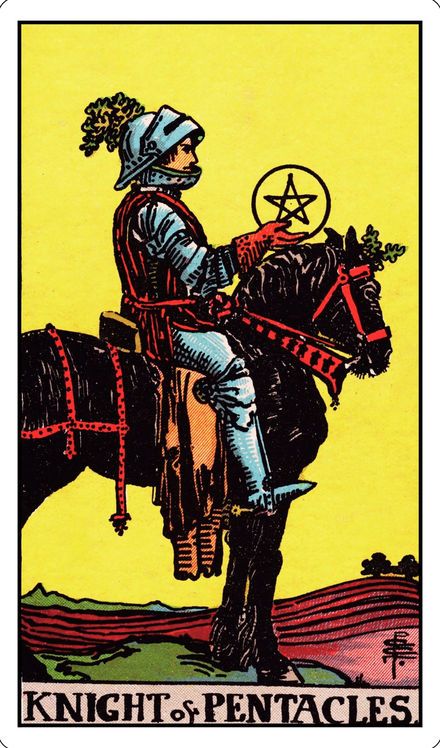
- Queen of Pentaclesnurturing · practical
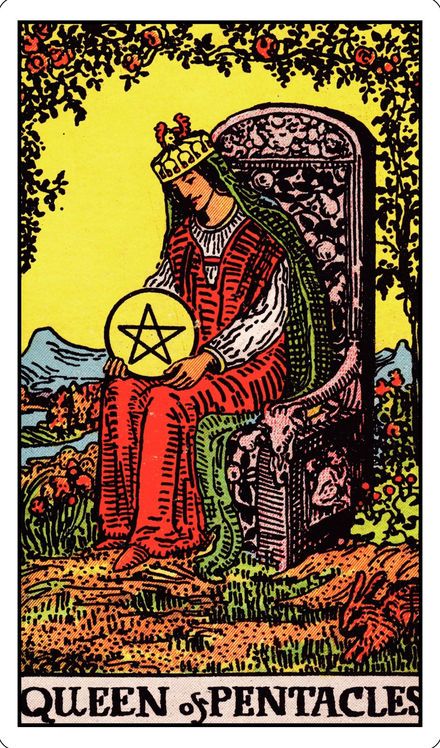
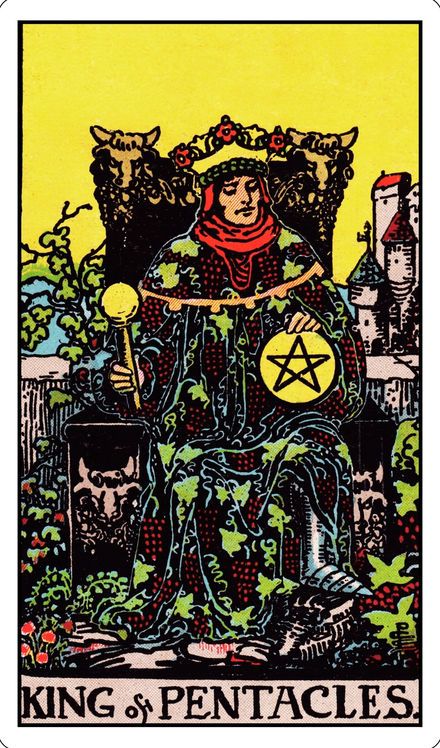
- King of Pentacleswealth · business
Swords
Air. Intellect, conflict, truth.
- Ace of Swordsbreakthrough · clarity
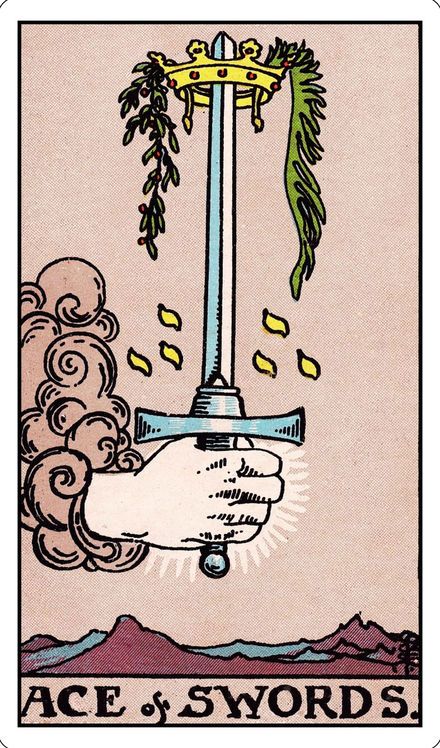
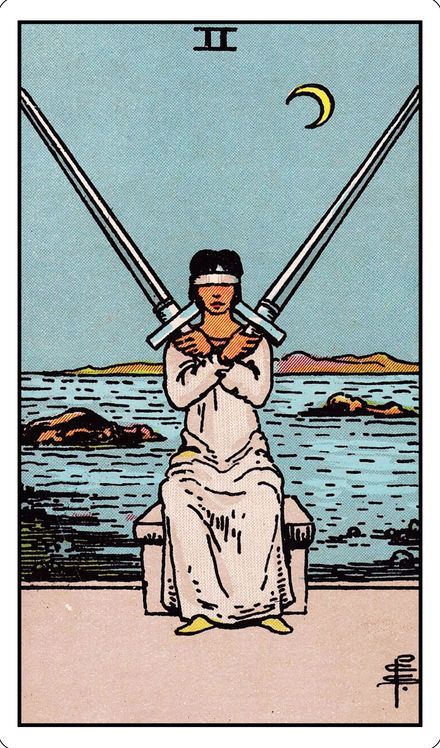
- Two of Swordsdifficult decisions · stalemate
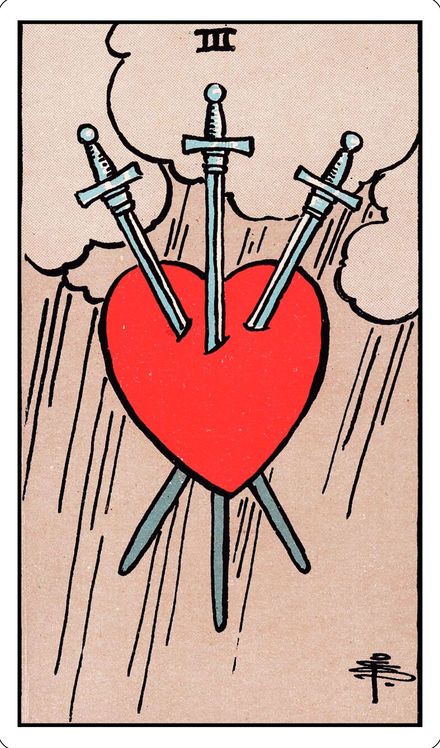
- Three of Swordsheartbreak · sorrow
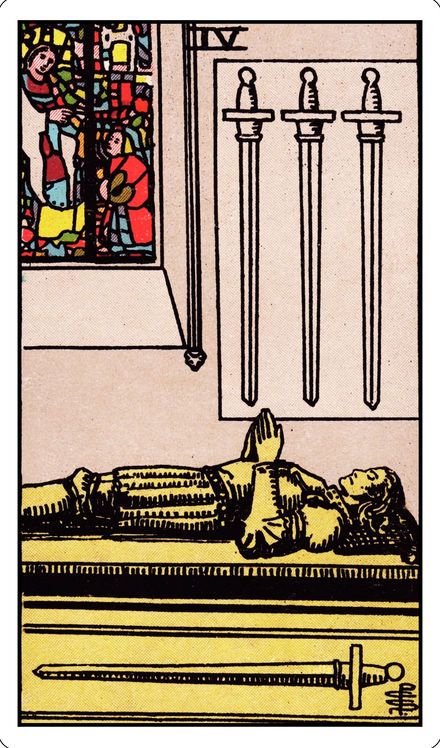
- Four of Swordsrest · recovery
- Five of Swordsconflict · defeat
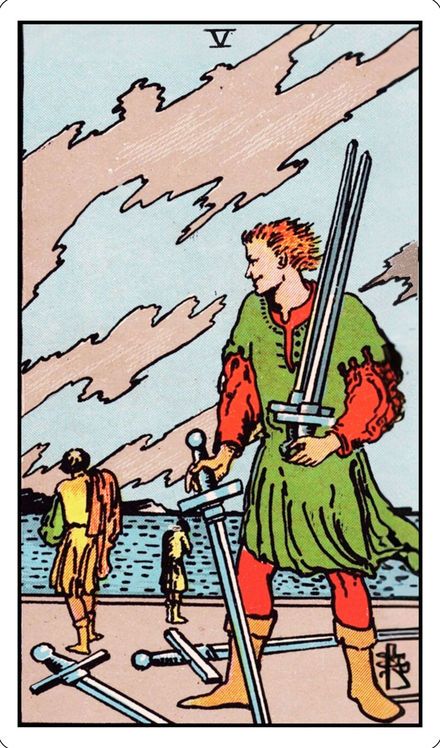
- Six of Swordstransition · moving on
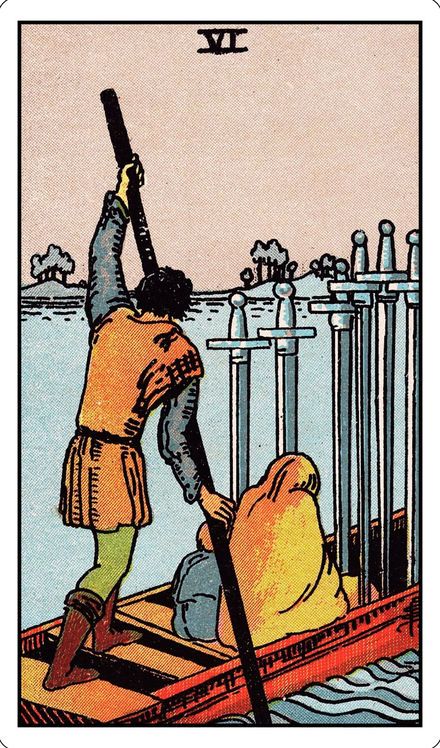
- Seven of Swordsdeception · strategy
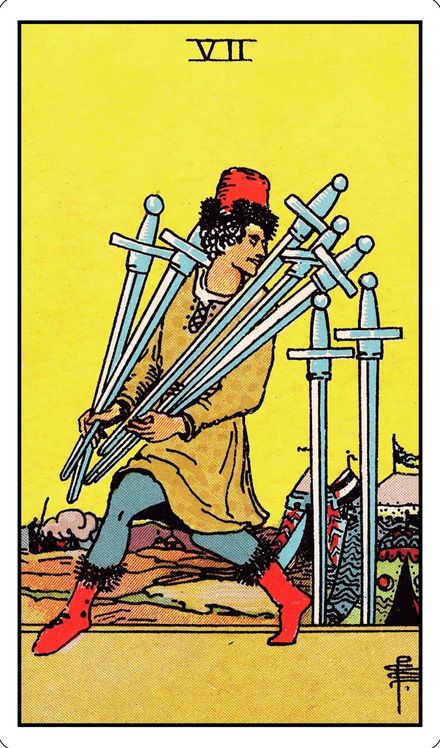
- Eight of Swordsrestriction · feeling trapped
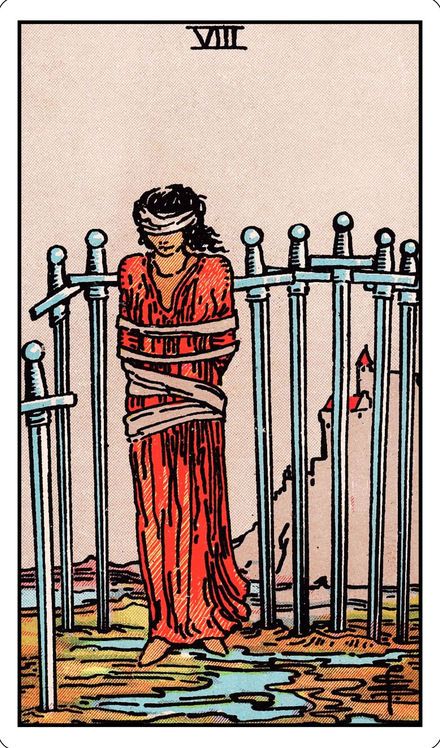
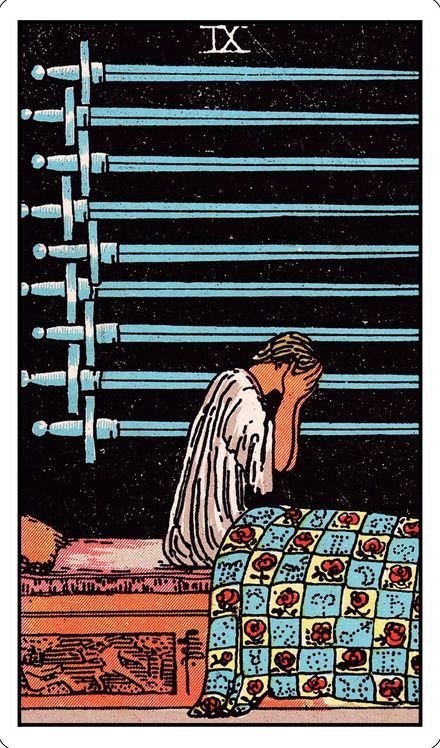
- Nine of Swordsanxiety · worry
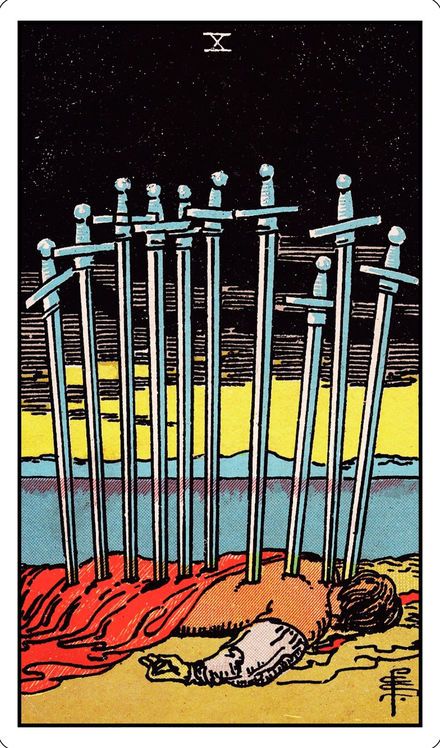
- Ten of Swordspainful ending · rock bottom
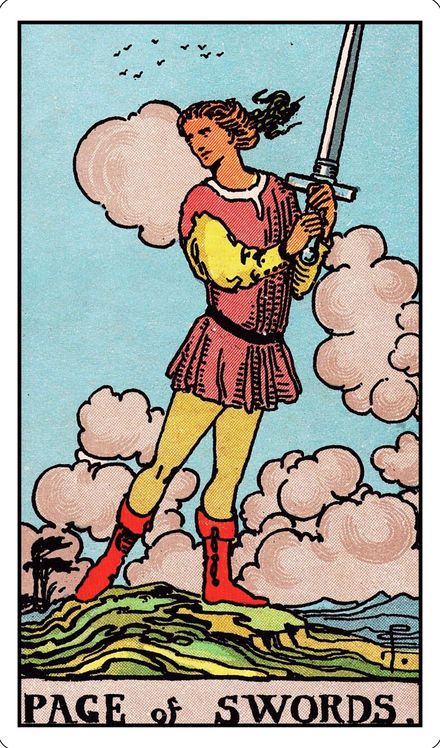
- Page of Swordscuriosity · new ideas
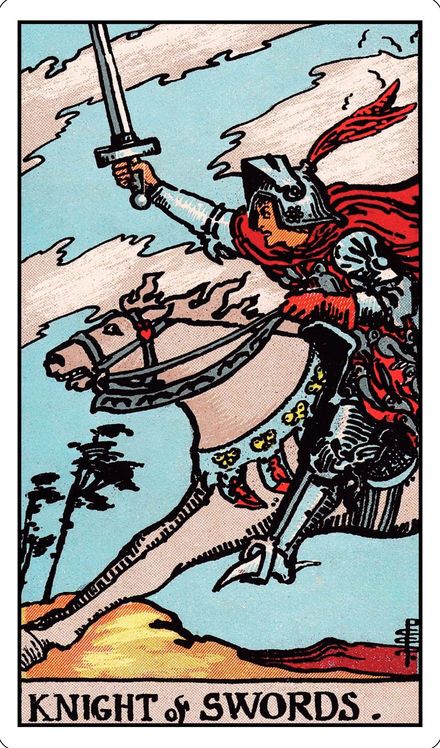
- Knight of Swordsaction · ambition
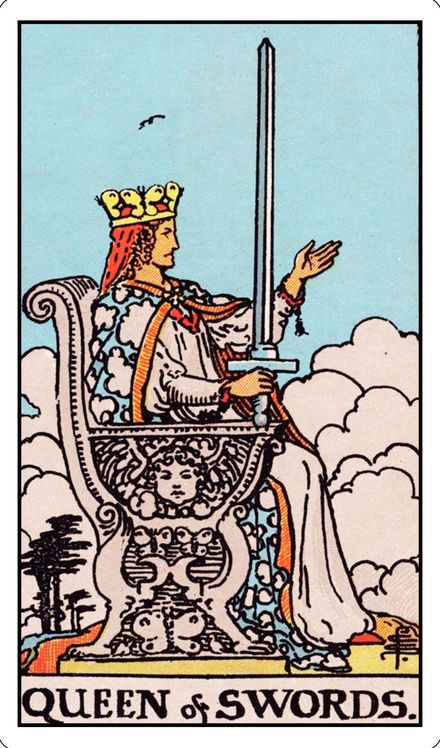
- Queen of Swordsindependence · clear thinking
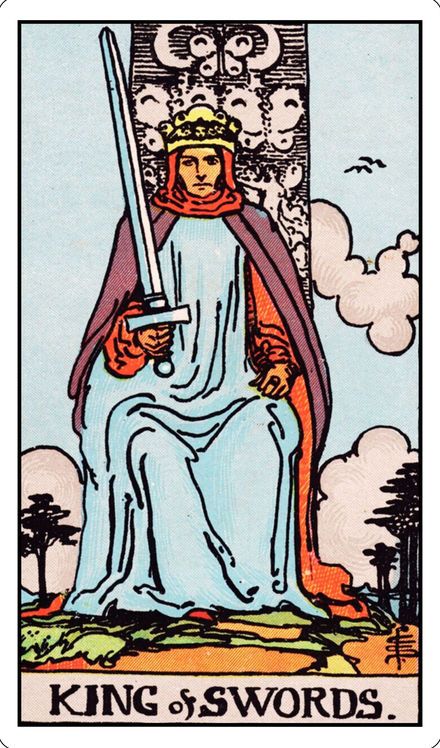
- King of Swordsauthority · truth
Wands
Fire. Passion, creativity, action.
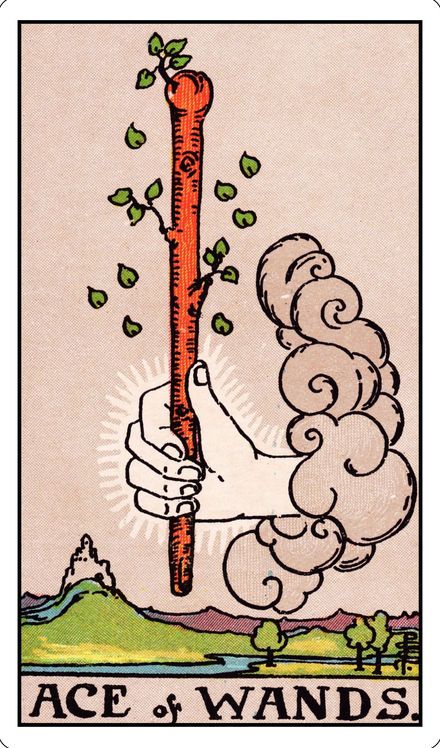
- Ace of Wandsinspiration · new beginnings
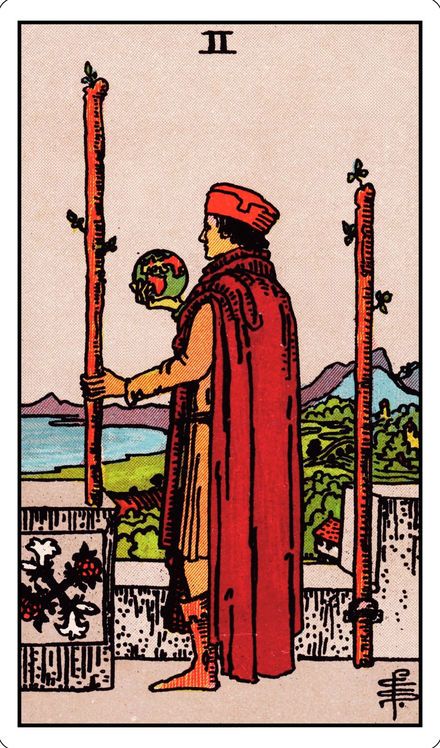
- Two of Wandsplanning · future vision
- Three of Wandsexpansion · foresight
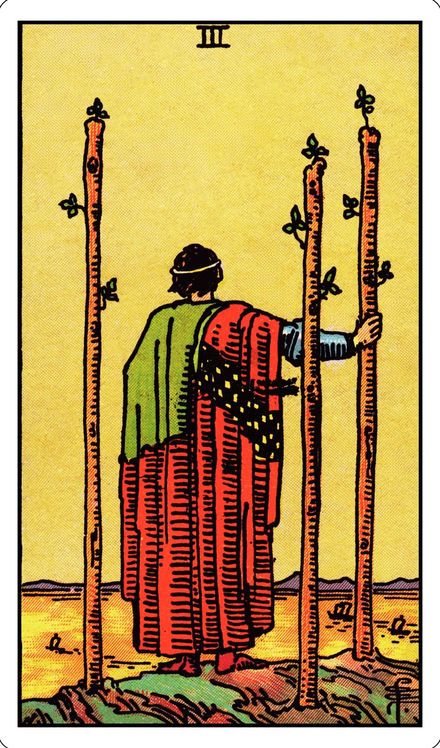
- Four of Wandscelebration · homecoming
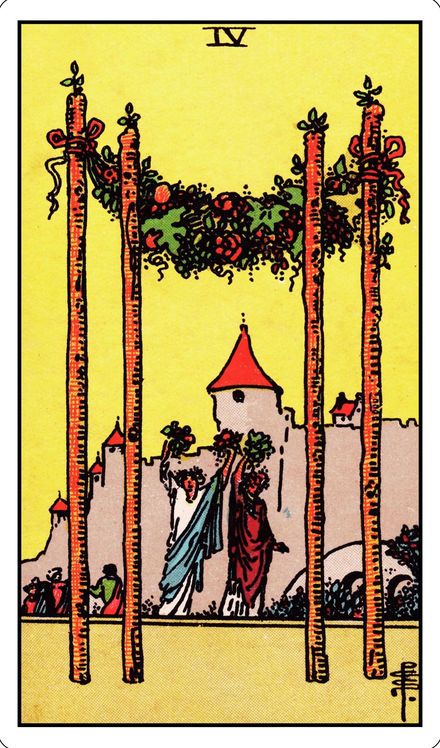
- Five of Wandscompetition · conflict
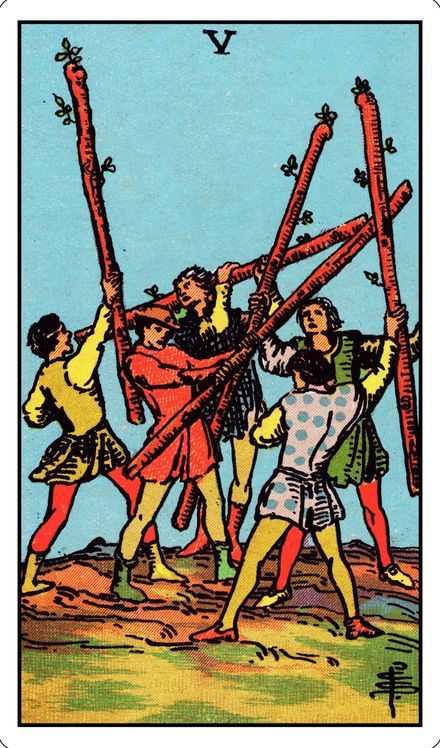
- Six of Wandsvictory · recognition
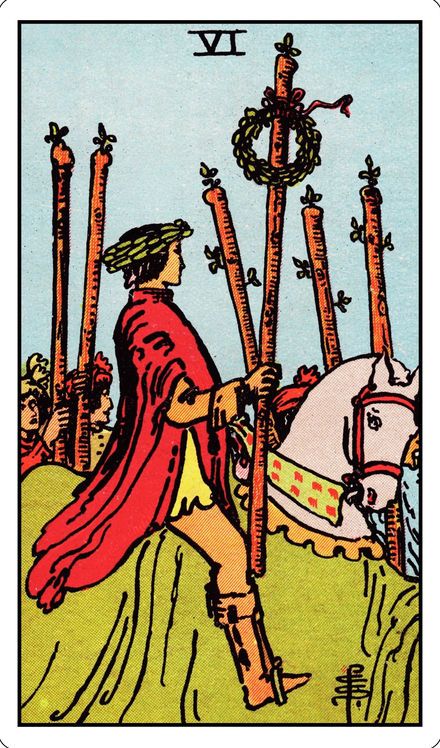
- Seven of Wandschallenge · perseverance
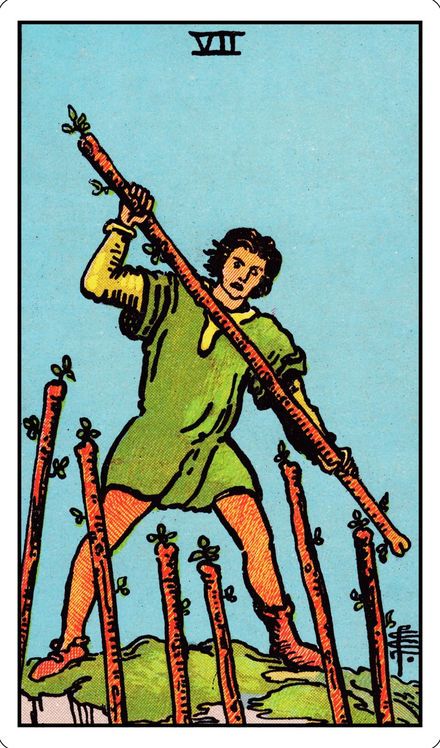
- Eight of Wandsspeed · movement
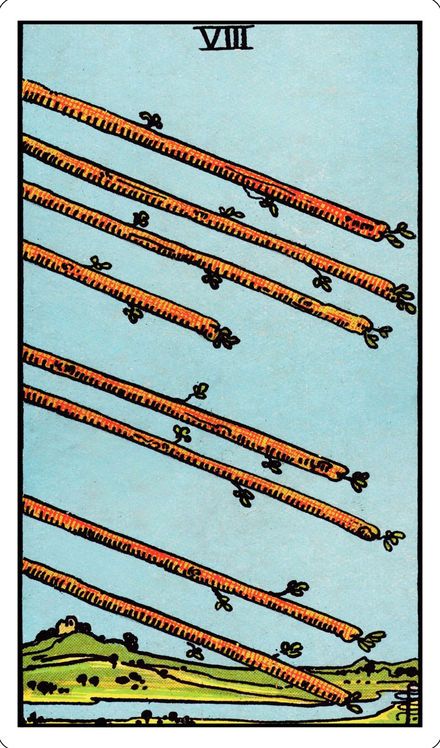
- Nine of Wandsresilience · persistence
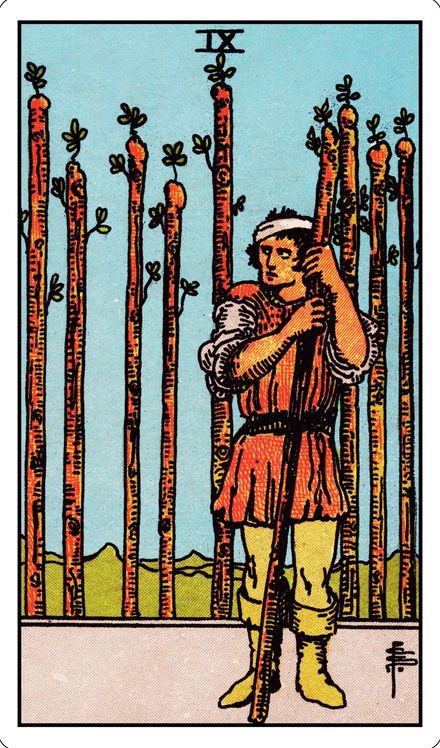
- Ten of Wandsburden · responsibility
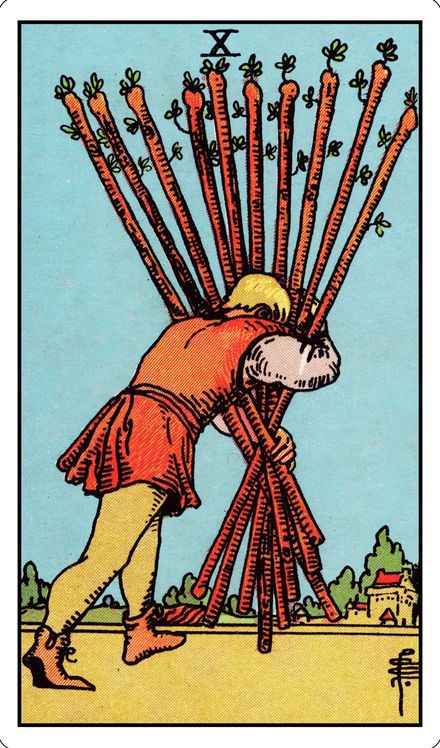
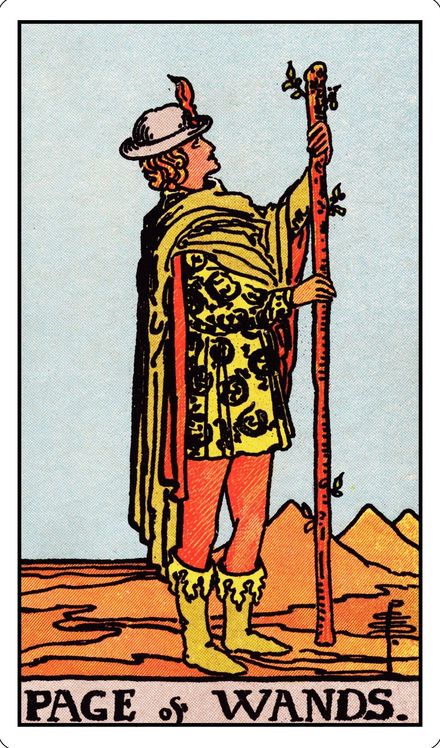
- Page of Wandsenthusiasm · exploration
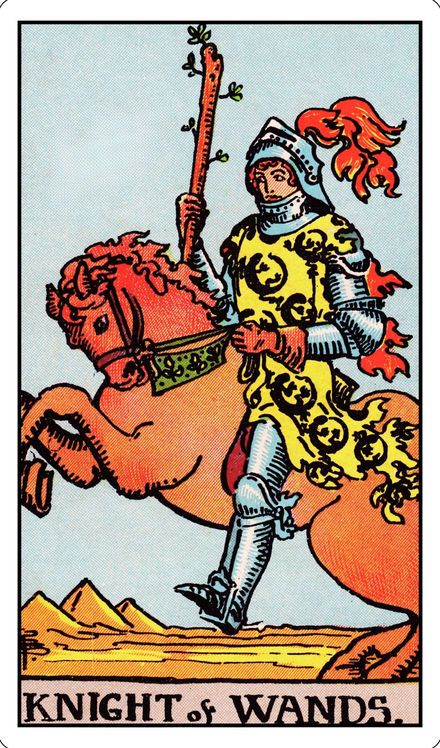
- Knight of Wandsenergy · passion
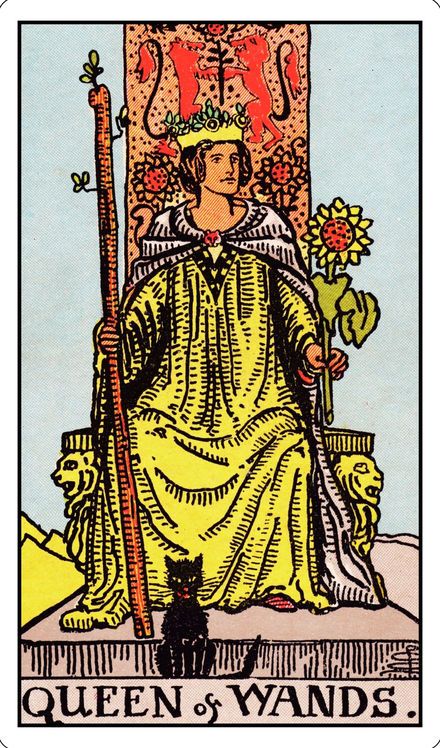
- Queen of Wandscourage · confidence
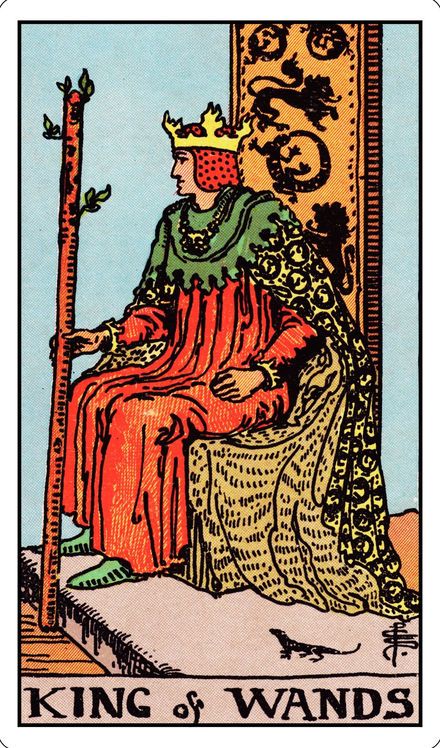
- King of Wandsvision · leadership
Read it across as well as down
Reading down a column is learning a suit, which is what the four pages above are for. Reading across a row is taking one number through all four suits at once, and it is the faster way to learn the fifty-six, because the rows hold together far better than anyone expects. The last two columns are counted from the yes or no leaning on each of the four cards in that row.
| Number | What it is doing | Yes upright | Better reversed |
|---|---|---|---|
| Ace | The suit in seed form, offered rather than earned | 4 of 4 | 0 of 4 |
| Two | Two of something: a pair, a choice, a balance somebody is holding up | 2 of 4 | 1 of 4 |
| Three | The first result, and usually the first other person in it | 3 of 4 | 1 of 4 |
| Four | Consolidation, and how fast holding still becomes refusing to move | 1 of 4 | 2 of 4 |
| Five | The loss, the shortfall, the fight. Every suit has one | 0 of 4 | 3 of 4 |
| Six | Recovery, and somebody else with a hand in it | 4 of 4 | 0 of 4 |
| Seven | Assessment, alone, on incomplete information | 1 of 4 | 2 of 4 |
| Eight | Movement: the escape, the repetition, the speed, the trap | 2 of 4 | 2 of 4 |
| Nine | Nearly there, and mostly alone with it | 3 of 4 | 1 of 4 |
| Ten | The end of the suit, and what reaching the end of it cost | 2 of 4 | 2 of 4 |
| Page | A beginner in the suit, or a message written in its language | 3 of 4 | 0 of 4 |
| Knight | The suit at its most extreme and least governed | 4 of 4 | 0 of 4 |
| Queen | Mastery turned inward: what it is like to have this | 4 of 4 | 0 of 4 |
| King | Mastery turned outward: what it does to other people | 4 of 4 | 0 of 4 |
The suit changes what the card is about. The number changes what is happening to it. A Five of Pentacles and a Five of Cups are different cards caught at the same moment in two different parts of a life, and once you can see that you are reading fifty-six cards as fourteen ideas.
The rows where all four suits say the same thing
Three rows of the grid vote together, and between them they teach more about the minors than any single card does.
The Aces are unanimous. All four read as yes upright, and all four read as no reversed. No other number in the deck is that uncomplicated in either direction. In the pictures they are the same card four times over: a hand comes out of a cloud holding the suit's emblem, and nobody has taken hold of it yet. An Ace is an offer. Reversed, the offer is still on the table and something is stopping it landing, which is the only way a thing that has not started can fail.
The Fives are the floor. Not one of the four reads as yes upright, which no other row can say, and three of the four read better upside down, because there is not much further down to go. Each one is a different way of coming up short: Cups spills three and does not turn to see the two still standing, Pentacles walks past a lit window in the snow, Swords wins and is left collecting the weapons alone, and Wands is five people swinging staves at nobody in particular. Grief, hardship, a hollow victory, a pointless scrap. Same rung, four floors of the building.
The Sixes are the way out. All four read as yes upright, and all four of them involve somebody else: the child handing over a cup of flowers, the merchant with the scales and the two beggars, the ferryman poling the boat away from whatever happened, the crowd around the rider with the laurel wreath. The Fives are what goes wrong and the Sixes are what help looks like, and they sit next to each other in every suit. If you learn only one pair of rows, learn that one.
The court is where the pattern stops
The last four rows of the grid are the sixteen court cards, and they behave unlike anything else in the deck. Fifteen of the sixteen read as yes upright. Every single one of the sixteen reads worse reversed, with no exception anywhere in the block, which neither the forty numbered minors nor the twenty-two majors come close to managing.
- Page of Cups
- Knight of Cups
- Queen of Cups
- King of Cups
- Page of Pentacles
- Knight of Pentacles
- Queen of Pentacles
- King of Pentacles
- Page of Swords
- Knight of Swords
- Queen of Swords
- King of Swords
- Page of Wands
- Knight of Wands
- Queen of Wands
- King of Wands
The reason is that a court card is a person rather than an event. In the rest of the suit somebody is doing something and the card is the doing. In the court the card is the person, and what they are doing is mostly being themselves: someone with a particular relationship to Water, or Earth, or Air, or Fire. Upright, that is competence, which is why they read so affirmatively. There is only one way for competence to fail and it is always the same way, so a reversed court card means the person, or the part of you the card is describing, is using what they are good at badly. The Queen of Swords reversed is not a woman who has stopped being clever.
Four ranks, and the difference between them is how far the suit has got from being an idea. The Page is learning it and often arrives as news. The Knight is the suit with the brakes off, all of it in one direction, which is thrilling in Wands and frightening in Swords. The Queen holds the suit inwardly and knows what having it feels like. The King points it at the world and other people have to deal with the result. When one lands on a person in a reading, the question is rarely which of your friends it is. More often it is which of those four relationships to the suit is currently being acted out.
Four ranks is also one more than an ordinary pack of playing cards has, and the missing one is the Knight. The two decks share an ancestor, so the fifty-two cards in a kitchen drawer are these forty numbered minors plus three courts a suit, with the Page and the Knight collapsed into a single Jack. Which cards you have and which you do not is worked out rank by rank in reading playing cards as tarot.
Which suit answers which question
Suits are the part people know, so this is the short version, with what each one is bad at attached, because that is the half nobody writes down.
- Cups, Water, fourteen cards, ten of them yes upright. Feeling, attachment, what you want to be true. Weak on whether any of it is practical.
- Pentacles, Earth, fourteen cards, ten yes upright. Work, money, health, the slow things. Almost silent on how anybody feels about them.
- Swords, Air, fourteen cards, only five yes upright. Thought, truth, conflict, the things you tell yourself at four in the morning. Bad at comfort and worse at cost.
- Wands, Fire, fourteen cards, twelve yes upright, the most affirmative suit in the deck. Drive, momentum, wanting. Says nothing about whether the thing is wise.
The reversal behavior is the sharper divider. Swords is the only suit where more cards read better upside down than worse, eight against six, because most of what a Sword describes is painful and reversal usually means it is receding. Everywhere else reversal costs you something: thirteen of fourteen Wands read worse, twelve Pentacles, ten Cups. A table of upside-down Swords is the best news in the deck, and it is the suit everyone dreads.
You will also meet the suits under other names. Pentacles are called Coins or Disks, Cups are Chalices, Wands are Rods, Staves or Batons, and Swords are usually just Swords. Different decks, same fifty-six cards, same meanings.
When a spread has no majors in it at all
The minors are fifty-six of the seventy-eight, so most of what you draw will be minor cards and a three card reading with nothing major in it is the normal case rather than a disappointing one. It is worth knowing what that means, because a lot of people read it as the deck declining to answer.
A reading made only of minors is a reading about the near term and about things you can move. Nothing structural is being claimed. When two or three majors turn up instead, the situation has a shape you are inside rather than a set of choices you are making, and the Major Arcana covers what to do with that. Both are answers. Only one of them is convenient.
One more thing to look for before you read any individual card: a repeated suit. Minor cards say little alone, and the clearest signal a spread gives you is three cards from the same suit, which tells you what department of your life the question is being answered in, whatever you thought you were asking about. Tarot card combinations collects the pairs these fifty-six turn up in, and most of the pairs where both cards are minors have both cards in one suit.
Common questions
- What are the Minor Arcana cards in tarot?
- The Minor Arcana are the fifty-six cards of the tarot deck that sit outside the twenty-two Major Arcana. They divide into four suits of fourteen: Cups, Pentacles, Swords, and Wands. Each suit runs Ace through Ten and then four court cards: Page, Knight, Queen, and King. Where a major card names a force in your life, a minor card names a situation in it.
- What is the order of the Minor Arcana suits?
- There is no single authority on it. The order you will meet most often is Wands, Cups, Swords, Pentacles, which follows the elements fire, water, air, and earth, and it is the order the Golden Dawn material established. Plenty of decks and books use another. Nothing in a reading depends on it, which is why this page lists the four alphabetically and nobody is any worse off.
- Are Minor Arcana cards less important than Major Arcana cards?
- They are more specific. The twenty-two majors describe what a period of your life is about; the fifty-six minors describe what is happening in it this week. A spread with no majors in it is a reading about something inside your control, which is usually the more useful answer to have.
- What do the numbers on the Minor Arcana mean?
- The number is the stage and the suit is the subject. An Ace is the beginning of the suit, a Five is its low point, a Ten is the end of it, and the court cards are people rather than events. Read the same number across all four suits and the family resemblance is obvious: all four Aces are an offer, all four Fives are a shortfall.
- Which Minor Arcana suit is the most negative?
- Swords, though less simply than the reputation suggests. Only five of the fourteen Swords read as yes upright, against twelve in Wands. Swords is also the only suit in the deck where more cards read better reversed than worse, eight against six, because a reversed Sword usually means the pain is easing rather than starting.
Every one of the fifty-six has its own page with upright and reversed meanings, what it says about love, work, and money, and the symbolism it is read from. The whole deck is in the card meanings index. If you came with a yes or no question, the yes or no page carries a leaning for all seventy-eight, and reversed meanings has the upside-down half of the deck in one place. For reading these next to each other rather than one at a time, start with how to read tarot. All fifty-six of these plus the twenty-two majors fit on two printable sheets in the tarot card meanings chart.
There is also a page on what Reflecta is, if the waitlist is a step too early.