10 of Swords
Ten of Swords
- painful ending
- rock bottom
- release
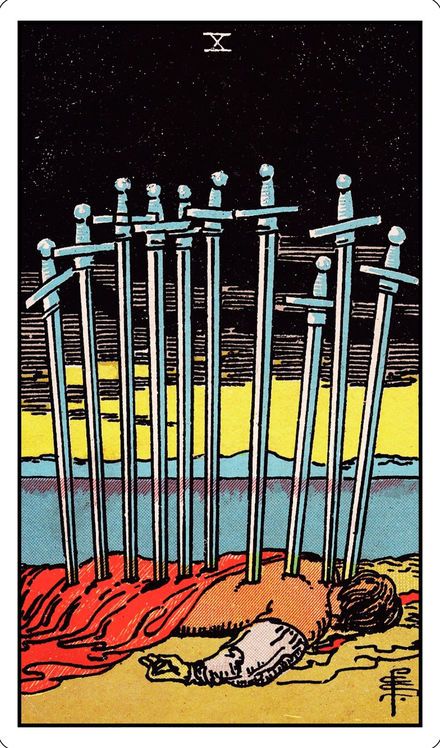
The Ten of Swords marks an ending that has gone as far as it can go. The worst has happened, and it has finished happening. A figure lies face down with ten swords in his back, under a black sky with a band of gold at the horizon. Waite's meanings were pain, sadness, tears, and desolation, and he said plainly it is not a card of violent death. Upright it can mean total defeat. Reversed it usually means recovery beginning, or a collapse dragged out longer than it needs to be.
- Element
- Air
- Astrology
- Sun in Gemini
- Numerology
- 10, the full count of the suit
- Yes or no
- no
There is a band of gold along the bottom of the sky. Everything above it is black, and the horizon is clearly getting lighter.
Whoever designed the darkest card in the suit put a sunrise in it, right at the edge, where you have to look to notice. The figure’s right hand is folded into a blessing. That is either the strangest detail in the deck or the most deliberate.
Ten of Swords upright meaning
The worst has happened, and has finished happening.
The Ten of Swords is the bleakest image in the deck, and its meaning is more specific than despair. A man lies face down with ten swords in his back, under a black sky with a gold band at the horizon. The number is the point. Ten swords is over the top, and it signals that the damage is complete. The card describes a situation with nothing more to lose. Waite's meanings were pain, suffering, tears, sadness, and desolation, and he added that it is not especially a card of violent death. Tarot cannot predict a death in any case. In readings it covers betrayal, total failure, the end of something with no doubt left about it, and hitting bottom. The card's one real comfort is practical, more than sentimental. Something that has fully ended cannot get worse. People stuck in the middle of a slow collapse do not get that particular relief. The sky is already lightening at the edge. That reads less as encouragement than as a fact about where this falls in a sequence.
Ten of Swords reversed meaning
The aftermath, and recovery beginning.
Reversed, the Ten of Swords is usually about what comes after. The most common modern reading is survival: getting up, recovery starting, and the worst finally behind you. It is a real improvement on the upright card, and rarely a comfortable one, because recovering from something total is slow and unglamorous. Its second reading is a collapse being dragged out: an ending that will not finish, or a situation kept going when it may already be done. The card asks whether dragging it out costs more than ending it would. Waite's reversal was surprisingly positive: advantage, profit, success, and favor, though none of them lasting, along with power and authority. There is also a version about overreacting, where a setback is treated as a catastrophe. Hold that reading lightly, and only use it when the cards around it support it. This suit has plenty of real disasters.
A reversal is rarely the upright card's opposite. Reversed tarot cards covers the four conditions a reversal usually describes, and how to tell which one a spread is asking for. Every card's reversed meaning sits beside its upright one on reversed tarot card meanings.
Ten of Swords in Waite's 1910 key
The meanings above are Reflecta's reading. These are the ones A. E. Waite gave in The Pictorial Key to the Tarot (1910), the guide he wrote for the deck Pamela Colman Smith drew. He wrote them for fortune-telling, a use tarot took on centuries after it began as a card game in fifteenth-century Italy. Some of his words are blunt, and none of them can tell you what will happen.
- Upright
- Whatsoever is intimated by the design; also pain, affliction, tears, sadness, desolation. It is not especially a card of violent death.
- Reversed
- Advantage, profit, success, favor, but none of these are permanent; also power and authority.
Symbolism in the card
- The ten swords in his back
- Waite describes a figure lying flat, pierced by all ten swords. One sword would have been enough. The excess is the card's own comment: this is defeat past the point where any more damage is possible.
- The gold band along the horizon
- Under the black sky there is a clear band of yellow at the bottom edge. It could be dawn, or the end of a storm. It sits there on purpose, in the darkest card in the suit.
- The hand raised in a blessing gesture
- His right hand is folded into the same sign the Hierophant makes. Something in this figure is still doing something, which is a strange and deliberate detail to include.
Ten of Swords in love and relationships
Upright. A relationship ending badly: betrayal, or a break with nothing left to save. It reads as an ending that has gone as far as it can go, and the card does not sketch a way back.
Reversed. Recovering from a bad ending, or a breakup being dragged out long after it stopped helping. The first is slow, and the second can be avoided.
Ten of Swords in career and work
Upright. Being let go, a project failing completely, or betrayal at work. It is total, and usually not a surprise when you look back on it.
Reversed. Rebuilding after a career collapse, or a job that already looks finished being kept alive in name only, because nobody will say it is over.
Ten of Swords in money
Upright. A serious financial low, or something that feels like ruin. The card does not soften this. Its only note is that rock bottom is also a floor. A qualified advisor will help more than a card.
Reversed. Recovering financially from a serious loss. Slow and real, and usually well underway before anyone notices it has started. Waite's reversal pointed to gain and success, though not lasting.
Ten of Swords as feelings
Upright. Devastation, or a sense of being completely done with the situation. The card describes a state past negotiating. It cannot say what anyone else has decided, and talking may not be what moves it.
Reversed. Recovery beginning after something that hurt badly. The ability to feel again may be coming back, and it usually takes longer than anyone would like.
Is Ten of Swords a yes or a no?
Upright, it leans no. Reversed, it leans maybe.
Upright it leans toward the most emphatic no in the suit. It describes something that has gone as far as it can go, and leaves little room for it to carry on as it was. Reversed it sits at maybe, since it describes the aftermath, where recovery has begun and nothing is settled either way yet.
Every card's leaning in one table, upright and reversed, is on yes or no tarot, along with what a maybe is asking you to do.
Ten of Swords card combinations
- +Ten of Swords and The Tower
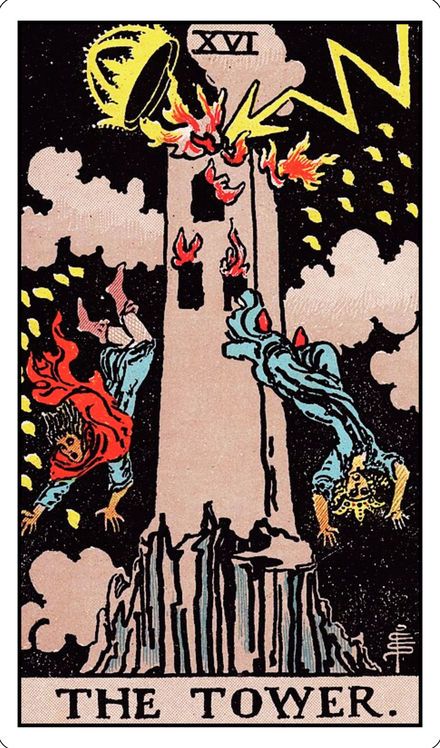
- Two total endings together. It can point to a collapse that is complete, top to bottom. It asks whether holding any of it in place is still useful.
- +Ten of Swords and The Star
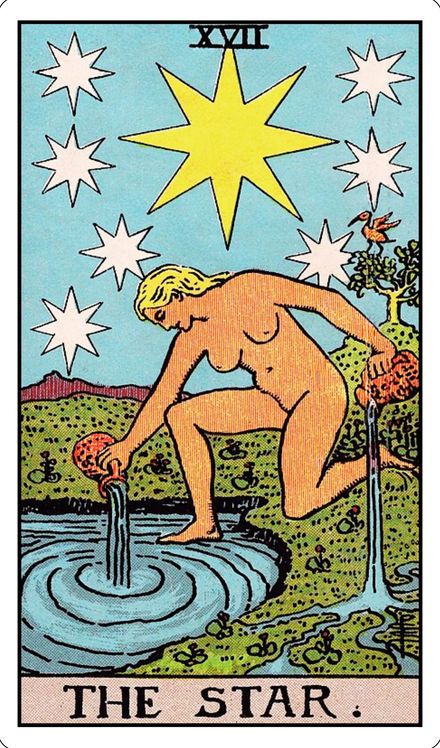
- Rock bottom, and what follows. One of the more reassuring sequences in the deck: the ending is as hard as it looks, and recovery from it is possible.
- +Ten of Swords and Nine of Swords
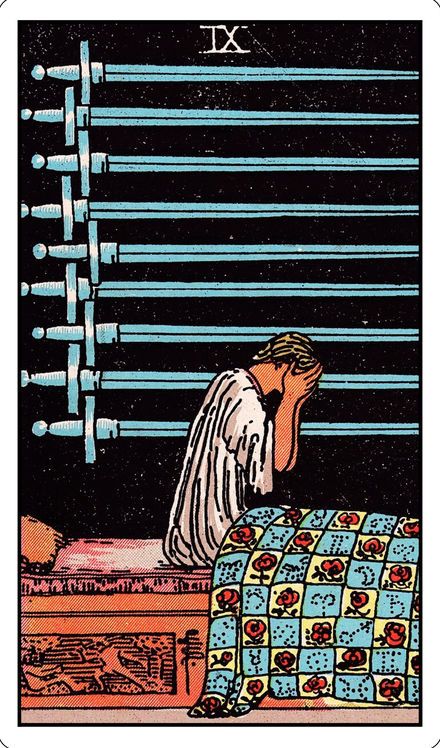
- The dread, and the event. It can mean the thing you feared has already happened, and that waiting for it was worse than the arrival. That is common, and rarely believed in advance.
- +Ten of Swords and The Fool
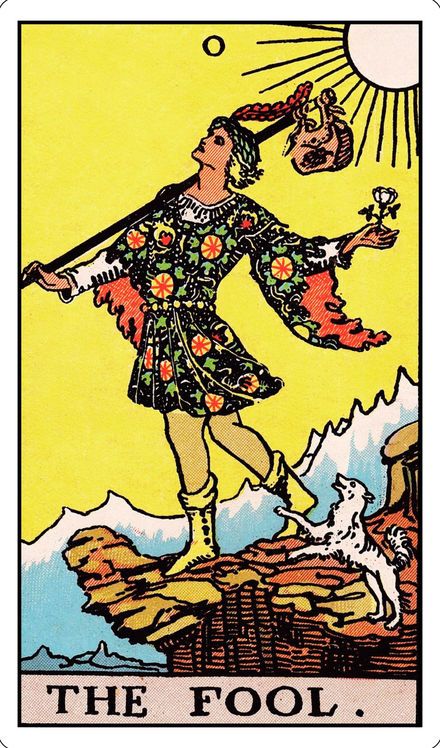
- An ending that hands you a beginning. Unexpected and hopeful: with nothing left to protect, the next step is unusually free.
Every pairing on this site, Ten of Swords's included, is collected on tarot card combinations.
It has finished happening. That counts for something.
Ten of Swords: common questions
- What does the Ten of Swords mean?
- It means the worst has happened, and has finished happening. A figure lies with ten swords in his back, under a black sky with a gold horizon. It covers betrayal, total failure, and hitting bottom. The damage is complete, and nothing more is coming. Waite said it is not a card of violent death.
- Is the Ten of Swords the worst card in the tarot?
- It is the bleakest image. The Tower is often harder to live through, because it arrives without warning. This card describes an ending that is already finished. There is a real, if cold, comfort in something that can no longer get worse.
- Why are there ten swords?
- Because one would have been enough, and the excess is the point. It signals defeat past the point where more damage is possible. That is what sets it apart from the less clear-cut cards in the suit.
- What does the Ten of Swords reversed mean?
- Usually the aftermath: survival, getting up, and a slow recovery beginning. It can also mean a collapse being dragged out. Waite's reversal was surprisingly bright: advantage, success, and favor, though none of it lasting.
There is also a page on what Reflecta does with a reading once the cards are down.