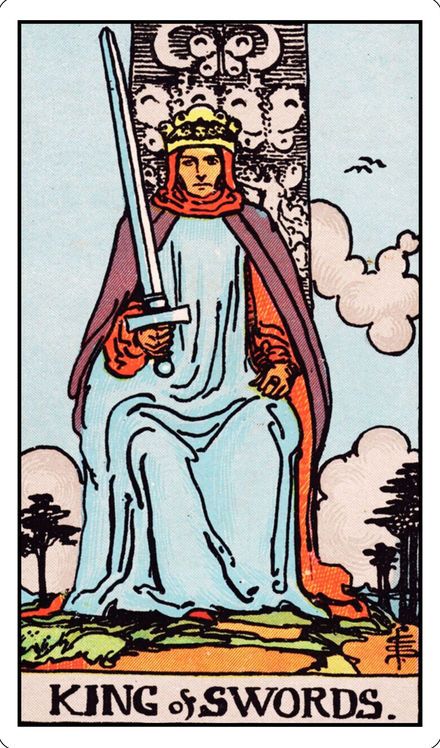
King of Swords
King of Swords
- authority
- truth
- intellectual power
The King of Swords means decisions made on principle, more than preference. He is authority of the mind: the judge, the lawyer, the person who applies the rule the same way no matter who it lands on. Waite said he sits in judgment, and listed power, command, authority, and law. As a yes or no he leans yes, reached by reasoning more than inclination. Reversed he leans no, because the reasoning may be serving a conclusion reached first.
- Element
- Air
- Astrology
- Air of Air
- Numerology
- King, the suit at its most authoritative
- Yes or no
- yes
The sky behind him is clear, and the trees are still. In a suit full of gales, storm clouds, and moving air, that stillness stands out.
That is the condition this card describes. The calm belongs to the air as much as to the man. It has stopped moving long enough for something to be judged properly. That kind of stillness is rare, and he makes good use of it.
King of Swords upright meaning
Decisions made on principle, more than preference.
The King of Swords sits facing forward with his sword raised, under a clear sky. Waite said he calls to mind Justice from the Major Arcana, and may stand for that virtue. More exactly, he holds the power of life and death that comes with his office. Waite's meanings were everything that comes from judgment: power, command, authority, sharp intelligence, and the law. In readings he points to authority of the mind, fair decisions, legal and formal matters, and applying a principle consistently, even when the result is unwelcome. As a person, he is analytical, articulate, ethical, and not warm. His advice is sound, and you may not enjoy how he delivers it. Waite's extra meanings included a lawyer and a doctor. He usually suggests taking the emotion out of the decision, at least for a while, and working out what you would advise someone else in your position. He also carries a note about consistency. A rule you only apply when it suits you is not a principle, and he tends to appear where that has been happening.
King of Swords reversed meaning
Reason used to dominate, or rules without judgment.
Reversed, the King of Swords misuses the mind. The most common reading is rationalizing: reasoning used to defend a conclusion that was reached some other way. It is argued so smoothly that it is hard to challenge, and it is not honest. This happens more in capable people than in others, which is why it is worth naming. His second failure is using intelligence to dominate. Being right becomes a way to control the conversation, and being more articulate does the work that a fair argument should. A third version is rigidity: a rule applied with no judgment in it, the letter of the law without its spirit, or a decision that is technically correct and obviously wrong. Waite's reversed meanings were dark: cruelty, perversity, barbarity, betrayal, and bad intentions. The card keeps the rigor, and asks whether it is serving the truth or serving the person using it.
A reversal is rarely the upright card's opposite. Reversed tarot cards covers the four conditions a reversal usually describes, and how to tell which one a spread is asking for. Every card's reversed meaning sits beside its upright one on reversed tarot card meanings.
King of Swords in Waite's 1910 key
The meanings above are Reflecta's reading. These are the ones A. E. Waite gave in The Pictorial Key to the Tarot (1910), the guide he wrote for the deck Pamela Colman Smith drew. He wrote them for fortune-telling, a use tarot took on centuries after it began as a card game in fifteenth-century Italy. Some of his words are blunt, and none of them can tell you what will happen.
- Upright
- Whatsoever arises out of the idea of judgment and all its connections, power, command, authority, militant intelligence, law, offices of the crown, and so forth.
- Reversed
- Cruelty, perversity, barbarity, perfidy, evil intention.
Symbolism in the card
- The unsheathed sword, held up
- Waite says he sits in judgment, holding his sword drawn. The blade leans slightly off upright. It reads as judgment still being weighed. It is the only softening in the card.
- The butterflies on the back of the throne
- The same sign of transformation the Queen carries. Whatever change brought her to her position happened to him too, however settled he looks.
- The still trees against a clear sky
- The sky behind him is clear, and the trees are still. In a suit full of wind and storm cloud, that stillness stands out. It is the calm that careful judgment needs.
King of Swords in love and relationships
Upright. A relationship handled with honesty and fairness, or a hard conversation handled well. Not romantic, and it is the card you want when something needs settling properly.
Reversed. Being argued into a position instead of persuaded, or a partner who wins every disagreement on technique. It can also mean emotional coldness defended as being rational.
King of Swords in career and work
Upright. Authority, sound judgment, legal or analytical work, and decisions that hold up when examined. Strong for anything formal, or anything that sets a precedent. Waite named law and authority among his meanings.
Reversed. A manager who rules by argument, a policy applied without sense, or a decision defended after the fact with reasons invented for the purpose.
King of Swords in money
Upright. Money decisions based on analysis, more than feeling. Contracts, structures, and arrangements that are sound because someone thought them through.
Reversed. Money rules applied so rigidly that they cost you, or an arrangement whose logic serves whoever wrote it. The card leans toward reading it yourself instead of trusting the summary.
King of Swords as feelings
Upright. A considered position, thought through. The card describes conclusions that are usually defensible, and slow to change because of feelings. It cannot say what the position is.
Reversed. Judgment against a standard nobody stated, or argument used to avoid the real conversation. The reasoning may be sound, and aimed in the wrong direction.
King of Swords in a reading position
The same card answers differently depending on what the position asked it. These are the readings for the positions people ask about most.
King of Swords as someone's intentions
Upright. A reasoned position. The intention this card describes tends to be consistent, stated plainly, and slow to change based on how anyone feels about it, including the person holding it.
Reversed. An intention to win the argument. The card describes a conclusion that came first, with reasons gathered up behind it. That is why the case can sound so clean and still not quite answer the question.
King of Swords as action
Upright. Take the emotion out of it for an afternoon, and decide as if you were advising someone else. The action here is a judgment based on a principle you would still apply if the result went against you.
Reversed. Consider pausing the argument to check your conclusion. The action is to work out whether your rigor is serving the truth or serving your position. Only you can ask that honestly.
King of Swords as how someone sees you
Upright. Possibly as someone to be judged on the merits. He is fair, and he is not warm. The judgment would be the same whoever you were. That protects you, and it also feels cool.
Reversed. Possibly as measured against a standard nobody stated. The card describes being judged by a rule you did not know existed, where a smooth argument is doing the work fairness should do.
King of Swords as an obstacle
Upright. The obstacle is a truth you have been arguing with. Something here is clear, defensible, and unwelcome. The block is how much energy is going into wishing it were otherwise.
Reversed. The obstacle is a rule with no judgment in it. Something technically correct and obviously wrong is being enforced, possibly by you, or possibly by an institution that stopped looking at the situation.
King of Swords as an outcome
Upright. This points toward a decision that holds. In formal matters the card favors whoever the principle supports, and the outcome tends to be reasoned, more than warm. For anything legal, a qualified lawyer matters more than a card.
Reversed. This path points toward an argument won and a situation no better. As an outcome, the sharper case tends to win, and what really needed saying stays unsaid underneath it.
King of Swords as advice
Upright. Consider deciding on the principle, and applying it consistently, especially where it costs you something. A rule you only use when it suits you is not a principle, and this card appears where that has been happening.
Reversed. Notice the point where being right became the goal. The advice is to lower the polish of your argument, raise its honesty, and have the conversation the reasoning has been avoiding.
Is King of Swords a yes or a no?
Upright, it leans yes. Reversed, it leans no.
Upright he leans yes, reached by reasoning more than inclination. That makes him strong for anything that needs fair judgment or a formal process. Reversed he leans no, often because the reasoning is being used to justify a conclusion that was reached first.
Every card's leaning in one table, upright and reversed, is on yes or no tarot, along with what a maybe is asking you to do.
King of Swords card combinations
- +King of Swords and Queen of Swords
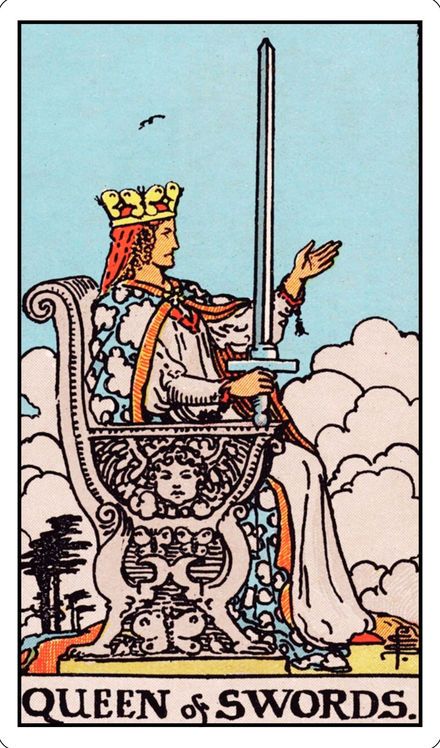
- Two clear minds, one perceptive and one in charge. Together they point to a situation handled with real judgment and very little sentiment.
- +King of Swords and Justice
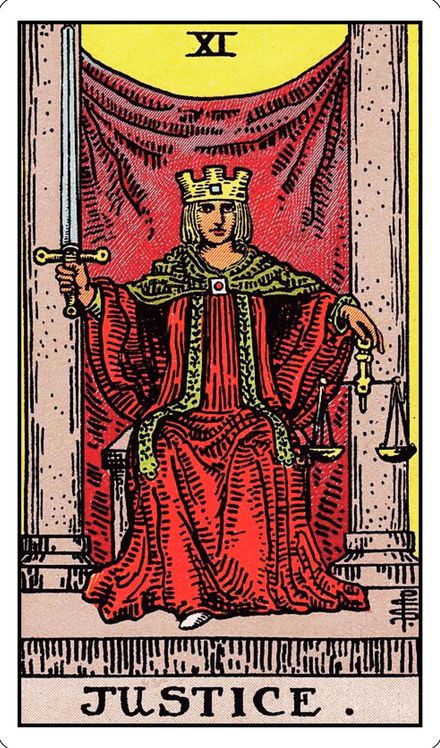
- Judgment, twice: personal and structural. Waite himself compared this King to Justice. Often a formal process, and the pairing favors doing everything properly and on the record.
- +King of Swords and The Emperor
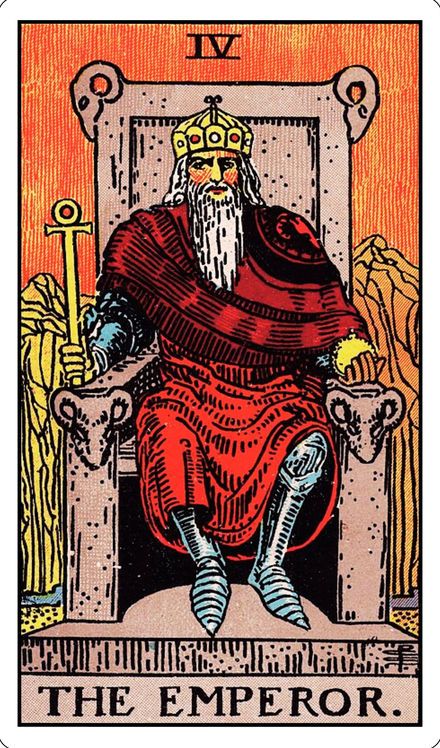
- Two authorities, one of the mind and one of structure. Together they suggest a decision that may be both reasoned and enforced. That is hard to argue with.
- +King of Swords and King of Cups
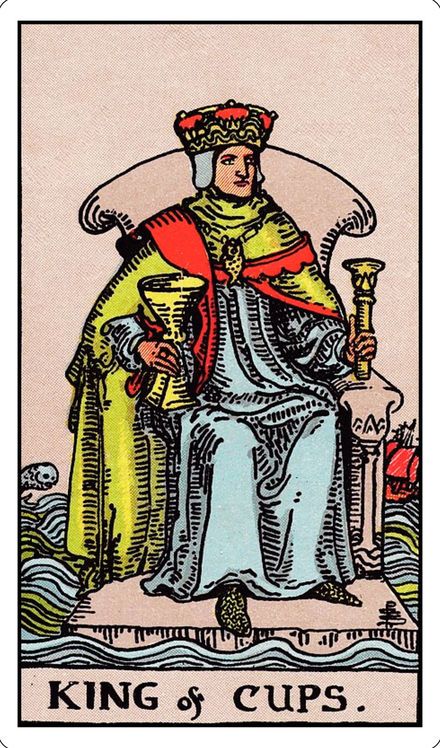
- Head against heart, at their most mature. Often the reading is that a good decision needs both, and this one was made with only half.
Every pairing on this site, King of Swords's included, is collected on tarot card combinations.
I can decide this on the merits and set aside how I feel about it.
King of Swords: common questions
- What does the King of Swords mean?
- He means decisions made on principle, more than preference: authority of the mind, fair judgment, and applying a rule consistently even when the result is unwelcome. Waite said he sits in judgment, and listed power, command, authority, and law.
- Is the King of Swords a person or a situation?
- Either. As a person he is analytical, articulate, ethical, and not warm. His advice is sound, and you may not enjoy how he delivers it. Waite's extra meanings included a lawyer and a doctor. As a situation, he points to legal or formal matters, or a decision that needs to be made on the merits.
- What does the King of Swords reversed mean?
- Most often rationalizing: reasoning used to defend a conclusion reached some other way, argued smoothly enough to be hard to challenge. It also covers using intelligence to dominate, and rigidity. Waite's reversed meanings were cruelty, betrayal, and bad intentions.
- What is the difference between the King and Queen of Swords?
- She sees, and he decides. The Queen sees through things, having learned to at some cost, and her hand is open. The King applies judgment consistently and impersonally. Her clarity is about people. His is about principles.
There is also a page on what Reflecta does with a reading once the cards are down.