Fire · 14 cards
Suit of Wands
Wands are the suit of drive. Ambition, creativity, momentum, the thing you want badly enough to begin before you have worked out how. Fire is the element, and these cards describe energy rather than outcome: what is moving, how fast, and whether anything is behind it.
The suit has one habit worth knowing before you read any single card of it. In Wands, the thing that decides the card is usually outside the picture. The attackers have no faces. The staves in flight have nobody who threw them. The town is drawn clearly for everyone except the man walking toward it. Fire is the suit of what has been set going and has not landed yet, and the interval is all a painter can show you of that.
Ace through Ten, then Page, Knight, Queen, and King. The numbered Wands read more like one continuous story than any other suit's do: a spark, a decision to leave, something sent out, an arrival, a scuffle, a win, the defense of it, the speed, the wound, and finally an armful of it too high to see over.
Every card below has its own page with upright and reversed meanings, what it says in love, work, and money, and the symbolism it is read from.
In a deck of playing cards this suit is Clubs, the same ranks with the pictures taken off and the Knight merged away. The mapping is worked out card by card in reading playing cards as tarot.
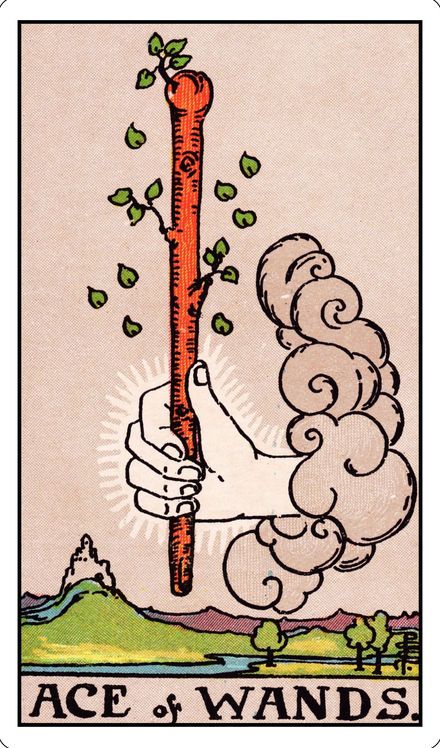
- Ace of Wandsinspiration · new beginnings
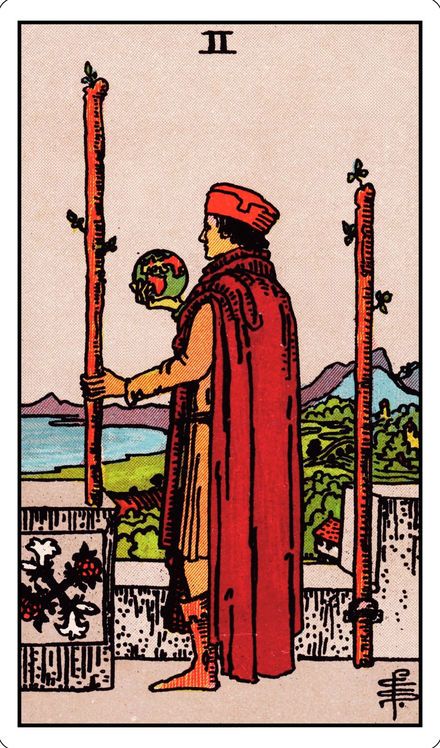
- Two of Wandsplanning · future vision
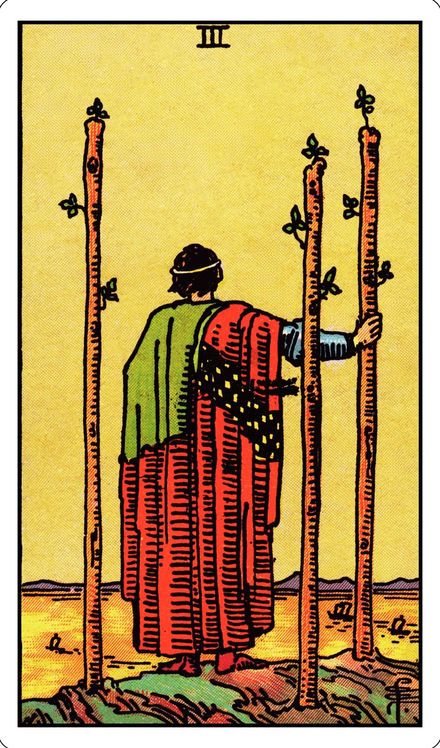
- Three of Wandsexpansion · foresight
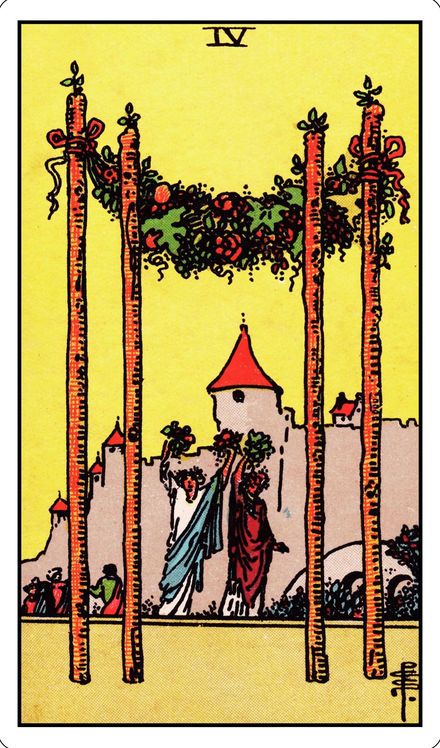
- Four of Wandscelebration · homecoming
- Five of Wandscompetition · conflict
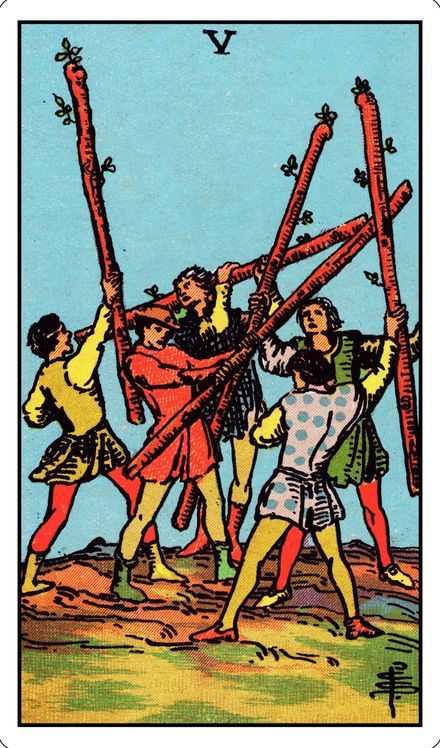
- Six of Wandsvictory · recognition
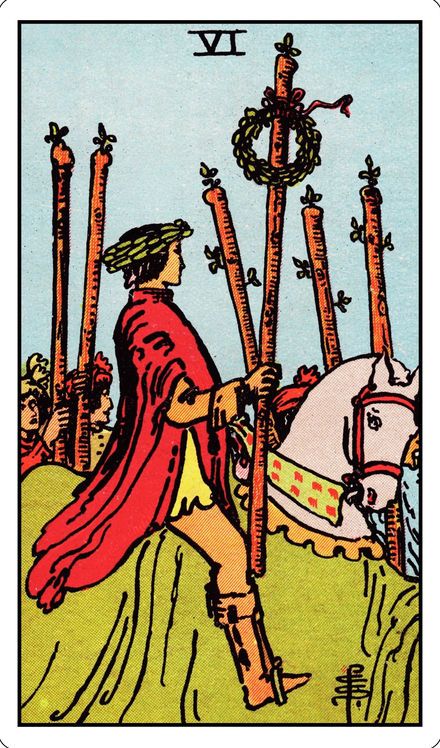
- Seven of Wandschallenge · perseverance
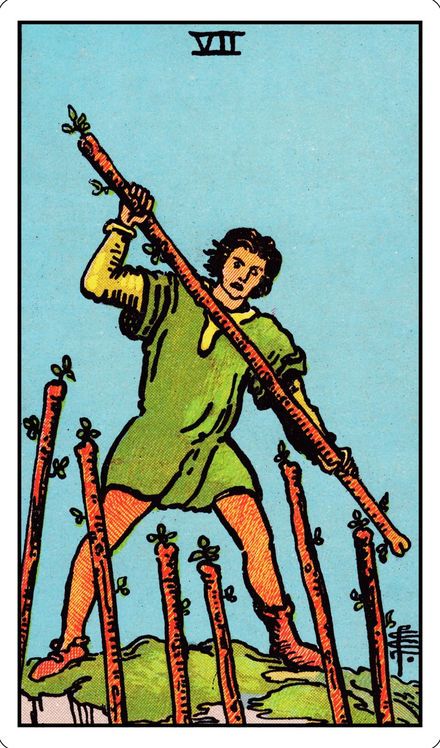
- Eight of Wandsspeed · movement
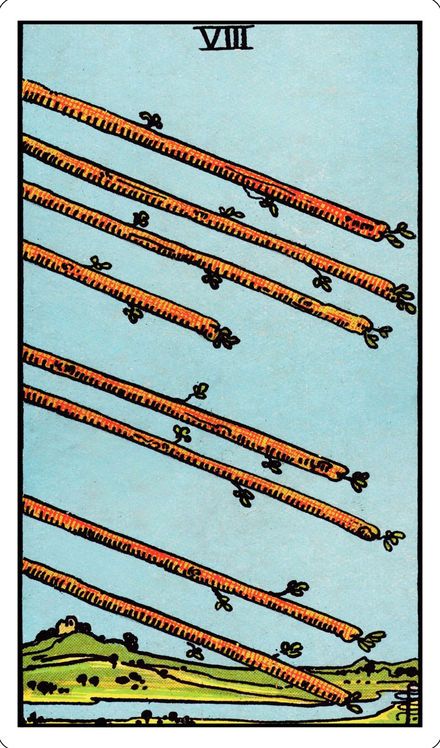
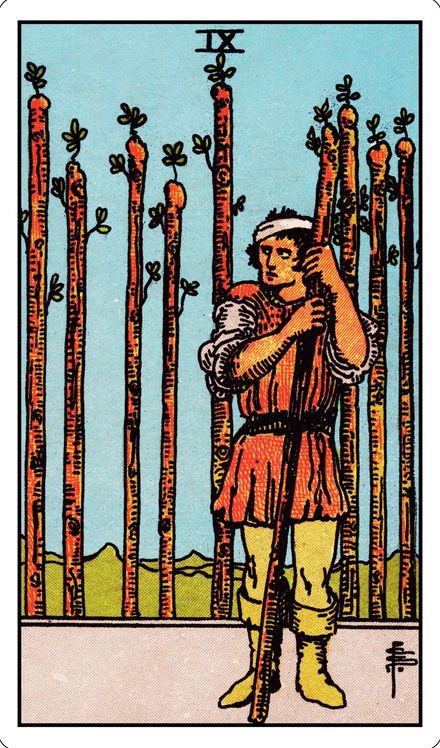
- Nine of Wandsresilience · persistence
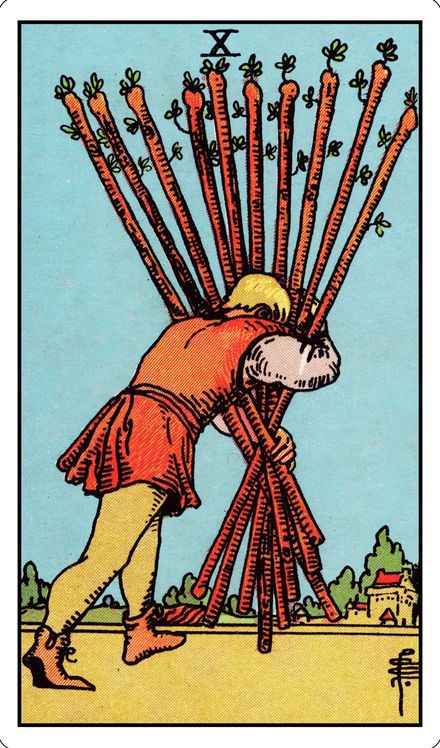
- Ten of Wandsburden · responsibility
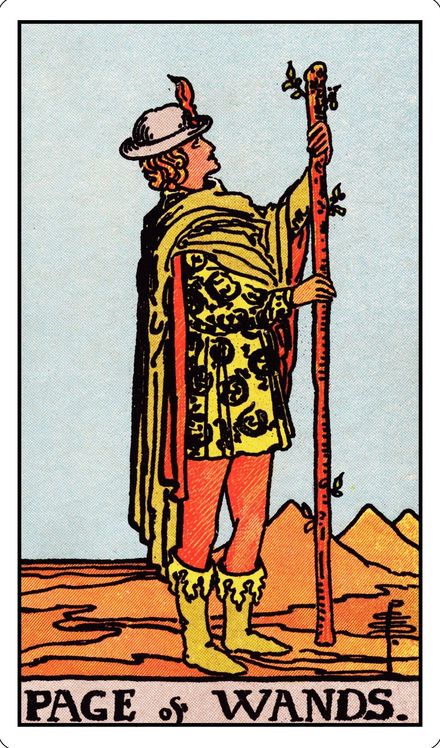
- Page of Wandsenthusiasm · exploration
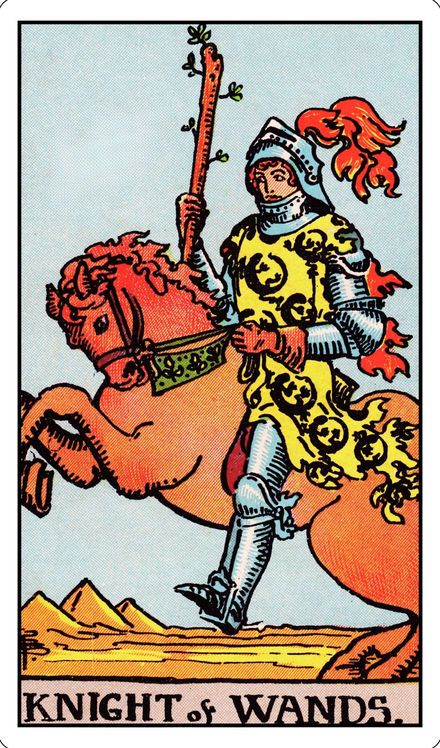
- Knight of Wandsenergy · passion
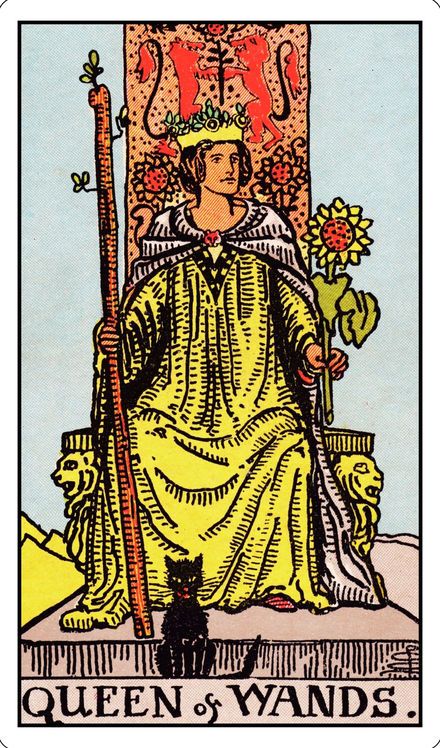
- Queen of Wandscourage · confidence
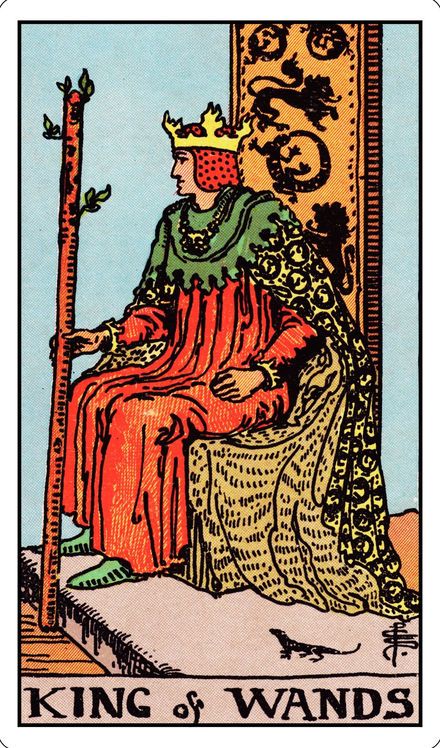
- King of Wandsvision · leadership
The fourteen, in order
Keywords and the yes or no leaning from each card's own page. In this suit the upright column is close to unanimous, so the column worth reading is the reversed one.
| Card | Keywords | Upright | Reversed |
|---|---|---|---|
| Ace of Wands | inspiration, new beginnings, potential | yes | no |
| Two of Wands | planning, future vision, decisions | yes | no |
| Three of Wands | expansion, foresight, opportunity | yes | no |
| Four of Wands | celebration, homecoming, harmony | yes | maybe |
| Five of Wands | competition, conflict, tension | maybe | no |
| Six of Wands | victory, recognition, public reward | yes | no |
| Seven of Wands | challenge, perseverance, defense | yes | no |
| Eight of Wands | speed, movement, swift action | yes | no |
| Nine of Wands | resilience, persistence, last stand | yes | no |
| Ten of Wands | burden, responsibility, hard work | no | yes |
| Page of Wands | enthusiasm, exploration, discovery | yes | no |
| Knight of Wands | energy, passion, adventure | yes | no |
| Queen of Wands | courage, confidence, independence | yes | no |
| King of Wands | vision, leadership, entrepreneurship | yes | no |
The suit that says yes, and the one with the most to lose
Twelve of the fourteen Wands read as yes upright. That is the highest count in the deck: Cups and Pentacles manage ten each and Swords five. The reason is structural rather than cheerful. A suit about wanting to begin will say yes to most questions about beginning, because that is what it is made of.
The exception is worth sitting with. The Ten is the only Wand that answers no, and it is refusing on the grounds of weight rather than merit. It is also the only card in the suit that reads better upside down, because putting some of the bundle down changes the answer.
That last count is the more useful one. Thirteen of the fourteen Wands read worse reversed, more than any other suit loses: Pentacles twelve, Cups ten, Swords six. Swords go the other way more often than they go this way: eight of the fourteen improve upside down, because a reversed Sword is usually pain easing off. Momentum has no equivalent relief. It has one failure mode with several names, and reversed Wands are that list: delayed, dissipated, burned out, or never started at all.
So a reversed Wand is rarely telling you the thing is wrong. It is nearly always telling you something about fuel or timing, which is a different conversation and usually a more answerable one. Reversed tarot cards covers the general case; this suit is the clearest example of it.
What is happening off the page
Four cards in this suit have a subject the picture does not contain, which is not a coincidence and is the most useful thing to know about reading Wands.
The Eight is the only card in the deck with no person in it at all. Eight staves cross a clear sky, angled down toward a landing. Nobody threw them and nobody catches them, and the card is entirely the interval between those two events. In the Seven, six staves come up from below the frame with no faces attached, which is how a contested position feels from inside it: the opposition is real and you could not describe it. In the Ten, the town is a short walk ahead and clearly drawn, and his head is bent below the top of the bundle, so the destination is visible to everyone except the person carrying the load. In the Three, his back is turned and the ships are already on the water. What he is waiting on left his hands some time ago.
Even the Nine belongs to this group by implication. He is bandaged, watching off to one side, and there is nothing there yet. The card is about expecting more of something that has not arrived.
What that changes in a reading is the question you put to the card. Wands rarely answer what is happening now. They report on something already released: an effort made, a message sent, a decision acted on, a reputation already circulating. When one turns up in a position about other people, it usually describes what your own momentum has set off rather than what they intend, which is why a Wands-heavy spread about someone else's feelings tends to answer a question you did not ask.
The court, by how much they turn toward you
The four Wands court cards are easiest to tell apart by where each one is facing, which happens to be the same thing as who their energy is for.
The Page is looking up at a staff taller than he is, alone in an empty desert. All of his attention is on the thing and none of it on us, and there is nothing around him to burn. Nobody has seen this idea yet, including him.
The Knight is in profile on a horse that is rearing rather than running. The power is vertical, the direction is not settled, and the animal does not look like it is under instruction. He is the suit in the second before it moves, which is why the card is exciting and unreliable in the same breath.
The Queen faces straight out. Knees apart, sunflower in one hand, staff in the other, and a black cat at her feet looking at the viewer as well. She is not arranged for anyone's comfort and it works anyway, which is the whole card: being entirely yourself in public, on purpose.
The King is the only King in the deck not facing forward. His attention is already off to the side, on something the picture does not include, and the salamander that the Page wears on his clothes is finished and set down on the ground beside him. He is the visionary rather than the administrator, and the cost is in the posture: the room is not what he is looking at.
When one of these lands on a person, the question is who the energy is being spent in front of, and whether that is where it is needed.
What the suit is good for, and what it is not
Wands are the suit people reach for when they want to know when. By the common correspondence they are the fastest, read as days where Swords are weeks, Cups weeks to months, and Pentacles seasons or years. Inside the suit the same logic scales: the Eight is the quickest card in it, the Three is the wait, and the Ten is the point where the speed has cost something.
Treat all of that as a tendency. Timing is the least reliable thing tarot gets asked for, and a correspondence chart does not make it more reliable. What this suit does answer well is whether a thing has any motion in it, and that is usually the question underneath the one about when. Three Wands in a spread about a stalled project is a more informative result than any date would have been.
Wands are also weak where you might expect them to be strong. They say little about whether something is wise, almost nothing about how anyone else feels, and nothing at all about cost. Those belong to Swords, Cups, and Pentacles, and a reading made only of Wands is one that has not been asked the hard part yet.
Common questions
- What does the Suit of Wands mean in tarot?
- Wands are the suit of drive. Ambition, creativity, momentum, and the thing you want badly enough to begin before you have worked out how. Their element is Fire, and they describe energy rather than outcome: what is moving, how fast it is moving, and whether there is anything behind it.
- Is the Suit of Wands good or bad?
- It is the most affirmative suit in the deck. Twelve of the fourteen Wands read as yes upright, against ten in Cups, ten in Pentacles, and five in Swords. The one that says no is the Ten, and it says no about the weight being carried rather than about the thing being wrong.
- What do reversed Wands mean?
- Almost always an interruption rather than a reversal of meaning. Thirteen of the fourteen Wands read worse upside down, more than any other suit loses, because momentum has only one way to fail: delayed, dissipated, burned out, or never started. Compare Swords, where eight of fourteen read better reversed because the pain is easing.
- What does it mean to draw a lot of Wands in one reading?
- Wands are fourteen of the seventy-eight cards, so a ten card spread holds about 1.8 of them on average. Three or more usually means the situation has more energy in it than direction, and the useful question becomes what all of it is pointed at rather than whether to act.
- How fast are Wands in tarot timing?
- By the common correspondence they are the fastest suit, read as days where Swords are weeks, Cups are weeks to months, and Pentacles are seasons or years. Treat it as a tendency rather than a rule. What the suit says reliably is whether something is in motion, which is a more answerable question than when it lands.
All fifty-six minors sit together in the Minor Arcana, and the whole deck is in the card meanings index. If the question you came with was a yes or no one, the yes or no page carries a leaning for all seventy-eight cards. For reading these next to each other rather than one at a time, try how to read tarot or the pairs in tarot card combinations.
There is also a page on what Reflecta is, if the waitlist is a step too early.