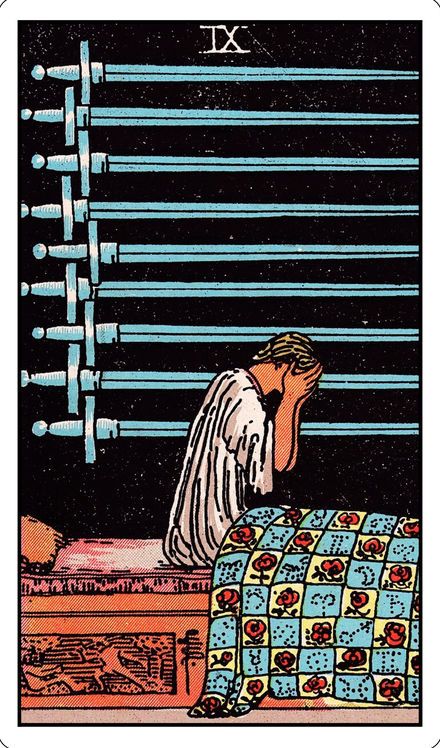
9 of Swords
Nine of Swords
- anxiety
- worry
- sleepless nights
The Nine of Swords means the fear that comes at night. A woman sits up in bed with her face in her hands, nine swords on the wall behind her. Waite called it a card of utter desolation. It covers anxiety, guilt, and sleeplessness, and the way dread grows in the dark. Reversed it usually means the worst of it passing, or a fear finally spoken out loud.
- Element
- Air
- Astrology
- Mars in Gemini
- Numerology
- 9, the number of fullness, just short of complete
- Yes or no
- no
The swords are on the wall. They hang there, still, pointed away from her, in a row, in the dark, in the room where she is trying to sleep.
Anyone who has been awake at three in the morning will recognize this. Nothing about the situation has changed since the afternoon. It is just that all of it is hanging on the wall at once.
Nine of Swords upright meaning
The fear that comes, and grows, at night.
The Nine of Swords is the deck's anxiety card, and it is unusually well observed. A woman sits up in bed with her face in her hands, and nine swords hang on the wall behind her. The swords are not falling, and they touch no one. They are simply arranged in the dark. That is exactly what three in the morning does to problems that felt manageable at four in the afternoon. Waite described her as someone who believes no sorrow is like hers, and called it a card of utter desolation. His meanings were grim: failure, delay, deception, disappointment, and despair. No card can predict those for you. In readings it covers anxiety, sleeplessness, guilt, and imagining the worst. It is one of the few cards that describes a state of mind more than a situation. Its accuracy lies in the gap between the two: the situation is usually not as bad as this card feels. That is not dismissive. The suffering is completely real, and the judgment you make while in it is not reliable. That is useful to know when you are inside it. It tends to suggest leaving decisions until morning.
Nine of Swords reversed meaning
The worst of it passing, or the fear said out loud.
Reversed, the Nine of Swords usually eases. The most common reading is the worst of an anxious period passing, often slowly, and often only noticed looking back. A second, more specific reading is a fear finally spoken: told to someone, written down, or said out loud. At that point it usually shrinks to a size you can handle. The reversal often marks the moment a private catastrophe becomes a shared, ordinary problem. Waite's reversed meanings were suspicion, doubt, shame, and what he called reasonable fear. A harder version is anxiety that has become constant, more than an episode. The night-time state has spread into the daytime. Take that reading seriously, especially alongside other difficult Swords cards. If anxiety has spread into your days like this, a doctor or mental health professional can help in ways a card cannot.
A reversal is rarely the upright card's opposite. Reversed tarot cards covers the four conditions a reversal usually describes, and how to tell which one a spread is asking for. Every card's reversed meaning sits beside its upright one on reversed tarot card meanings.
Nine of Swords in Waite's 1910 key
The meanings above are Reflecta's reading. These are the ones A. E. Waite gave in The Pictorial Key to the Tarot (1910), the guide he wrote for the deck Pamela Colman Smith drew. He wrote them for fortune-telling, a use tarot took on centuries after it began as a card game in fifteenth-century Italy. Some of his words are blunt, and none of them can tell you what will happen.
- Upright
- Death, failure, miscarriage, delay, deception, disappointment, despair.
- Reversed
- Imprisonment, suspicion, doubt, reasonable fear, shame.
Symbolism in the card
- The nine swords on the wall behind her
- Waite describes her sitting on her bed in grief, with the swords above her. They hang still, and none of them touches her. The threats are arranged in the room, doing nothing. That is exactly how fear at night works.
- Her face covered by both hands
- She is not looking at anything. Whatever is happening is happening inside her. The card places the whole event in the person, more than in the room.
- The carving of a fight on the side of the bed
- The bed has a carving of one figure defeating another. The conflict is built into the very place where she sleeps. It is a very precise piece of design.
Nine of Swords in love and relationships
Upright. Anxiety about a relationship, jealousy at night, or fear about someone that runs ahead of any evidence. It also covers guilt about how you have behaved.
Reversed. Relationship anxiety easing, or saying the worry out loud to the person it concerns. Often saying it is what shrinks it.
Nine of Swords in career and work
Upright. Work stress that follows you home, dread about a meeting, or guilt about a mistake. It is the card of lying awake over something that might take ten minutes to fix.
Reversed. Work anxiety fading, or a conversation you dreaded turning out to be manageable. It can also be the point where you finally ask someone for help.
Nine of Swords in money
Upright. Money worry at its worst: lying awake about debt or income. The fear can grow bigger than the numbers, and being told so rarely helps.
Reversed. Money worry easing, often after you finally look at the accounts. The reality is often more manageable than the three in the morning version.
Nine of Swords as feelings
Upright. Anxiety about the situation, possibly about you. The card describes worst cases imagined in private, which may have little to do with anything you have done. What someone feels is theirs to say.
Reversed. Anxiety about this easing, or a worry close to being said out loud. In this card, the unspoken version tends to do more damage than the conversation would.
Is Nine of Swords a yes or a no?
Upright, it leans no. Reversed, it leans maybe.
Upright it leans no. Notice that the no comes from a state that warps judgment, so it describes how the situation feels, more than what it is. Reversed it sits at maybe, since it usually points to the anxiety fading, and the answer tends to change once it has.
Every card's leaning in one table, upright and reversed, is on yes or no tarot, along with what a maybe is asking you to do.
Nine of Swords card combinations
- +Nine of Swords and Four of Swords
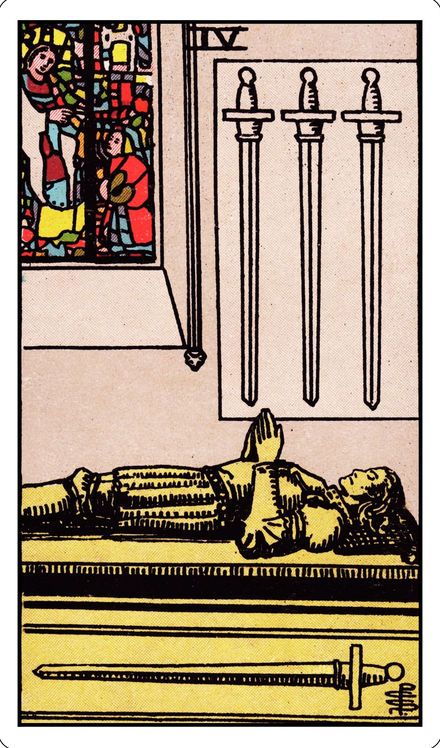
- Rest next to being unable to rest. A specific, common combination. Recovery is needed, and the mind is not cooperating right now.
- +Nine of Swords and The Moon
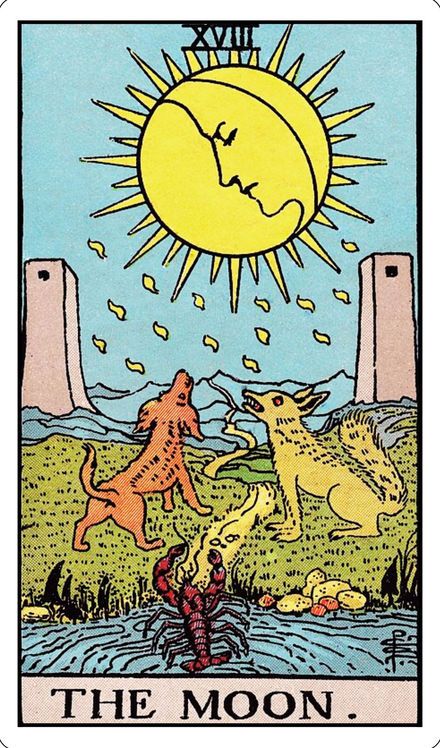
- Two cards about fear warping the picture. Together they lean strongly against deciding anything now. The situation may not be what it looks like at the moment.
- +Nine of Swords and Ten of Swords
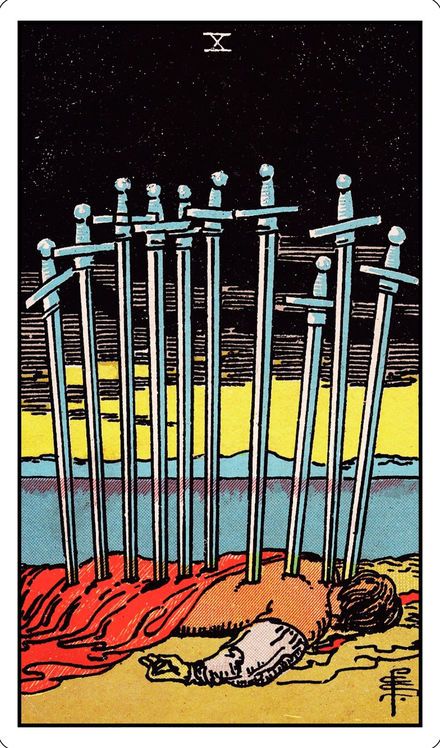
- Dread, and the thing itself. It can point to a feared ending that has already happened or feels close, and to waiting for it that may be harder than the event.
- +Nine of Swords and The Star
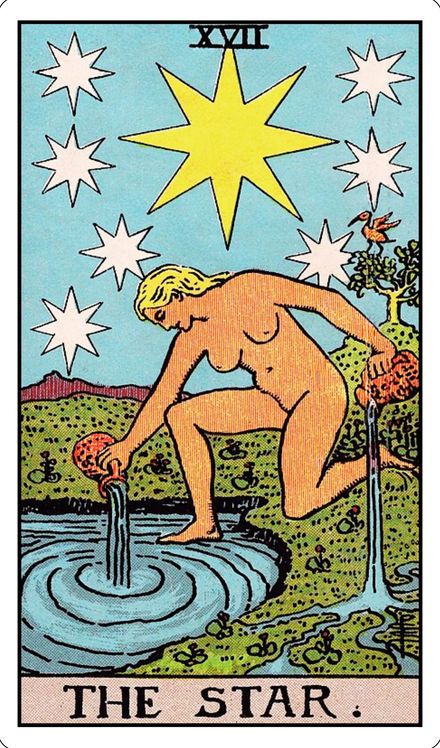
- Anxiety, then relief. A hopeful sequence. It suggests the hard night can end, and that healing may follow.
Every pairing on this site, Nine of Swords's included, is collected on tarot card combinations.
This is worse at night than it is.
Nine of Swords: common questions
- What does the Nine of Swords mean?
- It means the fear that comes at night. A woman sits up in bed with her face in her hands, and nine swords hang on the wall behind her. Waite called it a card of utter desolation. It covers anxiety, guilt, sleeplessness, and imagining the worst. It describes a state of mind, more than a situation.
- Is the Nine of Swords as bad as it looks?
- The suffering it describes is completely real. The card also says the situation is often not as bad as the feeling, because the swords hang on the wall and are not falling. Judgments made in this state are not reliable. That is worth knowing while you are inside it.
- What does the Nine of Swords mean for mental health?
- It is the deck's most direct picture of anxiety, especially the night-time kind, and it describes a feeling. It diagnoses nothing. Reversed it often means the worst passing, or a fear spoken out loud. The card can help you reflect, but it cannot replace care. If anxiety is affecting your sleep or your days, a doctor or mental health professional is a good next step. If you are in crisis, contact local emergency services or a crisis line.
- What does the Nine of Swords reversed mean?
- Usually the worst of an anxious period passing, often only noticed afterward. It can also mean a fear finally said out loud, which usually shrinks it to a manageable size. Less happily, it can mean anxiety that has spread from the nights into the days.
There is also a page on what Reflecta does with a reading once the cards are down.