6 of Wands
Six of Wands
- victory
- recognition
- public reward
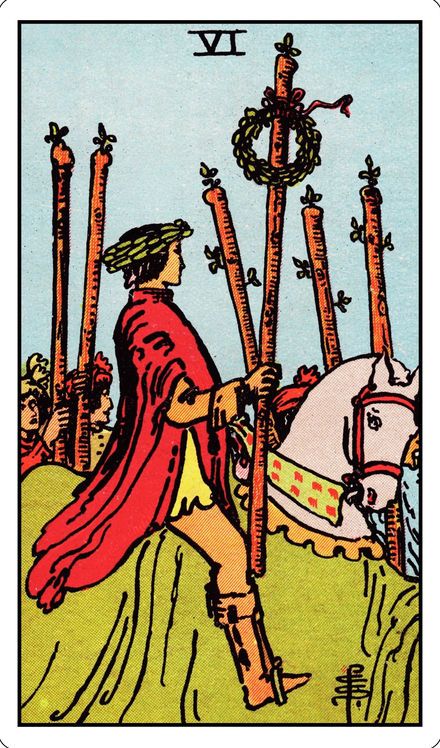
The Six of Wands means winning where people can see it. A rider comes home wearing a laurel wreath, with his staff raised and people walking beside him. It means recognition, being proved right, and success that has gone public. Waite called it a victor's triumph and great news. Upright it favors accepting the credit. Reversed it points to credit that never comes, or success that has gone to someone's head.
- Element
- Fire
- Astrology
- Jupiter in Leo
- Numerology
- 6, the number of reward and return
- Yes or no
- yes
The people walking beside him are at the horse’s level. Nobody is kneeling.
That detail decides what kind of card this is. He is coming back among them, wearing one laurel wreath with another tied to his staff. Someone went to the trouble of dressing the horse before he arrived.
The whole arrival has been arranged. The recognition was planned for him.
Six of Wands upright meaning
Winning somewhere other people can see it.
The Six of Wands is the victory parade. A rider comes back wearing a laurel wreath, with another tied to his staff, and people walk beside him. It follows the Five, and the order matters: the scuffle has ended, and someone came out of it with a result. Waite read it as a victor triumphing, and also as great news, like a message carried in state by a royal courier. He called it hope fulfilled. In readings it means recognition, a win, an announcement, or being publicly proved right. It usually leans toward accepting the credit. The card often appears for people who brush off praise out of habit, and it treats that as a small dishonesty more than modesty. The people walk beside the horse, at its level, so this is a return among people. That is the healthy version. It is one of the few cards about success that others witness, which is a different good from success itself.
Six of Wands reversed meaning
Credit that never comes, or a win carried badly.
Reversed, the Six of Wands is usually about credit going wrong. The most common reading is recognition that never arrives: good work that nobody notices, a result credited to someone else, or a win that happened quietly when it should have been announced. The card takes that frustration seriously. Its advice is practical: say what you did, instead of waiting to be noticed. Its second reading is a win carried badly: arrogance, success that has taken over someone's whole personality, or a person who cannot stop mentioning something they did long ago. A third version is private doubt behind public success. The recognition is real, and the person receiving it does not believe it. Waite's reversed meanings are darker: fear, as of an enemy who has won and is at the gate, along with betrayal, disloyalty, and endless delay.
A reversal is rarely the upright card's opposite. Reversed tarot cards covers the four conditions a reversal usually describes, and how to tell which one a spread is asking for. Every card's reversed meaning sits beside its upright one on reversed tarot card meanings.
Six of Wands in Waite's 1910 key
The meanings above are Reflecta's reading. These are the ones A. E. Waite gave in The Pictorial Key to the Tarot (1910), the guide he wrote for the deck Pamela Colman Smith drew. He wrote them for fortune-telling, a use tarot took on centuries after it began as a card game in fifteenth-century Italy. Some of his words are blunt, and none of them can tell you what will happen.
- Upright
- The card has been so designed that it can cover several significations; on the surface, it is a victor triumphing, but it is also great news, such as might be carried in state by the King's courier; it is expectation crowned with its own desire, the crown of hope, and so forth.
- Reversed
- Apprehension, fear, as of a victorious enemy at the gate; treachery, disloyalty, as of gates being opened to the enemy; also indefinite delay.
Symbolism in the card
- The laurel wreath, worn and on the staff
- Waite describes a horseman crowned with laurel, carrying a staff with another laurel crown tied to it. The win is both personal and on display. That is what sets it apart from a private success.
- The people walking beside the horse
- Men on foot walk alongside him, carrying staves of their own. Nobody is kneeling. He is coming back among people, and nobody is being conquered. That difference matters to how the card reads.
- The horse draped in cloth
- The horse is dressed for the occasion. Someone prepared for this arrival. The recognition was organized, and nobody stumbled into it.
Six of Wands in love and relationships
Upright. A relationship going public, being chosen openly, or a partner whose pride in you is obvious to others. The card favors being seen together.
Reversed. A relationship kept quieter than you would like, or one person taking credit for what you both built. It can also mean feeling unappreciated for what you bring.
Six of Wands in career and work
Upright. A promotion, recognition, a successful launch, or public credit for good work. One of the best career cards in the deck, and it favors being visible.
Reversed. Being overlooked, a colleague taking your credit, or a success announced in a way that grates. It can also mean an achievement that has gone to someone's head.
Six of Wands in money
Upright. Financial success others can see, a raise, or being paid what your work is worth. The card favors asking openly instead of hoping someone notices.
Reversed. A raise that never comes, or money spent showing off a success instead of building on it. That tends to leave you with neither the money nor the reputation.
Six of Wands as feelings
Upright. Pride, shown openly. The card describes affection that is comfortable being seen by others. That tends to be a stronger sign than private warmth, though only the person can say what they feel.
Reversed. Feelings kept more private than you would like, or a relationship valued partly for how it looks. The card can raise the question, and it cannot answer it for anyone.
Is Six of Wands a yes or a no?
Upright, it leans yes. Reversed, it leans no.
Upright it leans confidently yes, one of the clearest leanings in the deck. That is especially true for anything about recognition, competition, or a result being announced. Reversed it leans no, often because the credit may not come, or may go to someone else.
Every card's leaning in one table, upright and reversed, is on yes or no tarot, along with what a maybe is asking you to do.
Six of Wands card combinations
- +Six of Wands and Five of Wands
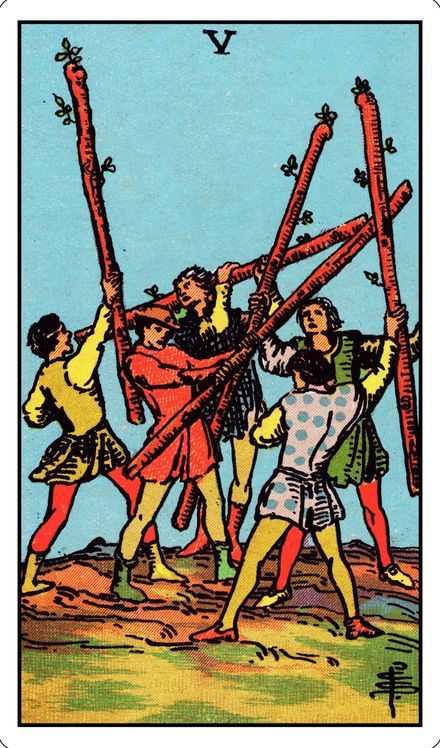
- The contest, then the result, in the deck's own order. Together they suggest the scuffle may end, with something to show for it.
- +Six of Wands and The Sun

- Success, and being seen. About as positive a combination as this suit offers. It strongly favors letting your achievement be seen.
- +Six of Wands and Three of Pentacles
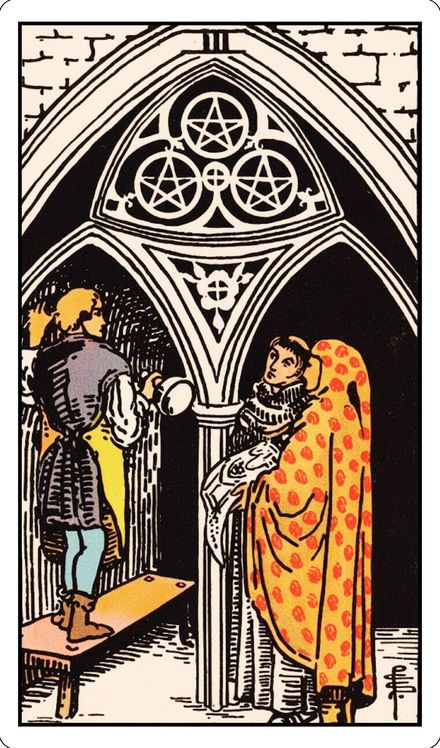
- Skill, and recognition for it. It often points to good work finally being noticed by people whose opinion counts.
- +Six of Wands and Seven of Wands
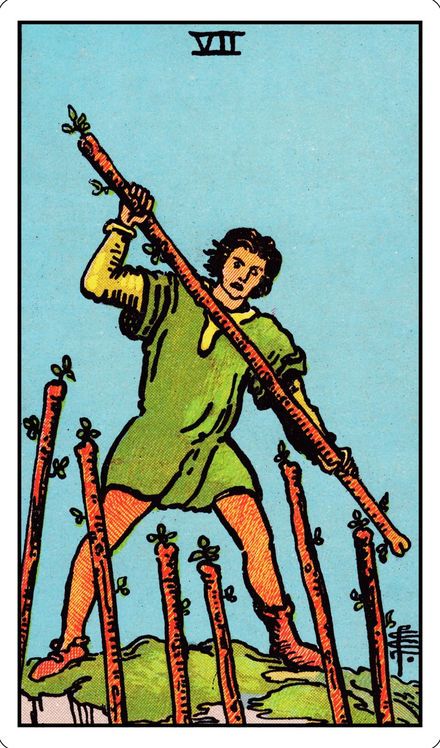
- Winning the position, then defending it. A realistic sequence: the card after the parade is about holding on to what the parade was for.
Every pairing on this site, Six of Wands's included, is collected on tarot card combinations.
I can take the credit for this out loud.
Six of Wands: common questions
- What does the Six of Wands mean?
- It means winning where people can see it: recognition, being proved right, and a public result. A rider comes home crowned with laurel, with people walking beside him. Waite called it a victor triumphing, and great news. It usually leans toward accepting the credit instead of brushing it off.
- Is the Six of Wands about ego?
- Upright, no. The people walk at the horse's level, and nobody kneels, so this is a return among people. Reversed is where it tips into arrogance, or into a success that has taken over someone's whole personality.
- What does the Six of Wands mean in love?
- A relationship going public, being chosen openly, or a partner whose pride in you is obvious to others. Reversed it can mean a relationship kept quieter than you would like, or feeling unappreciated for what you bring.
- What does the Six of Wands reversed mean?
- Usually recognition that never arrives: work unnoticed, or credited to someone else. The practical fix is to say what you did instead of waiting. It can also mean a win carried badly. Waite's reversed meanings were darker: fear, betrayal, disloyalty, and endless delay.
There is also a page on what Reflecta does with a reading once the cards are down.