Water · 14 cards
Suit of Cups
Cups are the feeling suit. They cover love, friendship, grief, intuition, and everything that moves under the surface of a situation rather than on top of it. Water is the element, and it is worth taking the metaphor literally: these cards describe what a situation is doing to someone, which is not always the same as what the situation is.
A spread heavy in Cups is usually telling you the problem is emotional even if you framed it as practical.
The suit runs Ace through Ten, then four court cards: Page, Knight, Queen, and King. The numbers describe a situation. The court cards usually describe a person, or a way of behaving that you or someone else has adopted.
In a deck of playing cards this suit is Hearts, the same ranks with the pictures taken off and the Knight merged away. The mapping is worked out card by card in reading playing cards as tarot.
Every card below has its own page with upright and reversed meanings, what it says in love, work, and money, and the symbolism it is read from. The table further down gives the fourteen at a glance with the yes or no leaning each one carries.
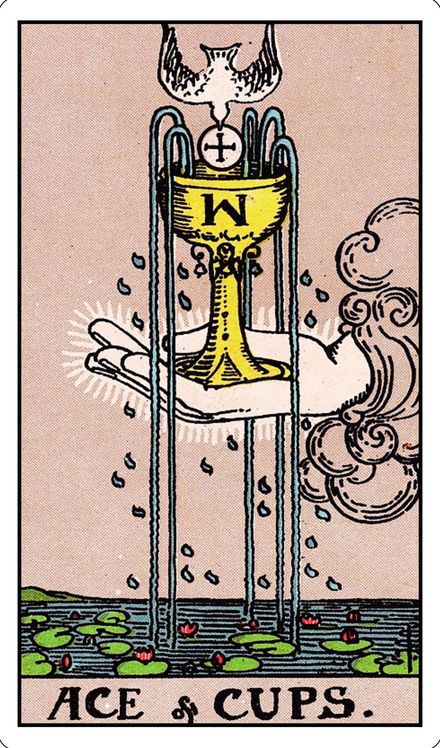
- Ace of Cupslove · new feelings
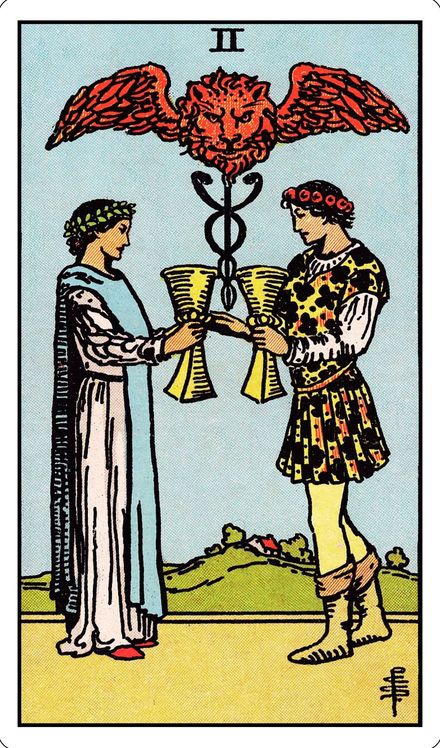
- Two of Cupspartnership · unity
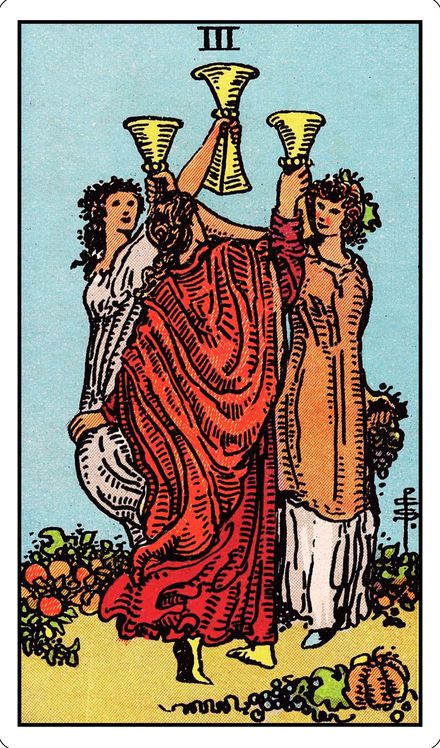
- Three of Cupscelebration · friendship
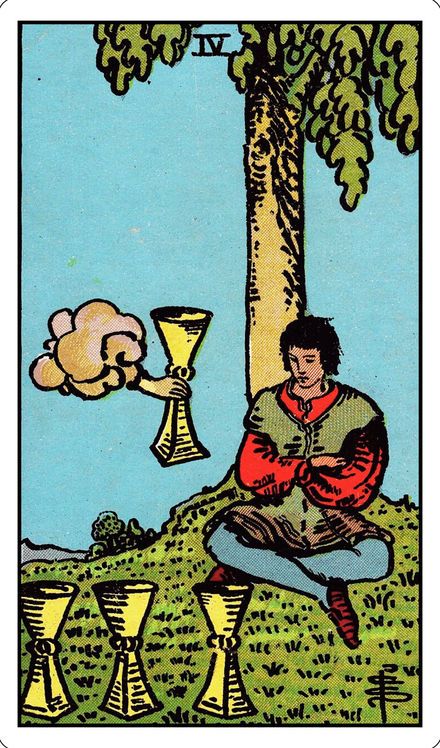
- Four of Cupsapathy · contemplation
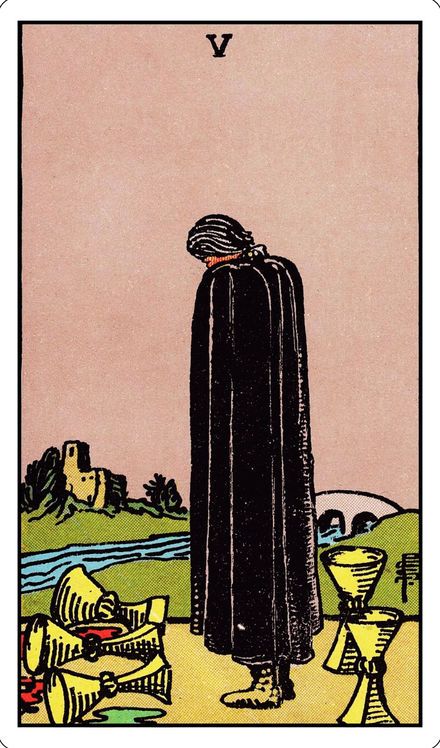
- Five of Cupsloss · grief
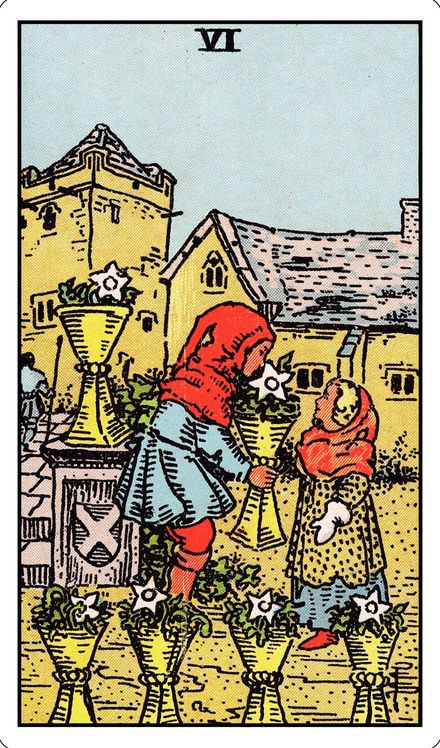
- Six of Cupsnostalgia · childhood
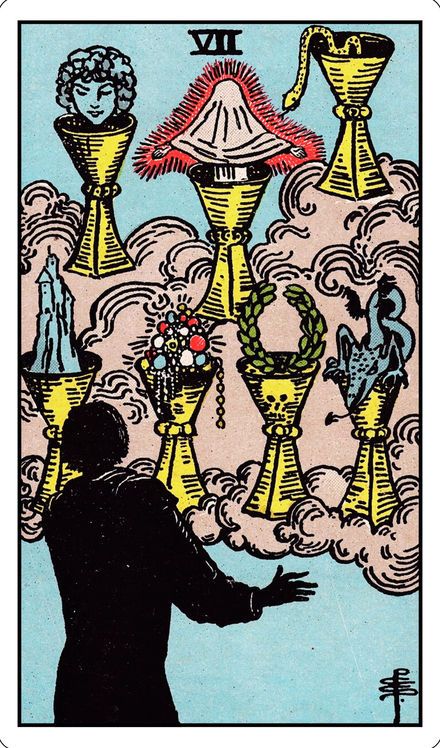
- Seven of Cupsillusion · choices
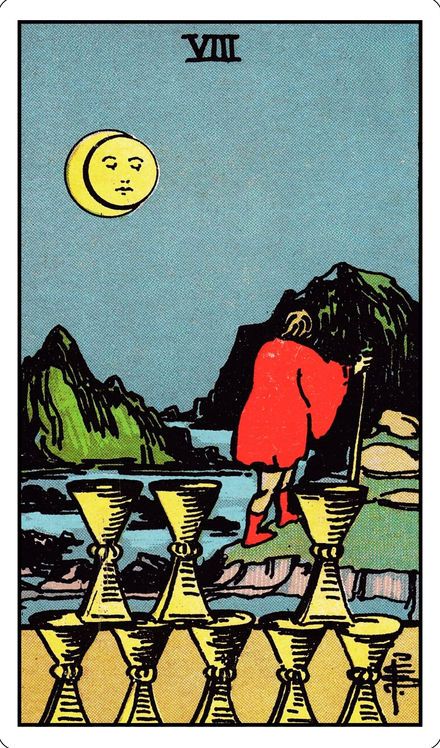
- Eight of Cupswalking away · disillusionment
- Nine of Cupswishes fulfilled · satisfaction
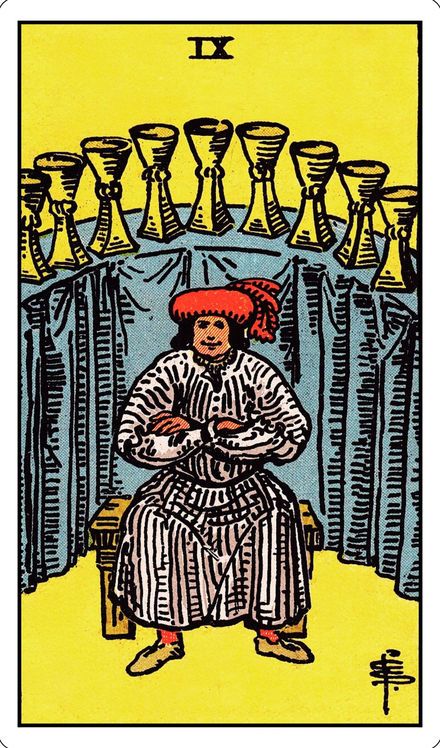
- Ten of Cupsharmony · family
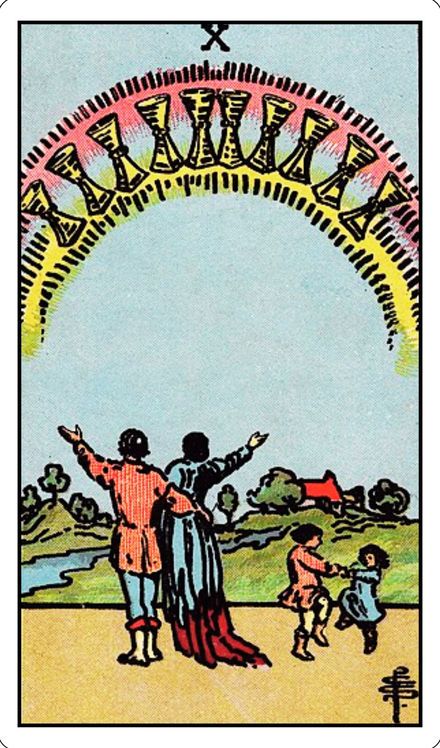
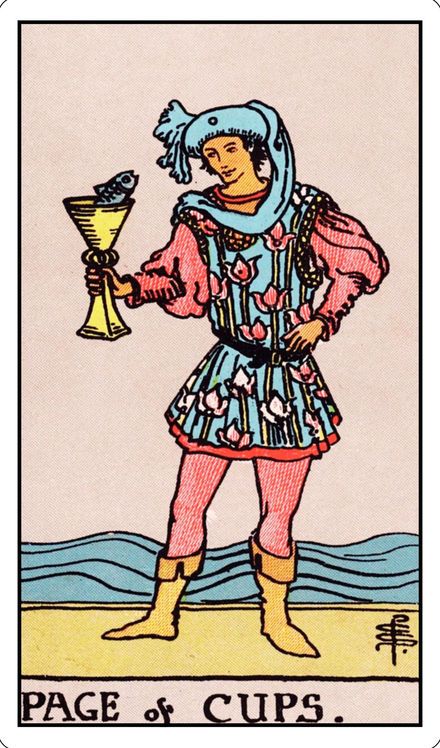
- Page of Cupscreative opportunity · curiosity
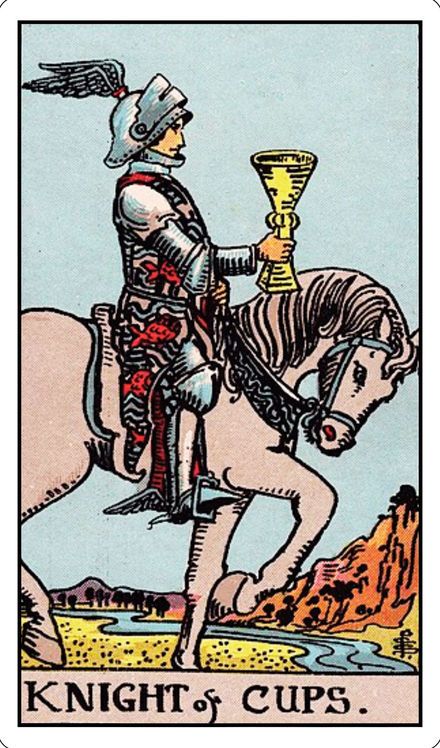
- Knight of Cupsromance · charm
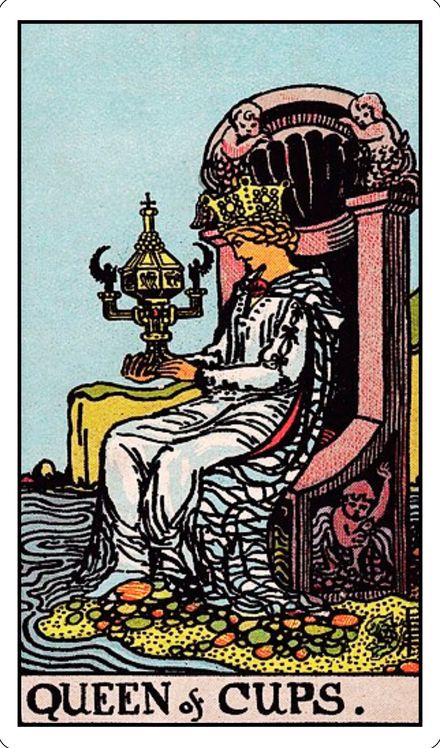
- Queen of Cupscompassion · calm
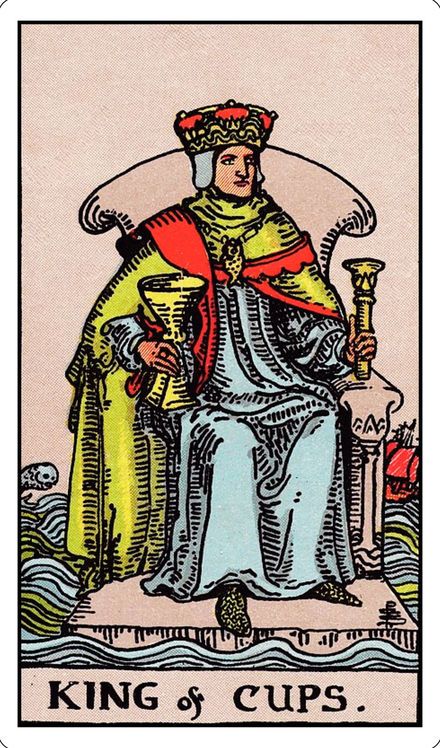
- King of Cupsemotional balance · diplomacy
The fourteen at a glance
Keywords and the yes or no leaning from each card's own page, in order. Read the two columns together: in this suit the gap between them is usually the interesting part.
| Card | Keywords | Upright | Reversed |
|---|---|---|---|
| Ace of Cups | love, new feelings, emotional opening | yes | no |
| Two of Cups | partnership, unity, mutual attraction | yes | no |
| Three of Cups | celebration, friendship, community | yes | no |
| Four of Cups | apathy, contemplation, disconnection | no | yes |
| Five of Cups | loss, grief, regret | no | maybe |
| Six of Cups | nostalgia, childhood, innocence | yes | no |
| Seven of Cups | illusion, choices, wishful thinking | maybe | yes |
| Eight of Cups | walking away, disillusionment, leaving behind | no | maybe |
| Nine of Cups | wishes fulfilled, satisfaction, contentment | yes | no |
| Ten of Cups | harmony, family, emotional fulfillment | yes | no |
| Page of Cups | creative opportunity, curiosity, new message | yes | no |
| Knight of Cups | romance, charm, following the heart | yes | no |
| Queen of Cups | compassion, calm, emotional security | yes | no |
| King of Cups | emotional balance, diplomacy, generosity | yes | no |
The four that do not say yes
Ten of the fourteen Cups read as yes upright. That puts the suit on the warm side of the deck, and a long way from Swords, where five say yes and eight say no.
The four exceptions are worth looking at together, because they have something in common that the keyword lists do not show.
Not one of them describes a bad thing happening. Every one of them describes where a person is looking. In the Four, three cups stand ignored and a fourth is held out from a cloud, and the figure is looking at none of them. In the Five, three are spilled in front and two are still standing behind, and he is looking at the wrong ones. In the Seven, seven imagined options hang in the air and all of them are being looked at, which is how none of them gets chosen. In the Eight, a figure turns away from eight stacked cups and walks uphill, which is a decision about what to stop looking at.
That changes how the suit reads. The difficult Cups are rarely about loss arriving from outside. They are about attention: what is in view, what is out of it, and what someone has settled on looking at. It is also why all four of them answer more warmly upside down than upright. When the subject is where a person is looking, turning the card over turns the head.
The court, and how much distance to keep from a feeling
The four Cups court cards are usually taught as a ladder from immature to mature. That is half right and it hides the more useful reading. What they disagree about is how much distance they keep from what they feel.
The Page keeps none. A fish rises out of his cup and he is visibly surprised by it, which is the whole character: a feeling arrives and is announced in the same movement. He is the one still capable of being startled by his own inner life.
The Knight acts on it. His horse walks rather than charges, and he carries the cup out in front of him like an offer. This is the suit's romantic, and the unreliability he is known for is structural rather than a character flaw: a feeling acted on the moment it arrives is a feeling that has not been checked against anything.
The Queen holds it. Hers is the only cup in the court with a lid on it, ornate and closed, and she is looking straight at it. She feels the entire thing and is not moved off course by it, which is a different skill from not feeling it.
The King manages it. His throne floats on rough water and his feet stay clear of it. The competence is real and so is the cost: the distance that keeps him steady is the same distance that makes him hard to reach.
So when one of these lands on a person, the question the card is asking is how far they are standing from what they feel, and whether that is the right distance for what is in front of them.
When the reading is mostly Cups
Cups are fourteen of the seventy-eight cards, so a ten card spread holds about 1.8 of them on average. Three or four is the point where the suit stops being texture and becomes the subject.
That rarely means something romantic is coming. More often the question was filed under the wrong heading. Someone asks whether to take the job, draws mostly Cups, and the decision turns out not to be about the salary. The suit is reporting the grounds the choice is being made on, and they are not the grounds it was described with.
The opposite case is worth the same attention and gets noticed far less. A spread about a relationship with no Cups in it at all is usually saying the thing is being handled as logistics. That is sometimes correct and sometimes the entire problem. In a Celtic Cross, counting the suits before reading any single card is the fastest way to find out which conversation you are in.
Why no Cup means the same thing upside down
Five cards in the deck give the same answer whichever way up they land, and not one of them is a Cup. Four are Major Arcana and one is a Pentacle.
That is not an accident of how these pages were written. A card holds steady when it describes a condition, and a condition does not care which way round it is dealt. Cups are made of the thing that does care. A feeling reversed is usually a different feeling: withheld instead of offered, turned inward instead of out, or coming back after being gone. Reversed tarot cards is the longer treatment, and this suit is the one where it matters most.
Common questions
- What does the Suit of Cups mean in tarot?
- Cups are the feeling suit. They cover love, friendship, grief, intuition, and everything moving under the surface of a situation rather than on top of it. Their element is Water and their subject is what a situation is doing to someone, which is not always the same as what the situation is.
- Is the Suit of Cups good or bad?
- Mostly warm, and not uniformly. Ten of the fourteen Cups read as yes upright, against five of the fourteen in Swords. The four that do not are Four, Five, Seven, and Eight of Cups, and none of them describes a bad thing happening. They describe where a person is looking.
- What does it mean to draw a lot of Cups in one reading?
- Cups are fourteen of the seventy-eight cards, so a ten card spread holds about 1.8 of them on average. Three or four is where the suit becomes the subject, and it usually means the question was filed under the wrong heading: the decision being asked about is not being made on the grounds it was described with.
- What do Cups mean in a love reading?
- They are the suit love questions are most often answered in, which makes the specific card matter more than the suit. Cups describe the emotional state of the people involved rather than the logistics between them, so they tend to say what someone feels rather than what they will do about it.
- What do Cups correspond to in a regular deck of cards?
- Hearts. The four tarot suits map onto the modern playing card suits: Cups to Hearts, Pentacles to Diamonds, Swords to Spades, and Wands to Clubs. The tarot suit keeps a fourth court card, the Page, which the playing card deck dropped.
The other three suits are Pentacles, Swords, and Wands, and all fifty-six sit together in the Minor Arcana. The whole deck is in the card meanings index. If you are learning to read cards next to each other rather than one at a time, how to read tarot is the longer treatment and tarot card combinations collects the pairs these fourteen turn up in most.
There is also a page on what Reflecta is, if the waitlist is a step too early.