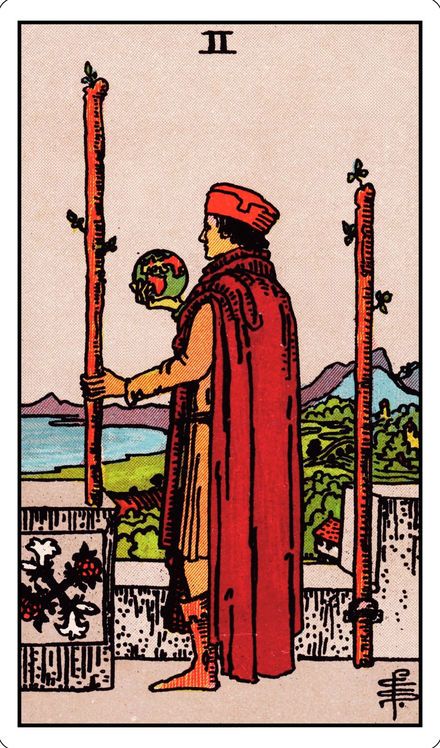
2 of Wands
Two of Wands
- planning
- future vision
- decisions
The Two of Wands means standing somewhere safe and thinking about leaving it. A man holds a globe on his castle wall and looks out at the sea. The card covers planning, ambition, and the moment before you commit to a bigger version of your life. Upright it favors making the decision. Reversed it points to planning that has taken the place of going.
- Element
- Fire
- Astrology
- Mars in Aries
- Numerology
- 2, the number of a choice between two
- Yes or no
- yes
One wand is fixed to the wall beside him. The other is in his hand.
That is the card, drawn as plainly as it can be. Half of what he has is fixed in place and half can come with him. He stands between them holding a globe, looking at a coastline he has not visited.
The globe is small enough to turn in one hand. Ambition stays that size until somebody moves.
Two of Wands upright meaning
Standing somewhere safe and thinking about leaving.
The Two of Wands shows a man on a castle wall holding a globe, looking out over the sea and shore. He has built something. The wall is his, and he looks out from a safe place, thinking about going somewhere else. That is the whole tension of the card: the discomfort of wanting more when what you have is already good. Waite saw the same thing. He describes a lord looking over everything he owns, and compares his mood to the sadness of Alexander the Great amid all the wealth of the world. In readings it points to planning, thinking about growth, and weighing a bigger version of a life or a business. One wand is fixed to the wall and one is in his hand, which is the situation drawn precisely. It usually leans toward deciding. The view from the wall is useful, but it does not stay useful forever. The card tends to appear for people who have been studying the horizon for far longer than they need to.
Two of Wands reversed meaning
Planning that has quietly taken the place of going.
Reversed, the Two of Wands is the plan that replaces the trip. Someone has a detailed, often revised idea of what they are going to do, and they have been standing on the wall for years. Planning is enjoyable. It feels productive, and it carries none of the risk of the real thing. The card is direct about this without being unkind, because the position is comfortable for a reason. Its second reading is fear of leaving a good situation. That is the gentler version of the same hesitation. The security is real, and giving it up for something uncertain is a true loss. Waite's reversed meanings run along these lines too: surprise, emotion, trouble, and fear. A third reading is about plans that fall through. The expansion was tried and did not work, and the card describes the aftermath more than the hesitation.
A reversal is rarely the upright card's opposite. Reversed tarot cards covers the four conditions a reversal usually describes, and how to tell which one a spread is asking for. Every card's reversed meaning sits beside its upright one on reversed tarot card meanings.
Two of Wands in Waite's 1910 key
The meanings above are Reflecta's reading. These are the ones A. E. Waite gave in The Pictorial Key to the Tarot (1910), the guide he wrote for the deck Pamela Colman Smith drew. He wrote them for fortune-telling, a use tarot took on centuries after it began as a card game in fifteenth-century Italy. Some of his words are blunt, and none of them can tell you what will happen.
- Upright
- Between the alternative readings there is no marriage possible; on the one hand, riches, fortune, magnificence; on the other, physical suffering, disease, chagrin, sadness, mortification. The design gives one suggestion; here is a lord overlooking his dominion and alternately contemplating a globe; it looks like the malady, the mortification, the sadness of Alexander amidst the grandeur of this world's wealth.
- Reversed
- Surprise, wonder, enchantment, emotion, trouble, fear.
Symbolism in the card
- The globe held in his right hand
- The whole world, small enough to turn in one hand. This is ambition while it is still an idea he is examining. He has not traveled anywhere yet.
- One wand fixed in a ring, one held
- Waite notes one staff fixed in a ring on the wall and one in his hand. Half of what he has is bolted down, and half is portable. The card sits exactly between staying and going.
- The rose, cross, and lily on the left
- Waite points out a rose, a cross, and a lily set into the wall on the left. Order and desire are arranged together, in the place where he stands, away from where he is looking.
Two of Wands in love and relationships
Upright. Thinking about a bigger commitment, or deciding whether a relationship has a future worth building. The card favors having the conversation about where this is going.
Reversed. Thinking about a relationship endlessly without moving it forward, or staying in something safe to avoid risking something better. Both are familiar, and neither is comfortable.
Two of Wands in career and work
Upright. Planning an expansion, thinking about a move, or deciding to build something bigger. Strong for business planning, and for weighing a major career change.
Reversed. A career plan that has been in the works for years, or a move considered so many times that considering it has become the whole activity.
Two of Wands in money
Upright. Planning a bigger financial move: an investment, a venture, or a change in scale. The card favors deciding over more planning. Waite's upright meanings include riches, fortune, and magnificence.
Reversed. Financial plans that never happen, or a spreadsheet revised again and again in place of a decision nobody wants to make.
Two of Wands as feelings
Upright. Serious thought about where this fits in a bigger picture. The card describes someone thinking about where this could go, beyond how it feels right now. It cannot say what anyone has decided.
Reversed. Weighing the options forever, or being reluctant to leave a comfortable situation for this. The kind of thinking this card describes can quietly turn into a habit.
Two of Wands in a reading position
The same card answers differently depending on what the position asked it. These are the readings for the positions people ask about most.
Two of Wands in the past position
Upright. A decision to look further ahead, already made. That choice to consider a bigger life still shapes the situation, and it is why you are standing where you are now.
Reversed. A plan made on the wall and never acted on. The expansion was mapped out, revised, and enjoyed, but never attempted. What you are asking about now is built on what did not happen.
Two of Wands in the present position
Upright. You are on the wall with the globe in your hand. One wand is fixed and one is portable. That is your current position, drawn exactly: wanting more while what you have is already good.
Reversed. Planning has quietly become the whole activity. It is enjoyable, it feels productive, and it carries none of the risk of the real trip. That is why this position is so easy to stay in for years.
Two of Wands in the future position
Upright. On this path, the decision gets made, and what lies ahead is the going, more than the arriving. When you reach this point the horizon may still be far away. The card marks a commitment, more than a result.
Reversed. If nothing changes, you are still on the wall. The card is not unkind about it. The security is real, and giving it up for something uncertain is a real loss.
Past, present and future are the three positions of the three card tarot spread, which explains why the past card is read as a cause and the future card as a direction of travel that can still change.
Is Two of Wands a yes or a no?
Upright, it leans yes. Reversed, it leans no.
Upright it leans yes, with a decision attached. The bigger option may be available, and taking it means giving up a comfortable position. The card tends to treat that as worth doing. Reversed it leans no, often because the plan has become a substitute for acting on it.
Every card's leaning in one table, upright and reversed, is on yes or no tarot, along with what a maybe is asking you to do.
Two of Wands card combinations
- +Two of Wands and Three of Wands
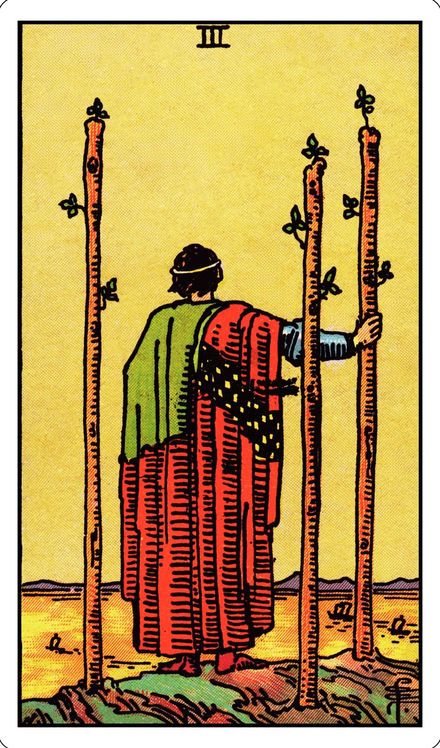
- The plan, and then carrying it out, in the deck's own order. Together they suggest the decision may already be made and the thing already underway.
- +Two of Wands and The World
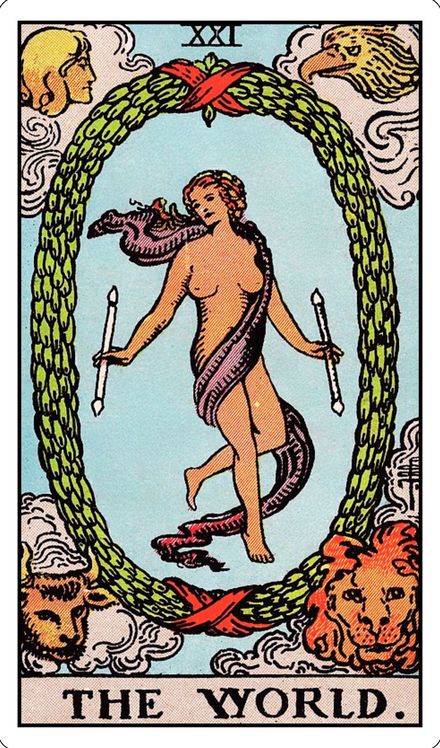
- Ambition next to completion. It suggests the bigger life you are considering may be achievable, more than a fantasy. That is useful to know.
- +Two of Wands and Eight of Cups
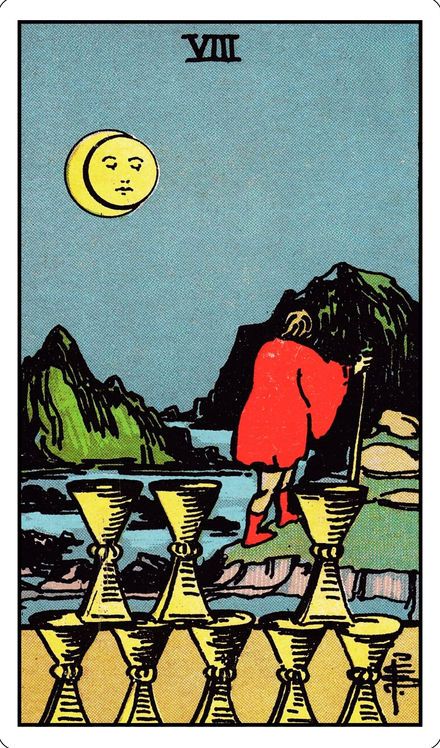
- Two cards about leaving something that is fine. Together they lean firmly toward going. Both agree that nothing is wrong with what you would leave behind.
- +Two of Wands and Four of Pentacles
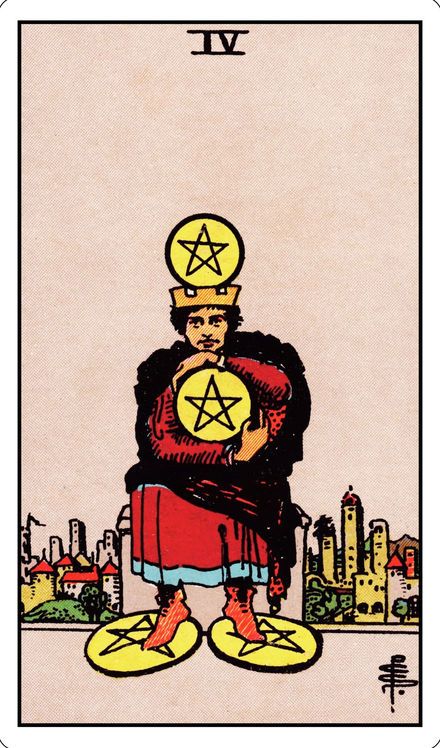
- Growth against holding on. The tension is the reading: your security is real, and it is what stands between you and the bigger version.
Every pairing on this site, Two of Wands's included, is collected on tarot card combinations.
I can leave a good position for a bigger one.
Two of Wands: common questions
- What does the Two of Wands mean?
- It means standing somewhere safe and thinking about leaving it. A man holds a globe on his own castle wall, looking out. The card covers planning and ambition, especially the discomfort of wanting more when what you have is already good.
- Does the Two of Wands mean travel?
- Sometimes it means real travel. More often it means growth in a broader sense: a bigger business, a bigger life, or a move. The globe in his hand is ambition he is still examining. Nobody has traveled anywhere yet.
- What does the Two of Wands reversed mean?
- Usually planning that has taken the place of going: a detailed, often revised idea held by someone who has stood on the wall for years. It can also mean fear of leaving a good situation, the gentler version of the same hesitation. Waite's reversed meanings include surprise, emotion, trouble, and fear.
- What is the difference between the Two and Three of Wands?
- The Two is deciding, and the Three is waiting. In the Two, he stands on his own wall with a globe, still choosing. In the Three, he stands on a cliff watching ships he has already sent out. One comes before the commitment, and the other comes after.
There is also a page on what Reflecta does with a reading once the cards are down.