Air · 14 cards
Suit of Swords
Swords are the suit of the mind. Thought, truth, decisions, conflict, and the stories you tell yourself about what is happening. Air is the element, and these cards describe what you know, what you fear, and what you have not yet said out loud.
They have a reputation as the bad suit, and the numbers give it some support: more of them lean no than in any other suit. Look at the pictures, though, and something else stands out. The swords in these cards hang on walls, stand in the ground, ride in boats, and get carried off in armfuls. Only one card in the suit shows a blade in a person. Most of what hurts in Swords is a threat being held in mind, and that is a different thing to read.
The numbered cards go from a single clear idea at the Ace to ten blades at the Ten, by way of a stalemate, a heartbreak, a rest, a hollow win, a crossing, a theft, a trap, and a sleepless night. The four court cards are four ways of living with a sharp mind.
Every card below has its own page with upright and reversed meanings, what it says in love, work, and money, and the symbolism it is read from.
In a deck of playing cards this suit is Spades, the same ranks with the pictures taken off and the Knight merged away. The mapping is worked out card by card in reading playing cards as tarot.
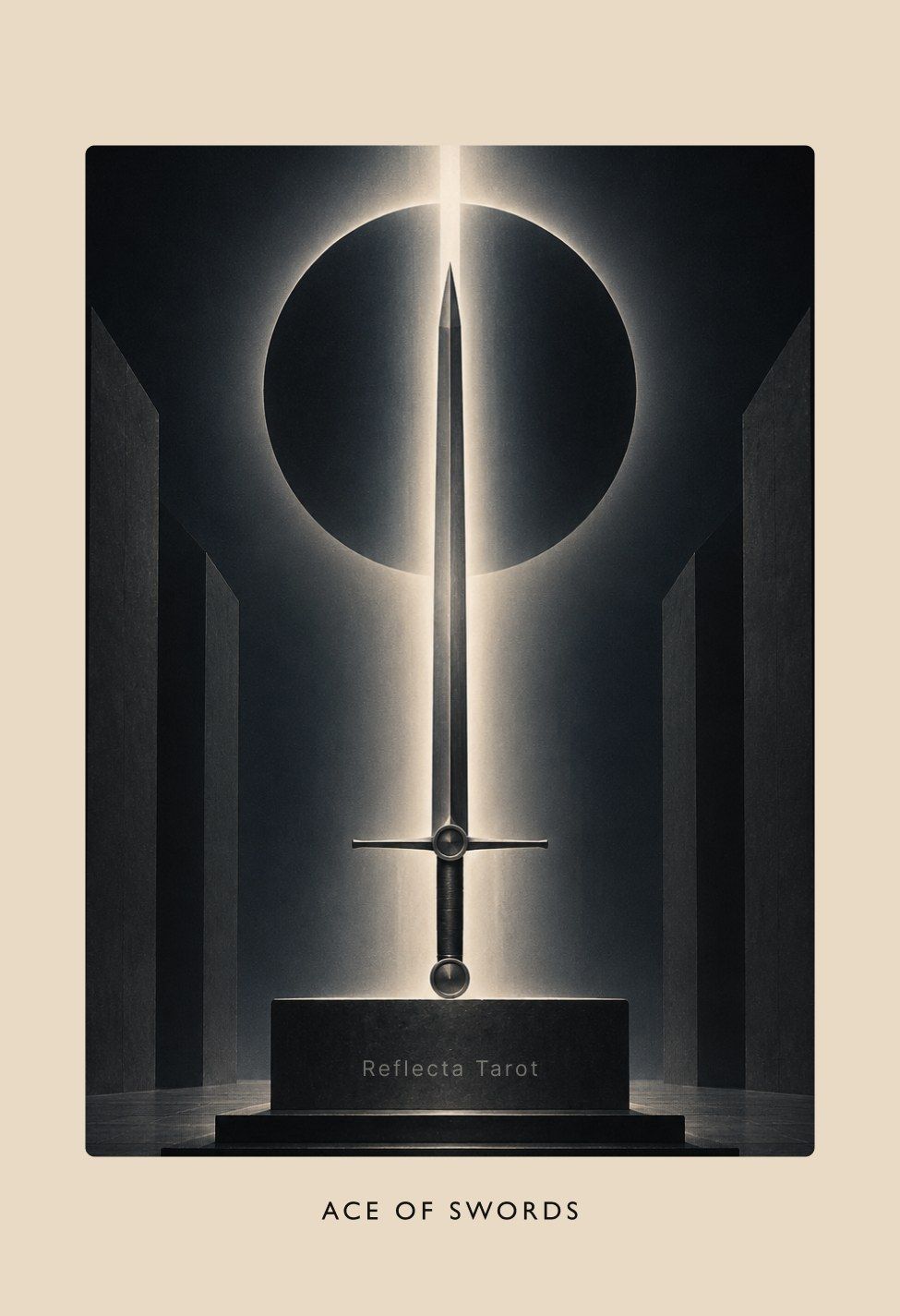
- Ace of Swordsbreakthrough · clarity
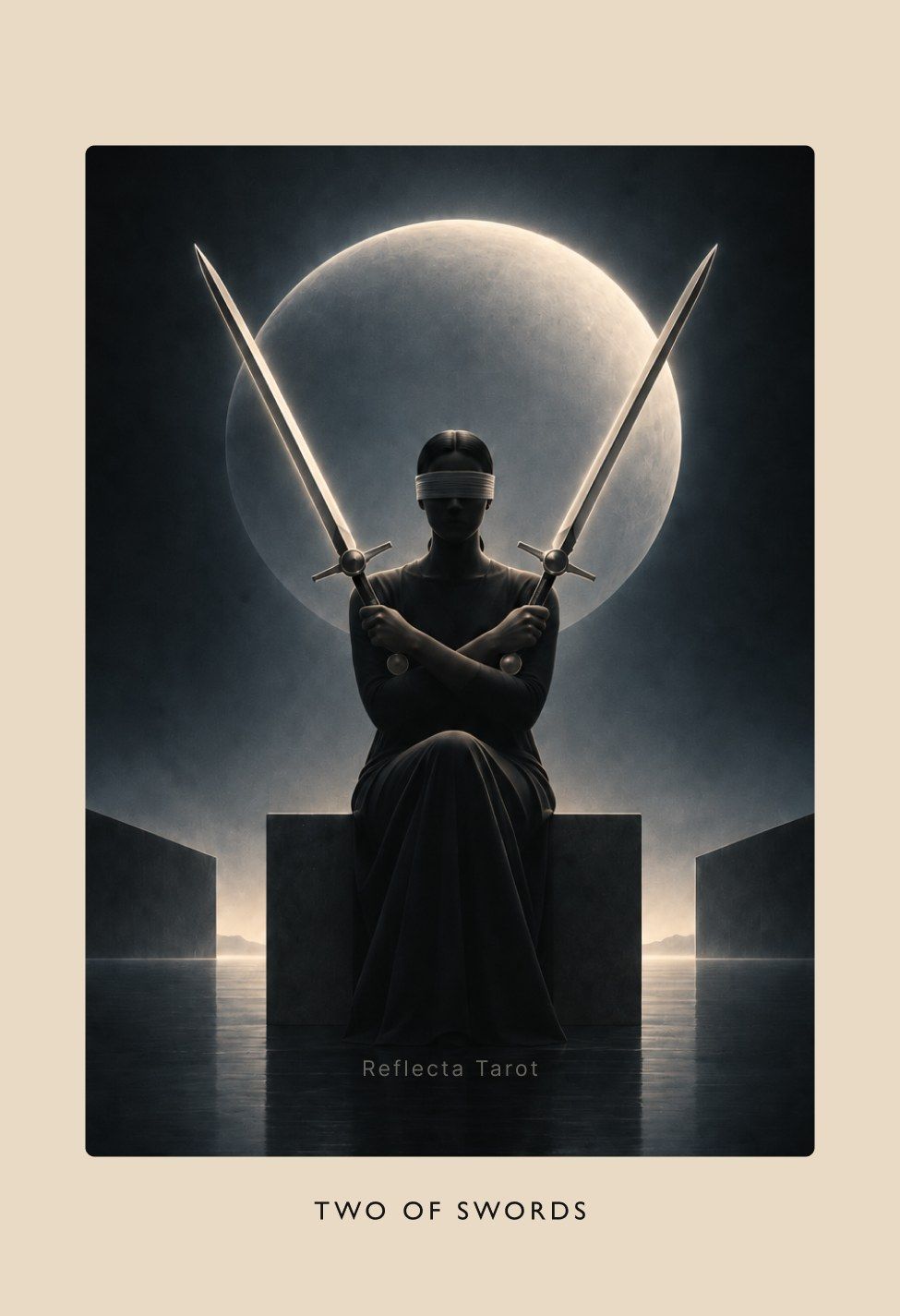
- Two of Swordsdifficult decisions · stalemate
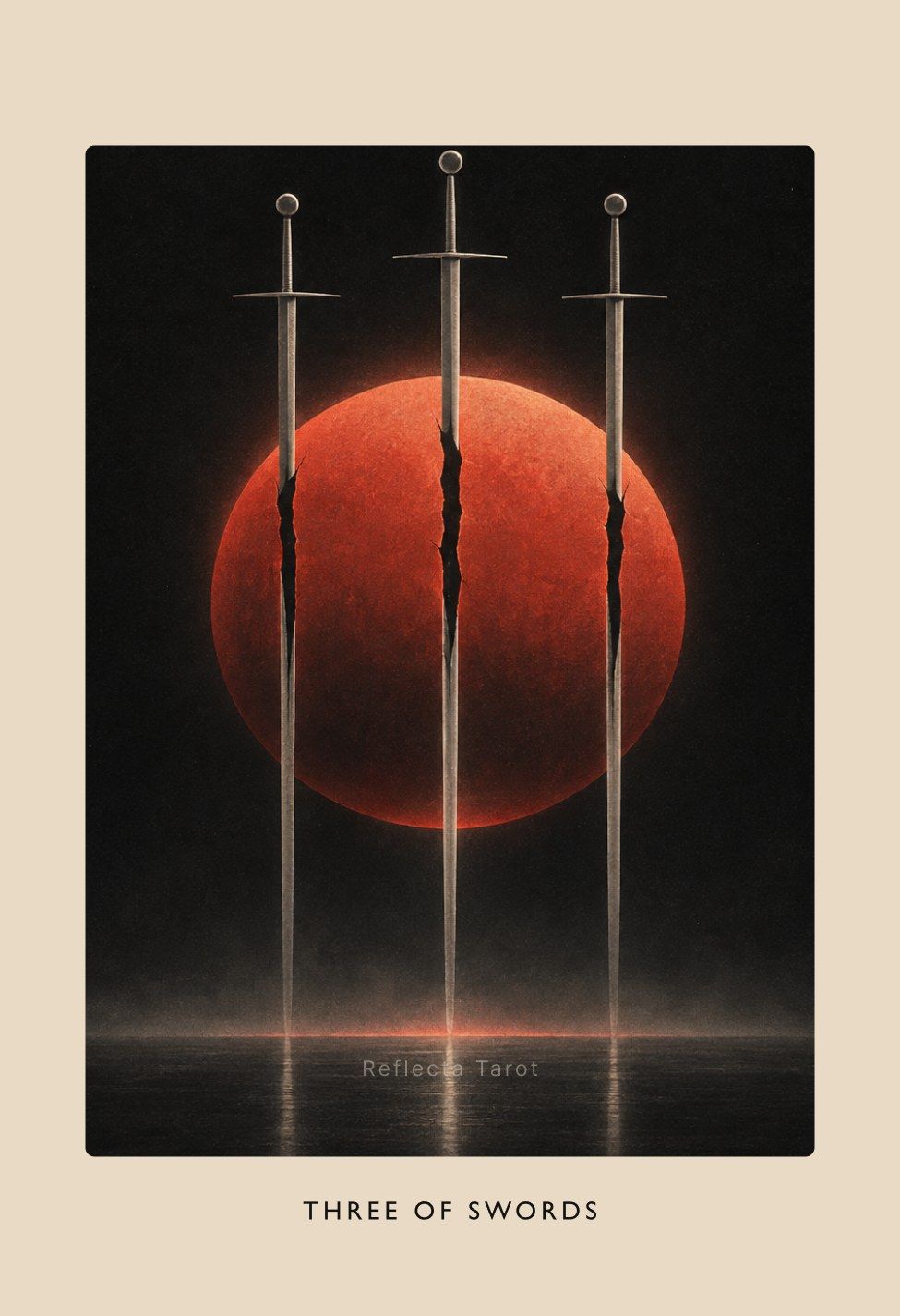
- Three of Swordsheartbreak · sorrow
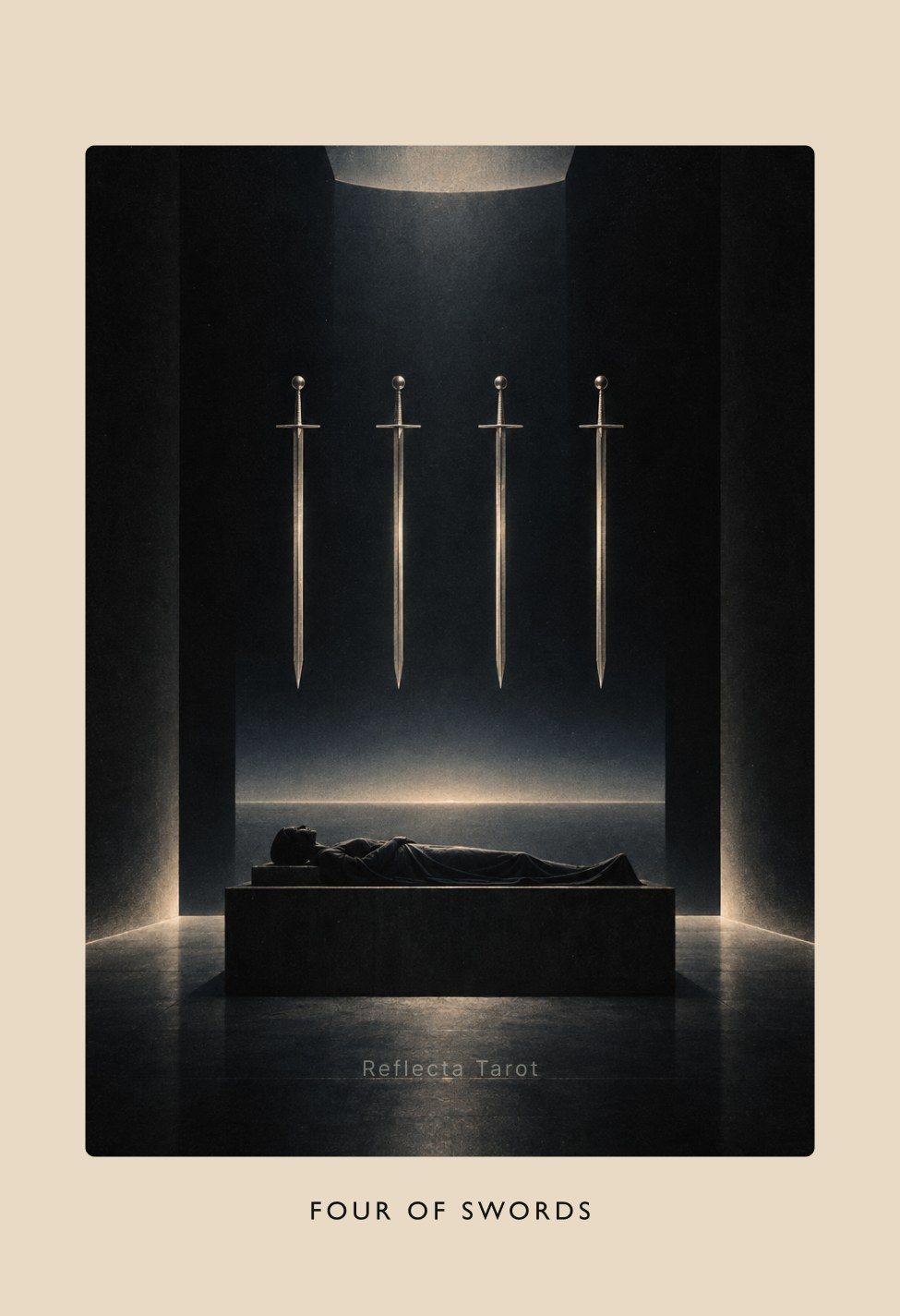
- Four of Swordsrest · recovery
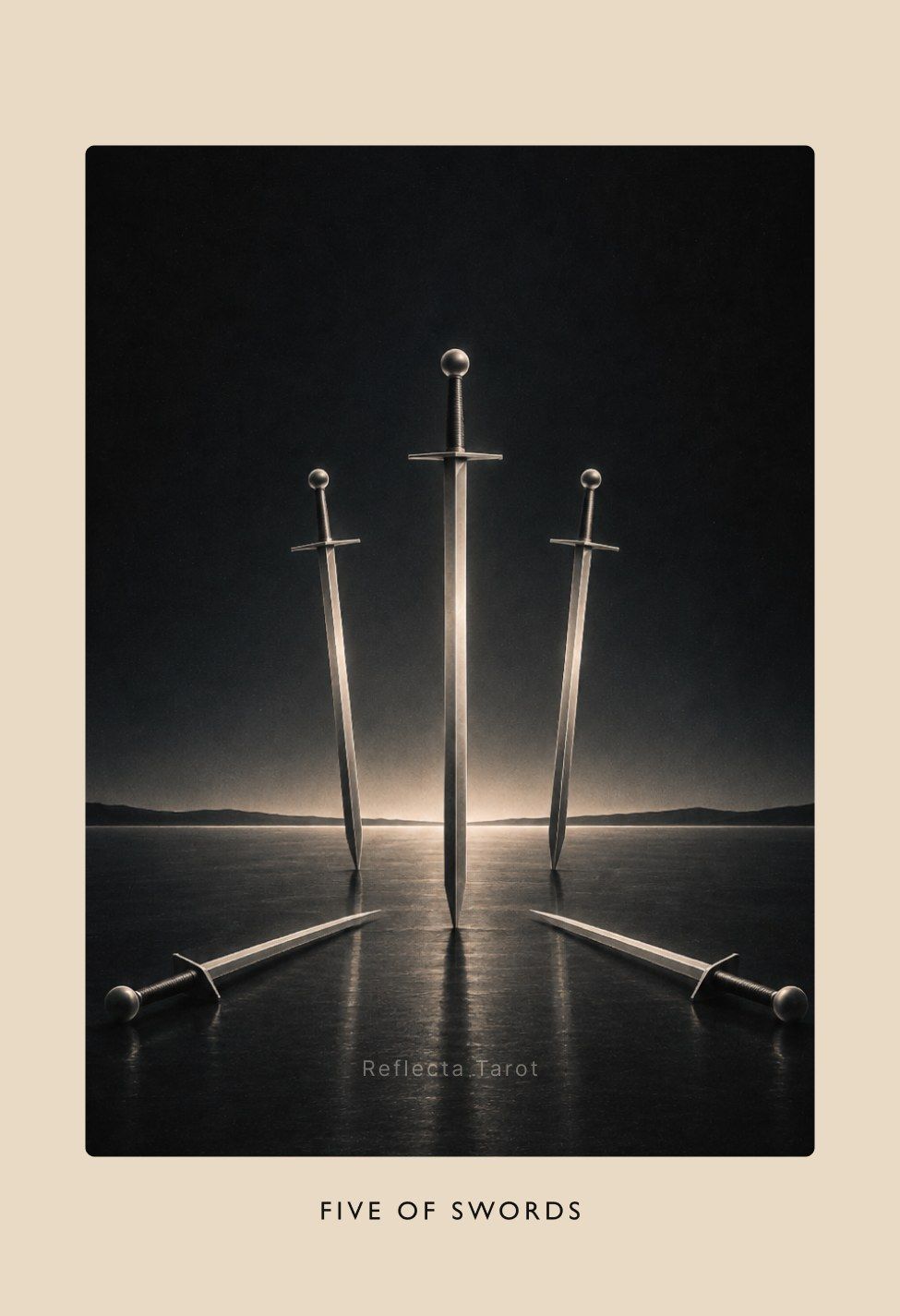
- Five of Swordsconflict · defeat
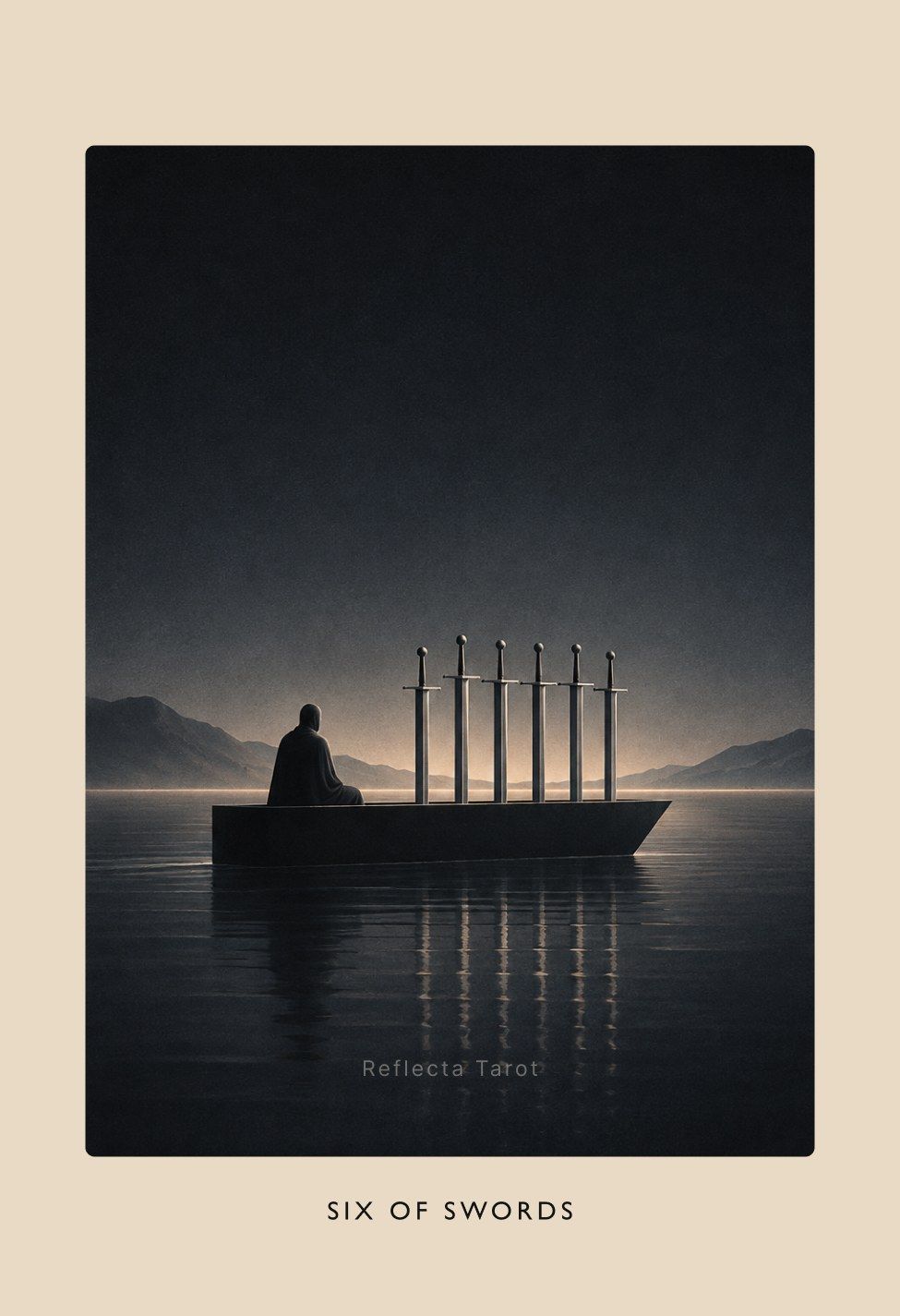
- Six of Swordstransition · moving on
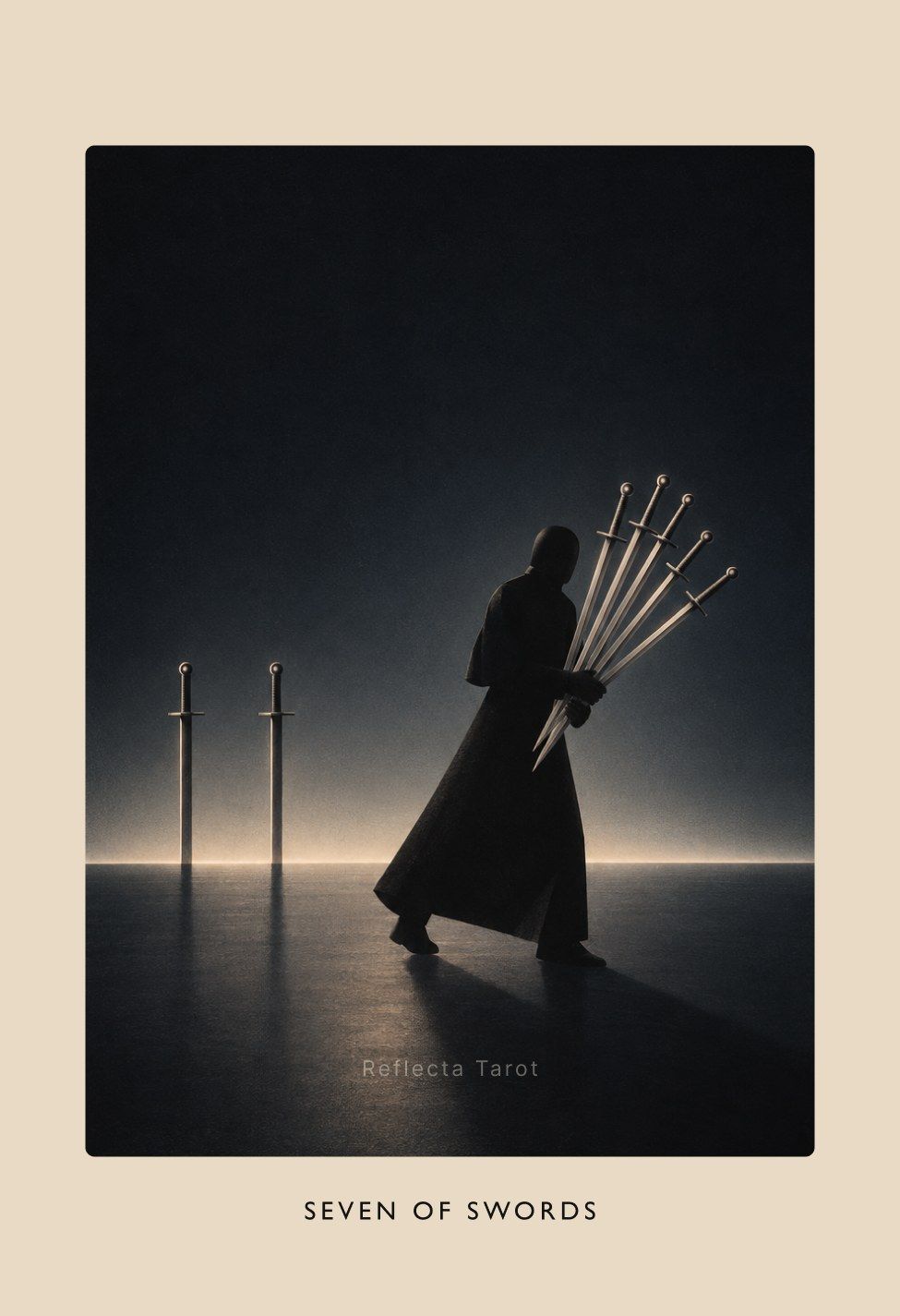
- Seven of Swordsdeception · strategy
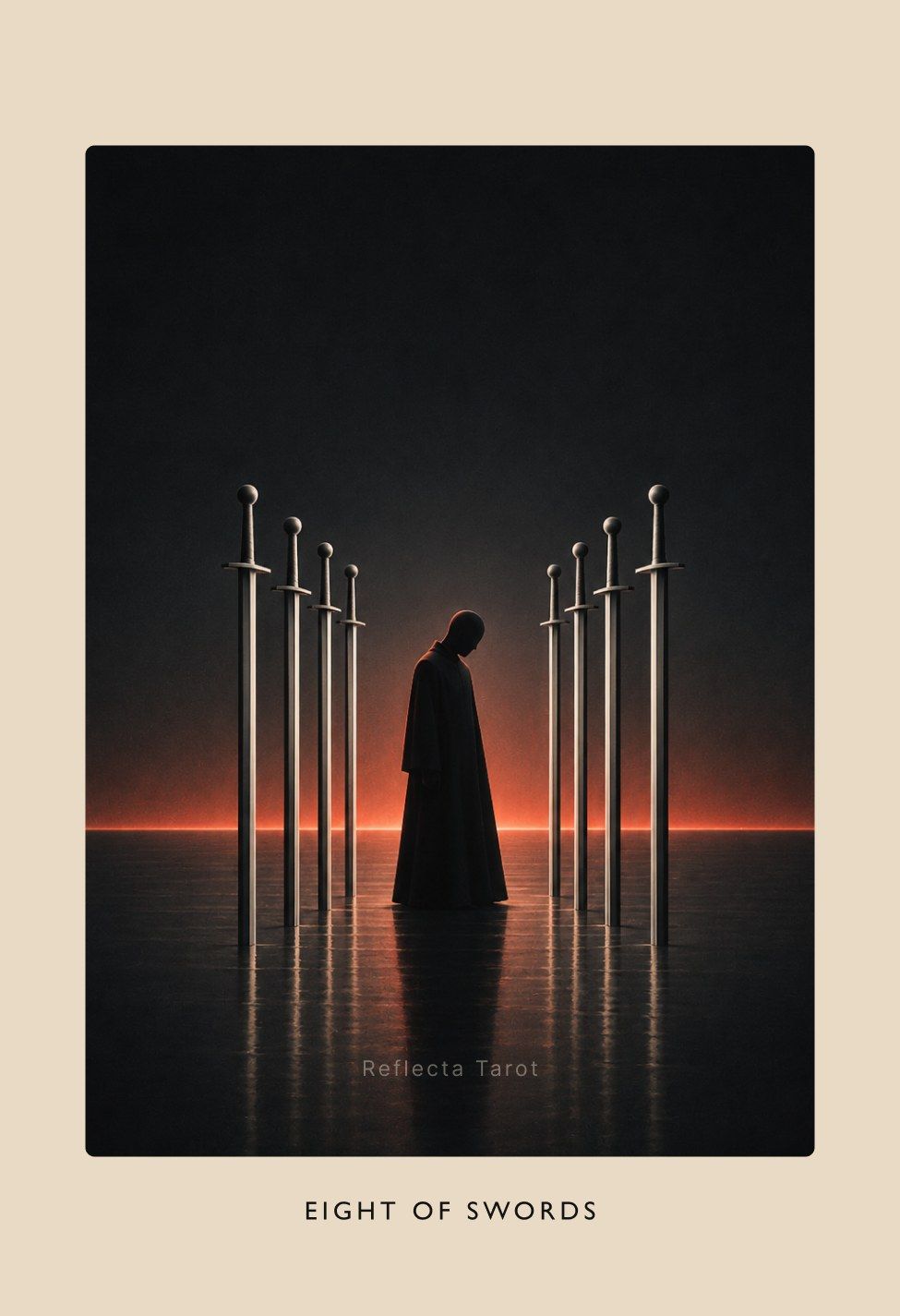
- Eight of Swordsrestriction · feeling trapped
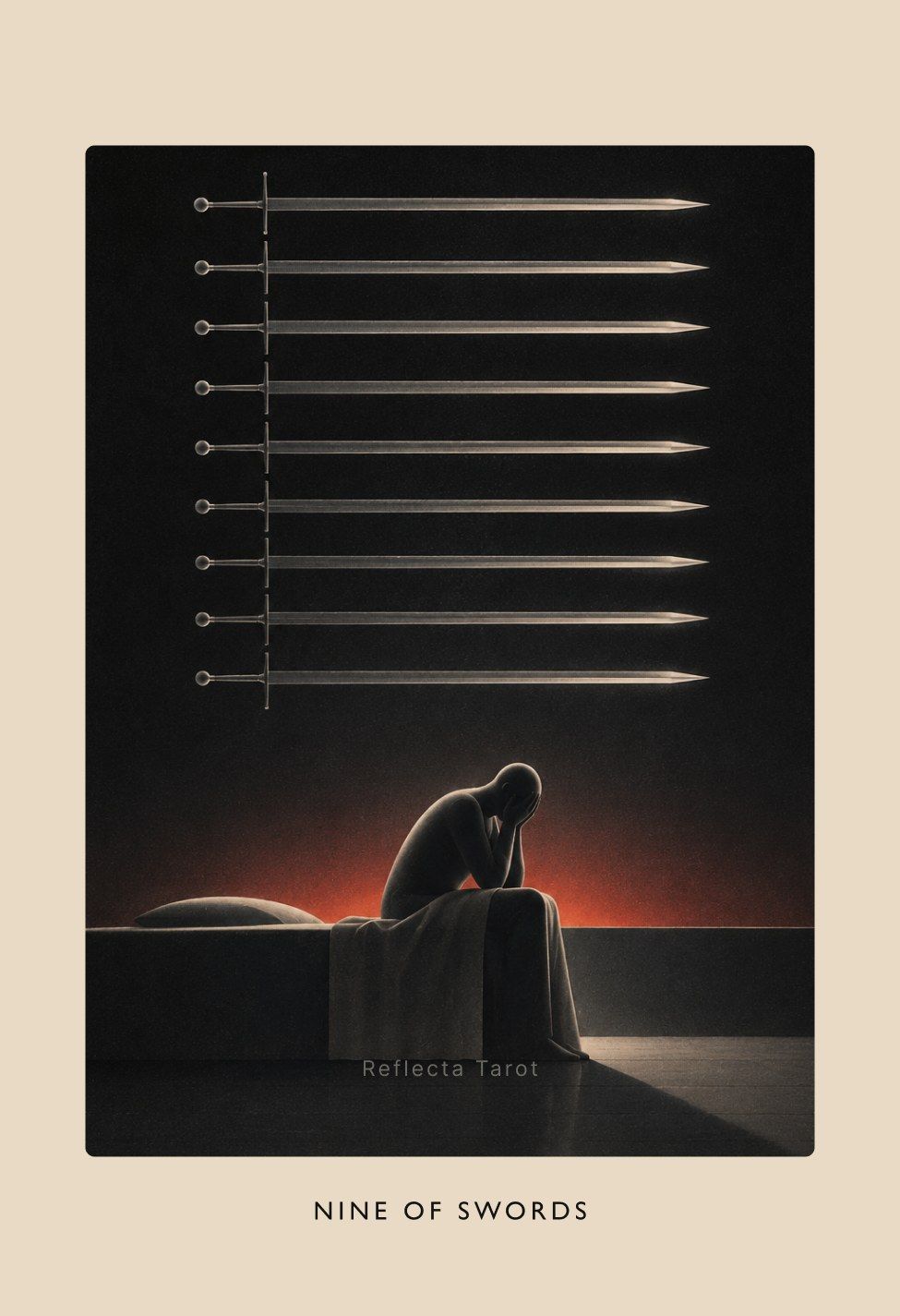
- Nine of Swordsanxiety · worry
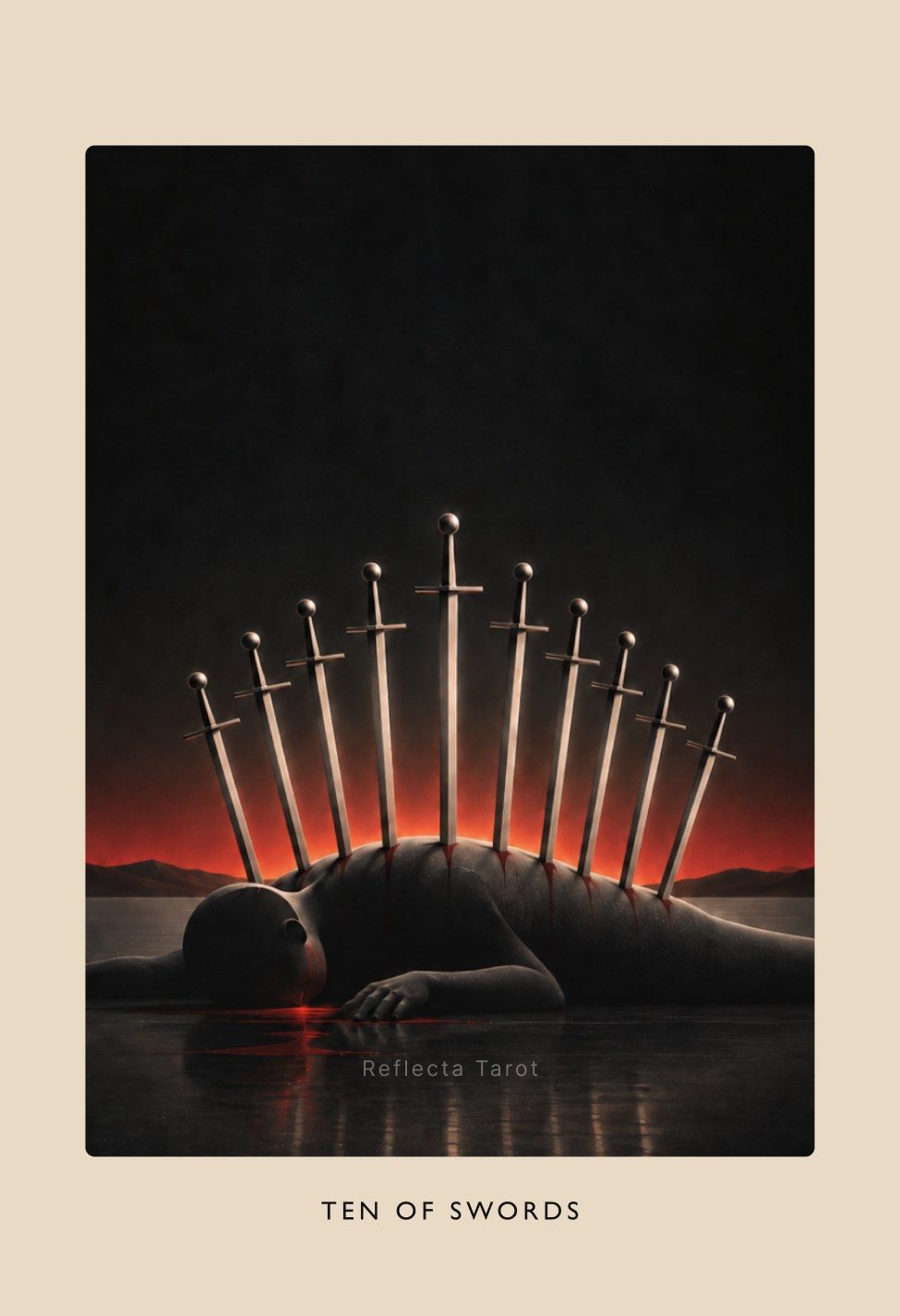
- Ten of Swordspainful ending · rock bottom
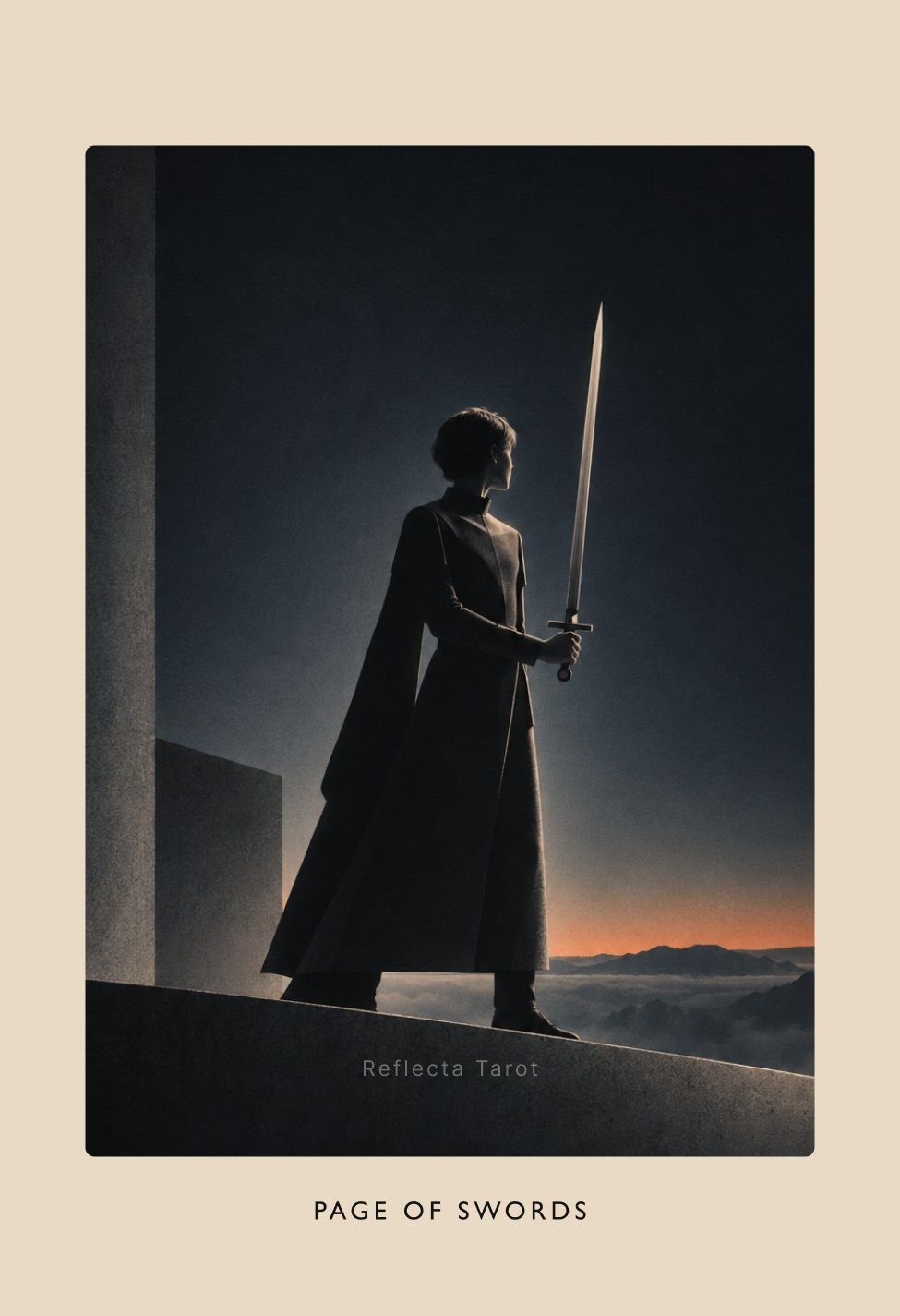
- Page of Swordscuriosity · new ideas
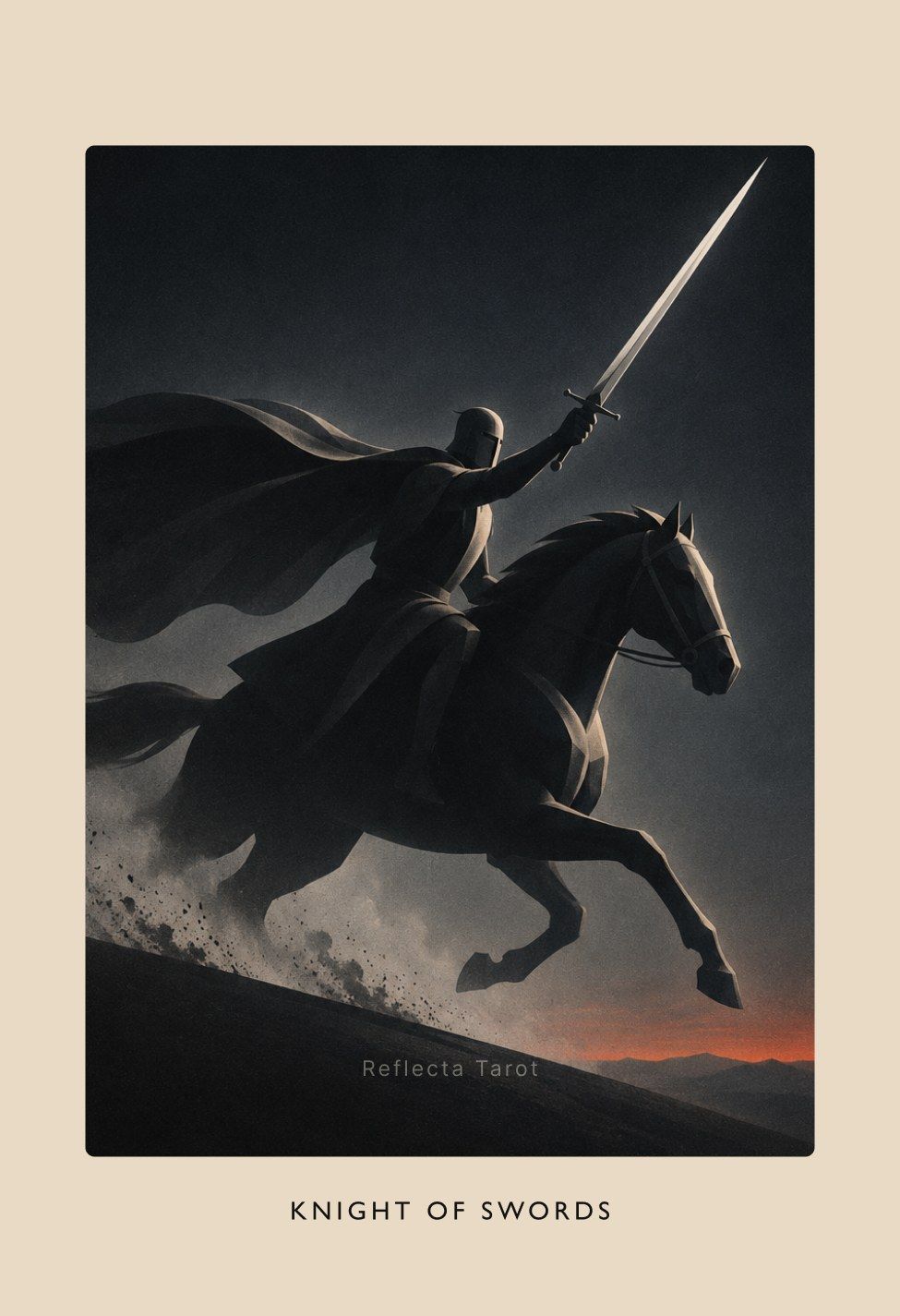
- Knight of Swordsaction · ambition
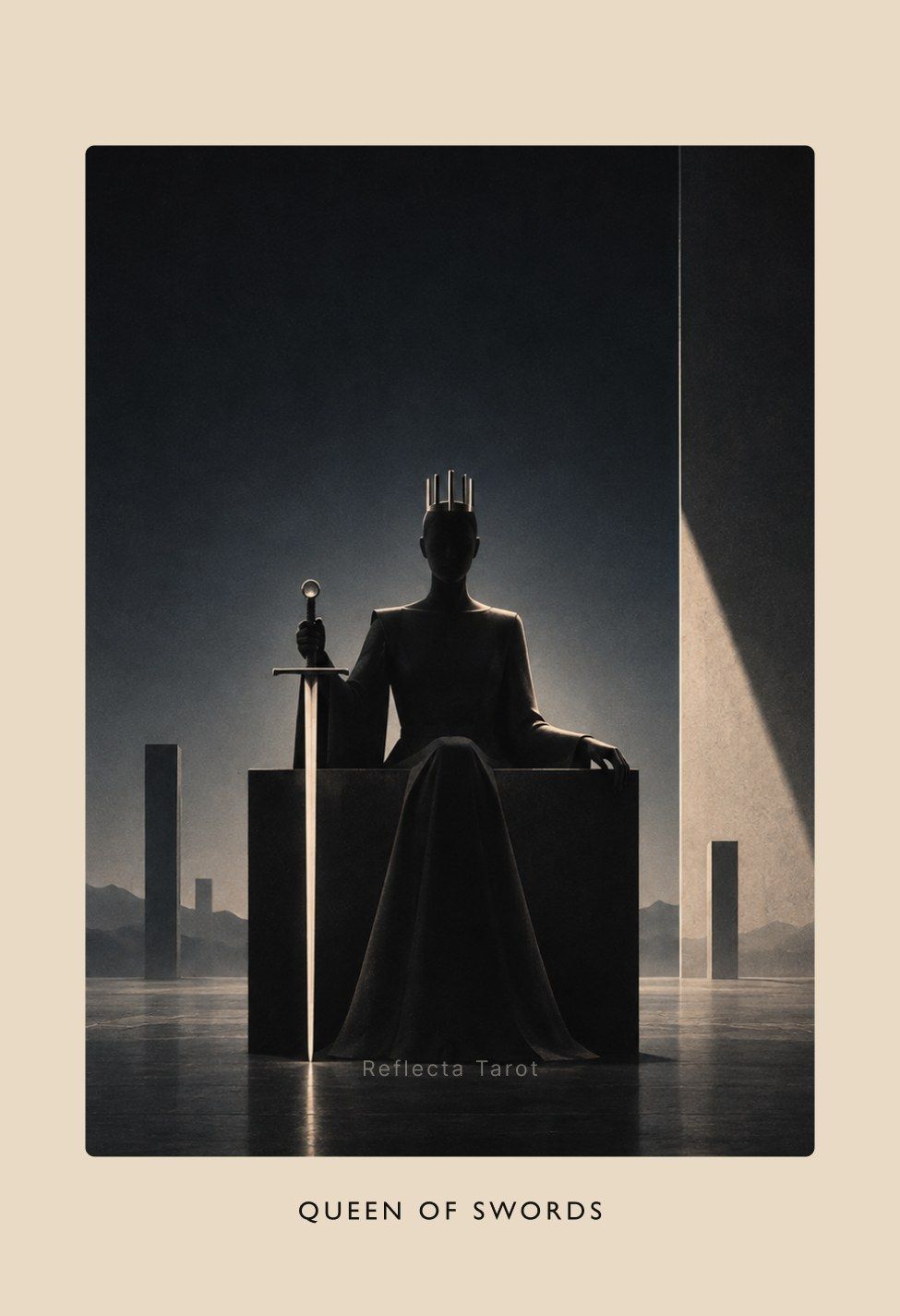
- Queen of Swordsindependence · clear thinking
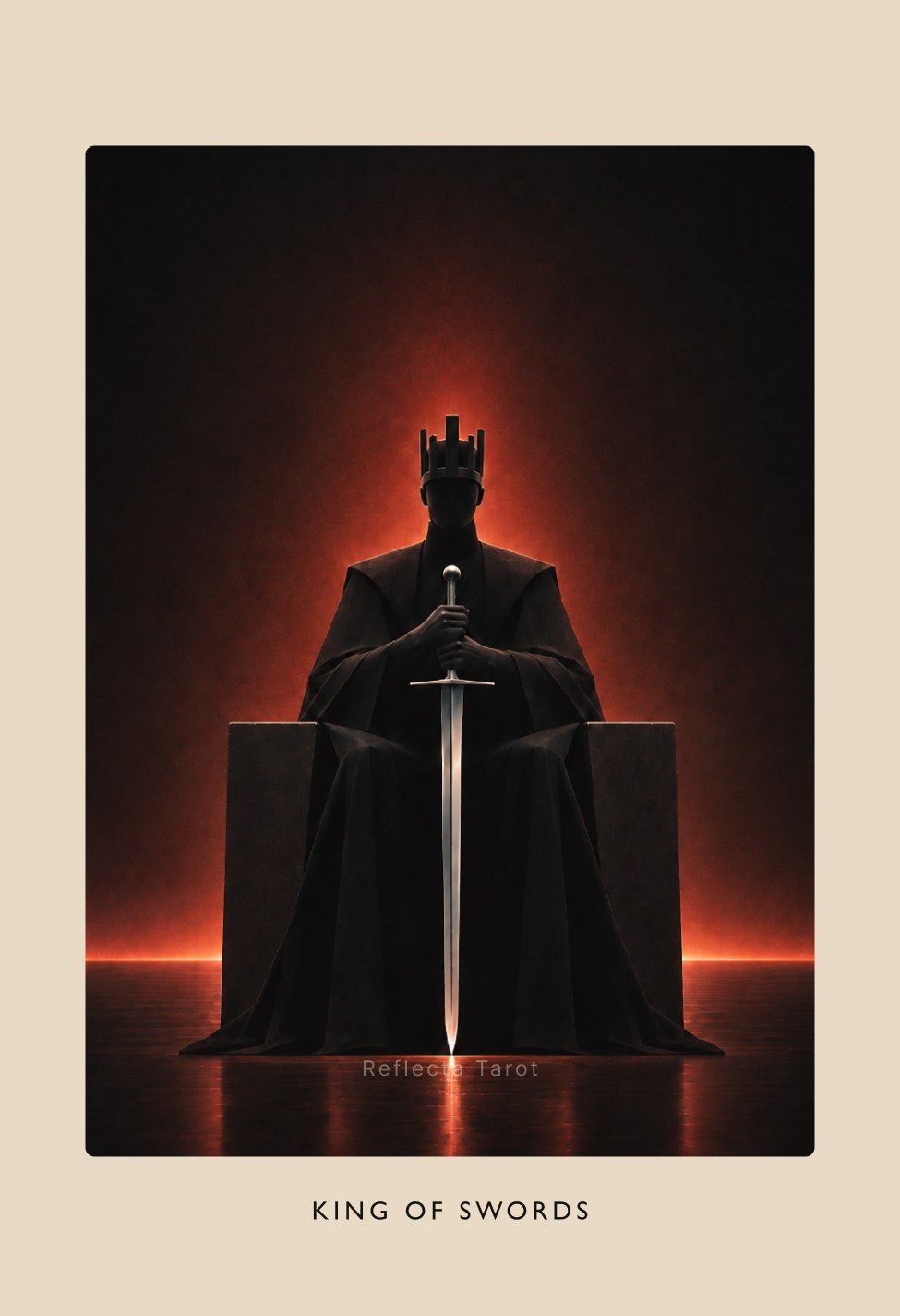
- King of Swordsauthority · truth
The fourteen, in order
Keywords and the yes or no leaning from each card's own page. Read the two verdict columns side by side: in this suit they never match.
| Card | Keywords | Upright | Reversed |
|---|---|---|---|
| Ace of Swords | breakthrough, clarity, truth | yes | no |
| Two of Swords | difficult decisions, stalemate, avoidance | no | yes |
| Three of Swords | heartbreak, sorrow, grief | no | maybe |
| Four of Swords | rest, recovery, contemplation | no | yes |
| Five of Swords | conflict, defeat, hostility | no | maybe |
| Six of Swords | transition, moving on, leaving behind | yes | no |
| Seven of Swords | deception, strategy, cunning | no | maybe |
| Eight of Swords | restriction, feeling trapped, powerlessness | no | yes |
| Nine of Swords | anxiety, worry, sleepless nights | no | maybe |
| Ten of Swords | painful ending, rock bottom, release | no | maybe |
| Page of Swords | curiosity, new ideas, communication | maybe | no |
| Knight of Swords | action, ambition, drive | yes | no |
| Queen of Swords | independence, clear thinking, direct communication | yes | no |
| King of Swords | authority, truth, intellectual power | yes | no |
The suit that turns toward yes
Eight of the fourteen Swords lean no upright. That is more than any other suit: Cups has three, Pentacles one, and Wands one. If the suit has earned its reputation anywhere, it is here.
The reversed column tells the rest of it. Every one of those eight reads better upside down. The Two's blindfold comes off, the Four's rest ends, the Eight's binding loosens, the Nine's night is over, and the Ten has finished happening. That is more cards improving on reversal than in any other suit, and in Swords it is exactly the set of cards that said no. Wands manage one.
The other six go the other way. The Ace, the Six, and the Page, Knight, Queen, and King all read as yes or maybe upright and lose ground reversed, because the suit's strength is clear thinking and a reversal is that clarity turning cold, hasty, or suspicious.
That makes Swords the only suit where more cards improve reversed than lose ground. In every other suit, turning a card over mostly moves the answer toward no. In this one it mostly moves toward yes, so the orientation of a Sword deserves more weight than it would elsewhere. A hard Sword reversed is often the hard part ending. Reversed tarot cards covers reversals in general; this suit is where they matter most.
Where the blade lands
Count the swords in this suit and follow where each one points. Very few of them reach anyone.
In the Nine, nine blades hang on the wall above a woman sitting up in bed with her face in her hands. None of them touches her. In the Eight, the swords stand around and behind her, the ground in front is open, and the binding on her arms has no knot. In the Four, three swords hang over a resting knight and one lies beside him, put down on purpose. Elsewhere they are held up (the Ace), balanced (the Two), collected after a fight (the Five), ferried (the Six), and carried away (the Seven).
Only the Ten shows a blade in a person, and it shows all ten of them in one man's back, far past what it would take. The excess is the point. It is the suit's single picture of the blow landing, drawn so that nothing more could happen after it, with a band of light along the horizon. The Three pierces a heart, but it is a drawn heart with no one attached to it.
That changes the question to put to a Sword. Most of the suit describes something anticipated, remembered, argued with, or feared at three in the morning, and the card is often more about the waiting than the wound. When a hard Sword turns up, ask if the thing it describes has happened yet, or if you are bracing for it. Those call for different responses, and the suit is careful to draw them differently.
The court, and what each does with a sharp mind
The Swords court cards share one gift, which is seeing clearly, and they differ in what they do with it.
The Page watches. He walks fast over rough ground with his sword raised, looking this way and that, under clouds that will not hold still. Nobody is fighting him yet. He is collecting information, and at his worst he is collecting suspicion.
The Knight acts on it. He is one of the fastest figures in the deck, at full gallop into a wind that bends the trees, sword pointed straight at what he is charging. He has stopped debating. Whether that is courage or damage depends on whether he aimed first.
The Queen judges, with one hand open. The sword is upright in her right hand and her left is raised and empty, which is the difference between judgment and rejection. Waite gave her a face that has known sorrow, and the butterflies on her throne say she arrived at this clarity. She was not born with it.
The King rules by it. He sits in judgment with his sword drawn and tilted a little off true, under a clear sky and still trees, which is rare in this windblown suit. He applies the rule the same way whoever it lands on, and reversed he is the one who reached the verdict first and built the reasoning after.
When one of these lands on a person in a reading, the useful question is which of the four they are doing with what they know: watching, acting, weighing, or ruling. It is a reading of behavior. The card cannot tell you what is in anyone's head.
Reading a spread full of Swords
Swords are fourteen of the 78 cards, so a ten card spread holds about 1.8 of them on average, so one or two is ordinary. When they crowd the spread, the situation is being lived mostly in thought: a decision going round, an argument rehearsed, a fact you have not let yourself say.
That is the suit's real use. It is the clearest the deck gets about what you already know, and it rarely flatters. A Sword in the advice position is usually asking for a sentence spoken out loud, a decision made, or a rest taken, in roughly that order.
It is also the suit that describes worry most directly, and a reading can help you name a fear. If the Nine or the Eight is describing weeks of dread, talk to someone you trust or a qualified professional. Use the cards for reflection, and real support for real weight.
Common questions
- What does the Suit of Swords mean in tarot?
- Swords are the suit of the mind. Thought, truth, decisions, conflict, and the stories a person tells themselves about what is happening. Their element is Air. They describe what you know, what you fear, and what you have not yet said out loud, and they are the suit most likely to show you a situation without softening it.
- Is the Suit of Swords bad?
- It is the suit that says no most often. Eight of the fourteen Swords lean no upright, against three in Cups, one in Pentacles, and one in Wands. It is also the suit where a no is least likely to be the last word: every one of those eight reads better reversed, because a turned Sword is usually a fear or a hurt easing off.
- What do reversed Swords mean?
- In this suit a reversal moves the answer every time. The eight hard cards read better upside down, as the blindfold comes off, the night ends, or the rest is over. The six that say yes or maybe upright read worse, usually because clear thinking has turned sharp or hasty. No Sword answers the same way both ways up.
- What does it mean to get a lot of Swords in one reading?
- Swords are fourteen of the 78 cards, so a ten card spread holds about 1.8 of them on average. Three or more usually means the situation is being lived mostly in your head: decisions, arguments, worry, or a truth that needs saying. The useful question is which of it has happened and which of it you are bracing for.
- Which Sword is the hardest card in the suit?
- The Ten is the most emphatic no, and it describes something that has gone as far as it can go, which also means it has finished. Many readers find the Nine harder to sit with, because it is fear at night with nothing in the room touching you. If that card matches weeks of lost sleep or dread, it is worth talking to someone you trust or a qualified professional. A reading can help you reflect. It cannot replace care.
All fifty-six minors sit together in the Minor Arcana, and the whole deck is in the card meanings index. For a leaning on any one card, the yes or no page covers all seventy-eight. For reading Swords next to the other suits, try how to read tarot or the pairs in tarot card combinations.
There is also a page on what Reflecta is, if the waitlist is a step too early.