8 guides · 38 questions answered
Tarot guides
There are eight guides here and they are meant to be read in an order: tarot for beginners, reading playing cards as tarot, how to read tarot, reversed tarot cards, repeated tarot cards, tarot spread positions, keeping a tarot journal and three card tarot reading examples. Each one assumes the one before it, so the beginner guide gets a deck out of its box and the last one answers a question you only have after a month of pulling cards. Between them they answer 38 questions and work through 32 of the seventy-eight cards.
What separates a guide from a card meaning is what it is for. A meaning is a reference: you arrive knowing which card you drew and leave knowing what it says. A guide is a method: how to ask a question the cards can answer, how to read three cards as one answer rather than three, and what to do when the answer is one you did not want. Written for people who want the mechanism behind the meanings.
Tarot for beginners
To start reading tarot you need a deck, one question, and a three card spread. Everything else, including memorizing 78 meanings and learning reversals, is better added later. The most common beginner mistake is asking a question too vague for any answer to land.
Start here if you own a deck and have not dealt with it yet. It settles the four things that stop people beginning: which deck to buy, what the seventy-eight cards are, what to lay out first, and the folklore about having to be given your first deck.
Reading playing cards as tarot
A standard 52 card deck maps onto the tarot's 56 minor arcana. Spades are Swords, Hearts are Cups, Diamonds are Pentacles, and Clubs are Wands, with Ace through Ten running straight across. The Jack stands in for the Page, and the Knight has no counterpart at all. What a playing card deck cannot deal is the 22 Major Arcana, so it reads the situation rather than the chapter it belongs to.
Read this if the deck you own has spades and hearts on it. It maps all fifty-two playing cards onto the tarot minors rank by rank, and is straight about the twenty-six cards a pack from a drawer cannot deal.
How to read tarot
Reading tarot is three skills: asking a question the cards can answer, knowing roughly what each card means, and reading the cards in relation to each other rather than one at a time. The third is the one that separates a reading from a lookup, and it is the one nobody teaches first.
Read this once looking a card up has stopped being the hard part. It is about the step from lookup to reading: asking a question the cards can answer, and reading the cards against each other rather than one at a time.
Reversed tarot cards
A reversed tarot card is one dealt upside down. It shifts the upright meaning rather than flipping it into its opposite. The four most useful readings are the energy blocked, turned inward, taken to excess, or in the process of resolving, and the question and the surrounding cards choose between them.
Read this when you decide to use reversals, and not before. It replaces the rule that a reversed card is the opposite with the four conditions a reversal usually describes, and explains how the spread picks between them.
Repeated tarot cards
A card that keeps appearing is usually the deck rather than a message. Pulling one card a day, there is a 71% chance some card has already repeated inside two weeks, and a repeat is more likely than not by the eleventh pull. What makes a repeat worth attention is that it beats chance, or that it answers the same question twice.
Read this when one card will not leave you alone. It works out the odds of a repeat, which are higher than almost anyone guesses, and gives you the test for the repeats that beat chance.
Tarot spread positions
Most tarot spreads offered as new layouts are the same three or five card shapes with the positions renamed, and the positions are what makes a reading work. A set of positions fits a question when every one of them is a question you would say out loud and no two ask the same thing in different words. Eight sets follow, for love, a job move, a recurring argument, a block, a decision, the year ahead, self-knowledge, and one question better asked with a single card.
Read this when the layouts have started to feel interchangeable. It gives eight sets of positions for the questions people go looking for a spread about, on the five layouts the site already has, and says which popular spreads are not worth the cards.
Keeping a tarot journal
Keep four things: the date, the question in the words you used, the cards and which way up, and one line of what you thought it meant. The fourth is the only one you cannot reconstruct later and the only one worth anything, because the cards are public and your reading of them is not. Journals die by recording interpretations rather than observations, and by never being read back, which is the more common death.
Read this once you have been pulling cards long enough to have forgotten what you thought last month. It is about the four fields worth recording, the two ways a journal dies, and the three passes that make a year of entries readable.
Three card tarot reading examples
Four complete three card readings follow, each with a question, three named cards, and what the reading came to. The method is the same every time: read each card for the position it landed in rather than in general, read the three pairs against each other, then say in one sentence what the reading came to. One of the four settles nothing, which is a normal outcome and the reason it is included.
Read this last, or read it whenever you want to see the rest of these guides used at once. Four three card readings worked end to end, including one that settles nothing, which is the outcome every other page of examples leaves out.
The cards the guides keep stopping at
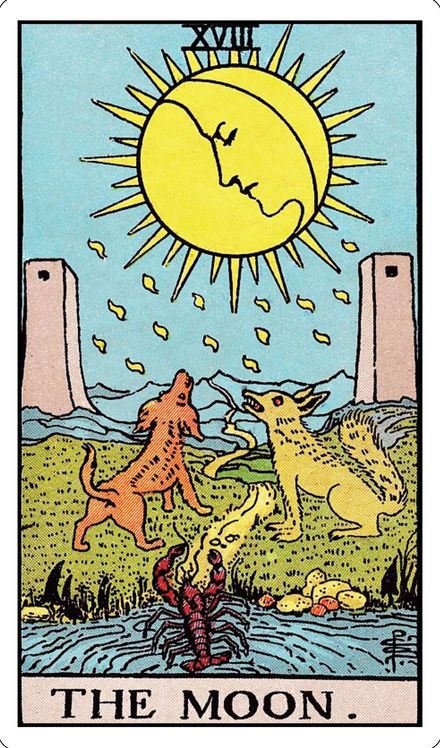
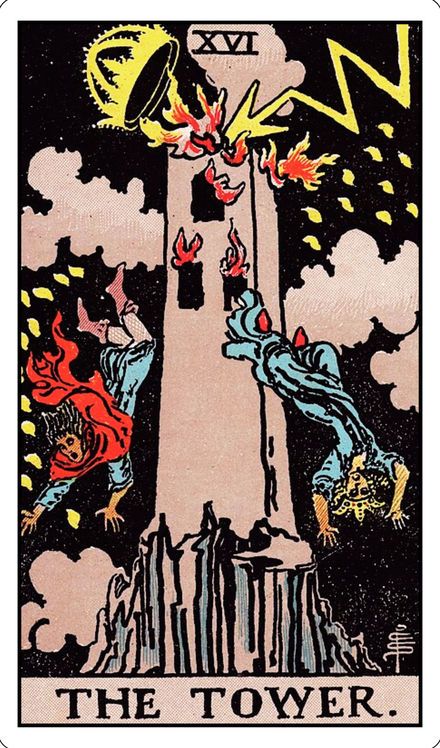
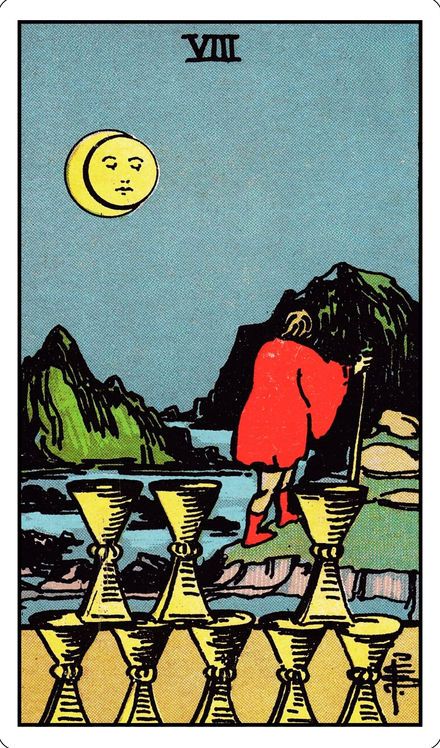
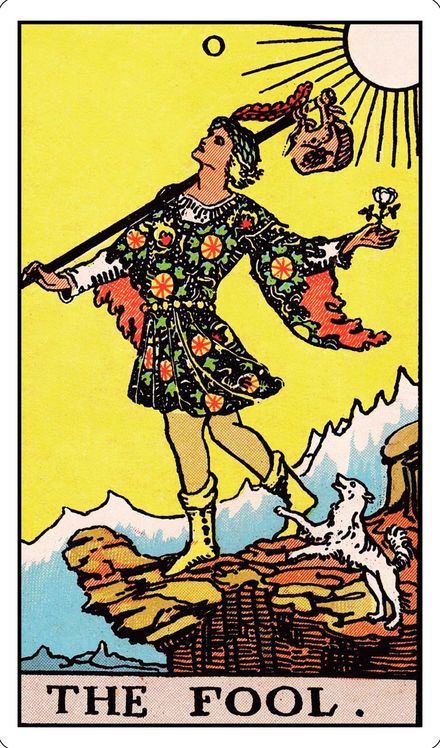
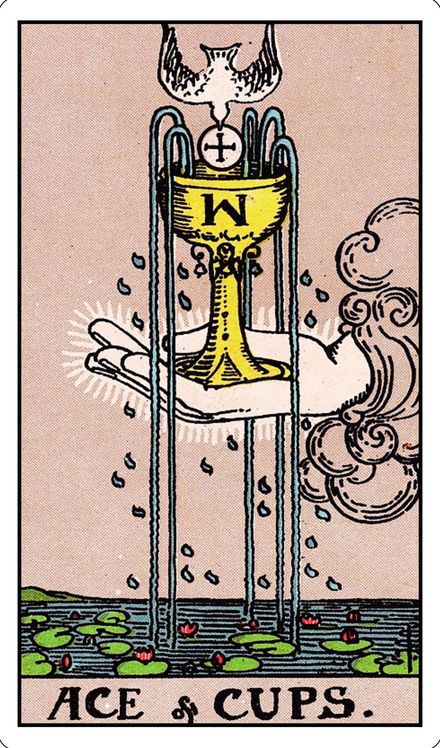
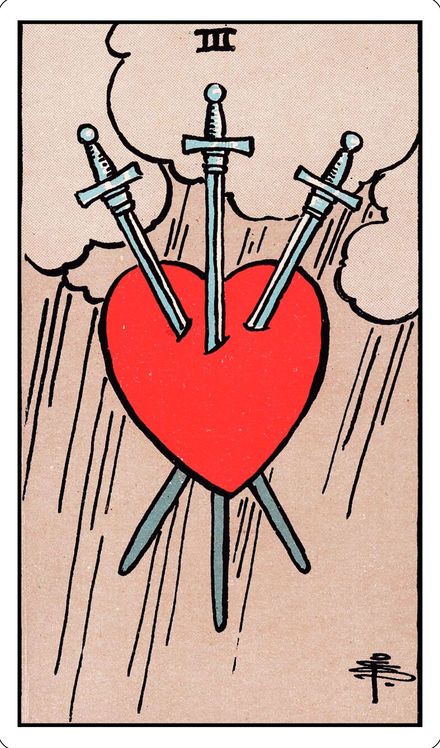
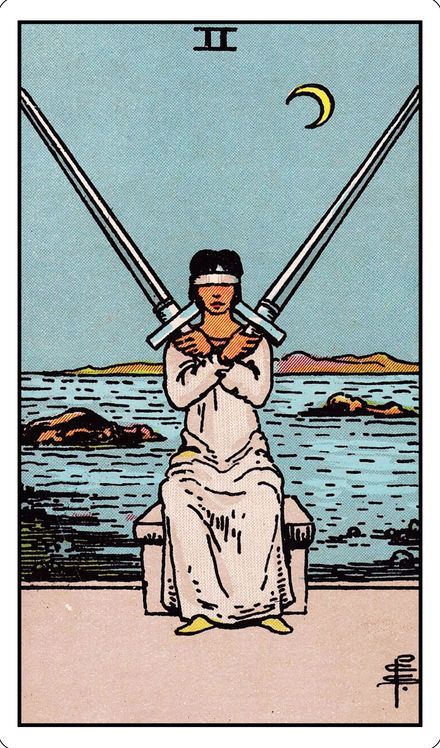
32 cards are worked through somewhere in these guides, and seven of them turn up in more than one: The Moon, The Tower, Eight of Cups, The Fool, Ace of Cups, Three of Swords and Two of Swords. The Moon appears in five of the eight.
That set is a list of the cards that make people go looking for a method. One of them is where a deck starts and the rest are the ones that land badly: the card nobody wants to see, the one that says nothing is as it looks, the one that is plainly about loss. A guide gets written because a card raised a question the card's own page could not settle, and these are the cards that raise it.
What a guide cannot do for you
It cannot supply the question. Every guide here is downstream of one, and the single most common reason a reading feels like nothing is that the question was too vague for any answer to land against. "What is coming" has no wrong answer, so no card can be wrong, so nothing you draw tells you anything. That failure looks like a problem with your interpretation. It almost never is.
It also cannot give you the thing that only repetition gives you, which is recognizing a card rather than recalling it. You can hold the method after an afternoon of reading. Knowing what the Five of Pentacles feels like in a position about money, because you have drawn it there before, takes months of ordinary pulls. The guides are written to shorten that.
What these guides leave out on purpose
Layouts. A spread is a set of positions and each one needs its diagram and its labels, so the layouts live in tarot spreads instead, compared on size, time, and what question each one suits. The guides cover what you do once the cards are down, which is the part that does not change with the layout.
Card by card meanings, for the same reason in reverse. All seventy-eight have their own page in the card meanings, upright and reversed, with what each one says about love, work, and money. A guide that restated them would be a worse version of a page that already exists, and a guide that skips them can be about method instead.
Prediction, and anything that asks you to believe something first. Nothing here claims the cards know what happens next. The claim is smaller and easier to test: a shuffled deck is good at interrupting the story you were already telling yourself, and that works whether or not anything else is going on.
Common questions
- In what order should I read these tarot guides?
- Tarot for beginners, Reading playing cards as tarot, How to read tarot, Reversed tarot cards, Repeated tarot cards, Tarot spread positions, Keeping a tarot journal and Three card tarot reading examples, in that order. Each one assumes the one before it: the beginner guide gets you dealing cards, the playing card guide is the detour for anyone whose deck has spades on it, how to read tarot takes you from looking a card up to reading a spread, reversals double the material once the upright meanings are secure, the repeats guide answers a question you only have after weeks of pulling, the positions guide comes late because rewriting a spread is only worth doing once the standard one has bored you, the journal guide is about the record the repeats guide has just shown you that you need, and the worked examples go last because they use all of it at once. Reading them out of order works; it just means meeting an answer before you have the question.
- What is the difference between a tarot guide and a card meaning?
- A card meaning tells you what one card says. A guide tells you what to do with it. Knowing that the Three of Swords is grief does not tell you how to read it in a position about the future, next to a card that contradicts it, in answer to a question you framed badly. The meanings are a reference you look things up in; the guides are the method you look them up for.
- Do these guides cover tarot spreads?
- The layouts themselves live in tarot spreads, with their diagrams, position labels, and the question each one suits, because a layout deserves a page you can look at. What the guides add is the half a diagram cannot show: the spread positions guide rewrites the questions under the cards for eight specific situations, and the rest cover what you do once the cards are down, which stays the same whichever layout you used.
- Can you learn tarot from reading about it?
- Partly, and the part you cannot get this way is the larger one. Between them these eight guides answer 38 questions, and none of them is the question you will have in front of a real spread about your own situation. Reading gets you to a competent first pull in an afternoon. What comes after that is pulling cards regularly and being honest about what you saw.
Not every question needs a guide behind it. If yours is a closed one, yes or no tarot lists all 78 leanings, upright and reversed, and says what a maybe is asking you to do. If a card came out upside down and you want the meaning rather than the method, reversed tarot card meanings puts all 78 reversed readings beside their upright ones.
And if what you want is the practice rather than the theory, the smallest one is a card of the day: one card, drawn in the browser, one line written about it in the morning and read back at night.
Two things here are tools rather than reading. The tarot card meanings chart is all 78 cards on two printable sheets, for having beside you while a spread is on the table, and the tarot birth card calculator reduces a date of birth to the Major Arcana card or cards it belongs to, which is one way to pick a first card to learn properly.
There is also a page on what Reflecta is, if the waitlist is a step too early.