7 of Wands
Seven of Wands
- challenge
- perseverance
- defense
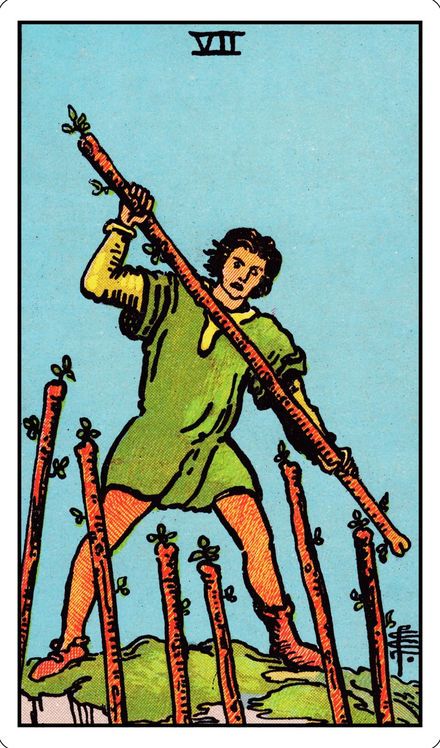
The Seven of Wands means holding your ground against people who want it. A young man stands on high ground, fending off six staves raised from below. Waite called it a card of courage: six attack one, but the one has the better position. As a yes or no it leans yes, if you keep at it. This looks defensible, and it will probably be challenged. Reversed it leans no: defending it now costs more than it is worth.
- Element
- Fire
- Astrology
- Mars in Leo
- Numerology
- 7, the number of a position under pressure
- Yes or no
- yes
He is wearing two different shoes.
It is easy to miss, and it changes the card. Nobody who prepared for a fight dresses like this. He was in the middle of something else, heard them coming, and went to the edge in whatever he had on.
The six staves come up from below the picture with no faces attached. That is how a contested position tends to feel from the inside.
Seven of Wands upright meaning
Holding ground that other people want from you.
The Seven of Wands follows the Six, and the order is the honest part. The card after the victory parade is about defending what the parade was for. A young man stands on high ground with a staff, and six more come up at him from below. Waite called it a card of courage, because six are attacking one, and the one has the better position. He also read it as argument, wordy strife, negotiation, and business competition, and as a card of success, since the enemies below may not be able to reach him. In readings it points to a position being challenged, competition for something you already have, or having to justify yourself again and again. His advantage is real. The ground is his, and defending it is fair. It leans toward holding on. What makes the card sympathetic is his shoes: two different ones. He was not prepared, and he came out anyway. Most people defending something worth having are a little under-equipped and a little too tired. The card knows that.
Seven of Wands reversed meaning
A defense that has become too costly to keep up.
Reversed, the Seven of Wands is usually about the cost. Holding the position is no longer worth what it takes: constant justifying, a fight that never ends, or a role defended for so long that defending it has become the job. The card does not judge you for having held on. It asks what the ground is worth now, compared with what it costs to keep. That question gets asked far too rarely. Its second reading is being overwhelmed: too many fronts, the advantage gone, and a position that used to be defensible and is not anymore. A third version is giving up something that may have been worth keeping, when tiredness made the decision more than judgment did. Waite's reversed meanings were perplexity, embarrassment, and anxiety, with a warning against being indecisive. Read the cards around it, since the same reversal covers a wise retreat and an early one.
A reversal is rarely the upright card's opposite. Reversed tarot cards covers the four conditions a reversal usually describes, and how to tell which one a spread is asking for. Every card's reversed meaning sits beside its upright one on reversed tarot card meanings.
Seven of Wands in Waite's 1910 key
The meanings above are Reflecta's reading. These are the ones A. E. Waite gave in The Pictorial Key to the Tarot (1910), the guide he wrote for the deck Pamela Colman Smith drew. He wrote them for fortune-telling, a use tarot took on centuries after it began as a card game in fifteenth-century Italy. Some of his words are blunt, and none of them can tell you what will happen.
- Upright
- It is a card of valor, for, on the surface, six are attacking one, who has, however, the vantage position. On the intellectual plane, it signifies discussion, wordy strife; in business, negotiations, war of trade, barter, competition. It is further a card of success, for the combatant is on the top and his enemies may be unable to reach him.
- Reversed
- Perplexity, embarrassments, anxiety. It is also a caution against indecision.
Symbolism in the card
- The high ground he is standing on
- Waite describes a young man on a rocky height, with six staves raised toward him from below. He is above them. His advantage is real and built into the position, which is why the card reads as defense.
- The two different shoes
- Look at his feet: he wears two different shoes. He was not ready for this, and he came out anyway. It is easy to miss, and it is the most human detail on the card.
- The attackers left out of the picture
- Only the staves appear from below, with no faces. The opposition is a faceless crowd. That is how a contested position usually feels from the inside.
Seven of Wands in love and relationships
Upright. Standing up for a relationship, or defending a boundary within one. It can also mean a couple facing pressure from outside, holding together against it.
Reversed. Worn out from always defending a relationship, or a boundary you have stopped enforcing. It can also mean fighting for something the other person is not fighting for.
Seven of Wands in career and work
Upright. Defending your position, your work, or your judgment at work. Waite named negotiation and business competition among its meanings. Strong for holding firm in a negotiation, or standing behind a decision people are questioning.
Reversed. Justifying yourself long after it stopped helping, or a role that has become all about defense. Worth asking what the position is still worth to you.
Seven of Wands in money
Upright. Protecting what you have, holding your rate, or refusing to be talked down. The card favors standing firm on a number you have already justified.
Reversed. Defending a financial position costs more than it is worth, or you give in on money because the argument got too tiring.
Seven of Wands as feelings
Upright. Defensiveness, possibly about something other than you. The card describes someone protecting a position. That can look like resisting the relationship, and it may be something else entirely.
Reversed. Weariness. The card describes defenses that may have been dropped, possibly including this one, where tiredness changed more than feelings did. Only the person can say.
Seven of Wands in a reading position
The same card answers differently depending on what the position asked it. These are the readings for the positions people ask about most.
Seven of Wands as timing
The timing systems disagree with each other. One counts Wands as days and Swords as weeks, the astrological decans give a different answer, and reading the card number as a count of weeks gives a third. No single one of them is the tradition, so what follows is read from the picture instead, which can tell you pace even when it cannot tell you a date.
Upright. Ongoing, with no date attached. The card is a position being held. So it answers when with: for as long as you keep standing there. That is usually longer than anyone expects.
Reversed. It may end because the cost ends it. Reversed, the defense becomes unaffordable, and it ends in exhaustion instead of a decision. That is often sooner than the upright card would suggest.
Seven of Wands as reconciliation
Upright. Probably not yet, and probably not without conditions. This is contested ground being held. It describes two people still arguing their case, more than a door opening. It does suggest your position may be a fair one.
Reversed. A reconciliation made out of exhaustion. Reversed, someone gives up the ground without settling the argument. That ends the conflict without touching whatever started it.
Is Seven of Wands a yes or a no?
Upright, it leans yes. Reversed, it leans no.
Upright it leans yes, as long as you keep at it. The position looks defensible, and it will probably be challenged before anyone gives it up. Reversed it leans no, often because continuing to defend it now costs more than it is worth.
Every card's leaning in one table, upright and reversed, is on yes or no tarot, along with what a maybe is asking you to do.
Seven of Wands card combinations
- +Seven of Wands and Six of Wands
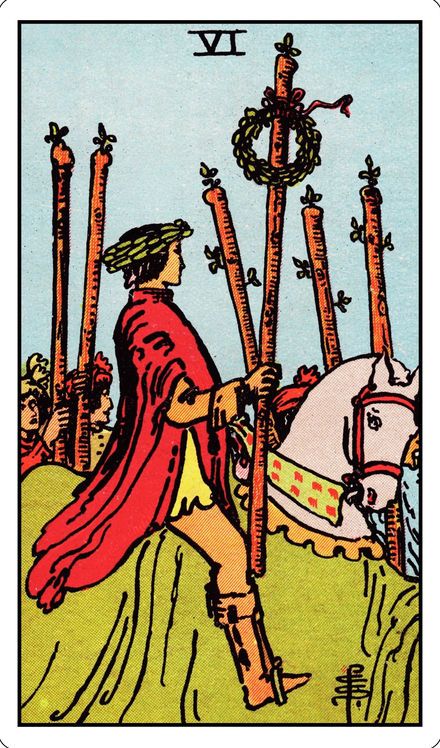
- The win, and then holding on to it. A realistic sequence, and worth expecting: the card after recognition is about keeping what the recognition was for.
- +Seven of Wands and Five of Wands
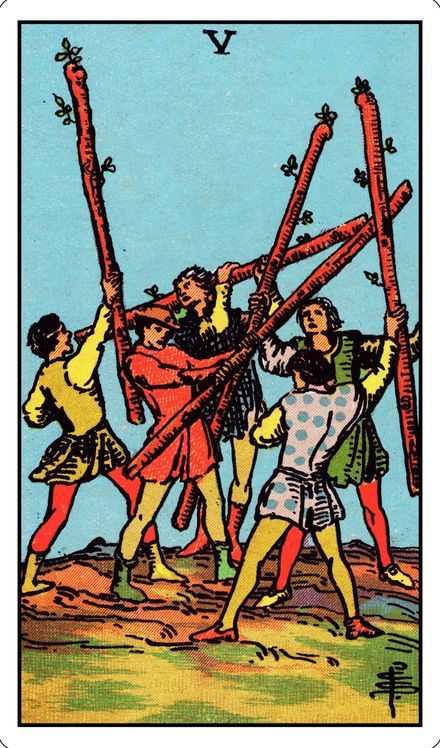
- A messy contest turning into a position you defend. More focused than the scuffle, and much more tiring to keep up.
- +Seven of Wands and Nine of Wands
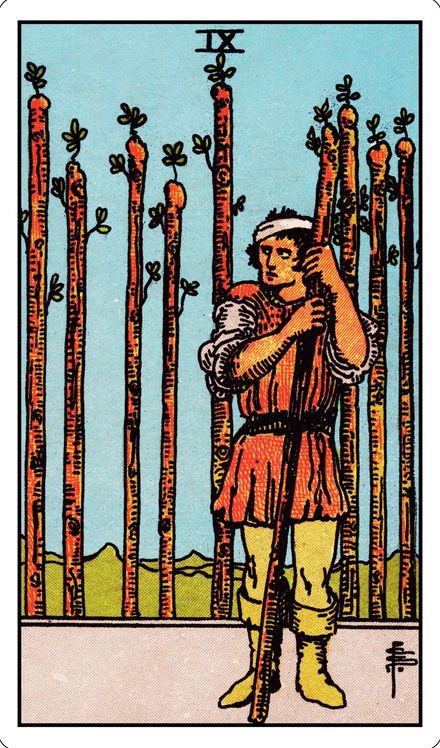
- Two cards about holding on, at different stages. The Seven still has the high ground. The Nine is wounded and still standing. Together they mark a long defense.
- +Seven of Wands and The Emperor
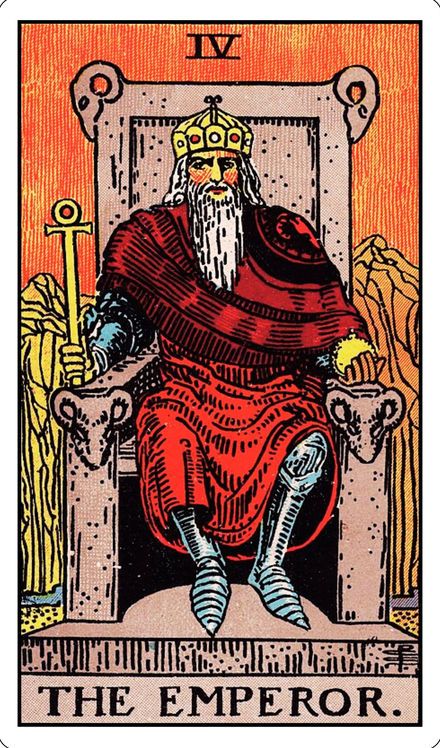
- Defending a position with structure behind it. It can suggest the ground is formally yours, and your case for it is stronger than it feels right now.
Every pairing on this site, Seven of Wands's included, is collected on tarot card combinations.
I have the high ground here, and I can hold it.
Seven of Wands: common questions
- What does the Seven of Wands mean?
- It means holding ground that other people want from you. A young man stands on high ground, fending off six staves from below. Waite called it a card of courage and success, because the one has the better position. The card treats defending it as fair.
- Why is he wearing different shoes?
- In Pamela Colman Smith's drawing, his two shoes do not match. It is the most human detail on the card. He was not ready for this, and he came out anyway. Most people defending something worth having are a little under-equipped and a little too tired.
- What does the Seven of Wands mean in love?
- Standing up for a relationship, or defending a boundary inside one, sometimes against pressure from outside. Reversed it points to being worn out from always defending, or fighting for something the other person is not fighting for.
- What does the Seven of Wands reversed mean?
- Usually that holding the position is no longer worth what it takes. It asks what the ground is worth now, compared with what it costs to keep. Waite's reversed meanings were perplexity, embarrassment, and anxiety, with a warning against indecision.
There is also a page on what Reflecta does with a reading once the cards are down.