1 of Swords
Ace of Swords
- breakthrough
- clarity
- truth
The Ace of Swords means clarity arriving all at once. It is the moment a situation finally makes sense: the realization, the decision, the thing at last said out loud. Waite read it as triumph and great force. As a yes or no answer it leans firmly yes, and it is a yes about knowing: you already have what you need to answer this yourself. Reversed it leans no, because you may not understand the situation well enough yet to act.
- Element
- Air
- Astrology
- The root of Air
- Numerology
- Ace, the purest form of the suit
- Yes or no
- yes
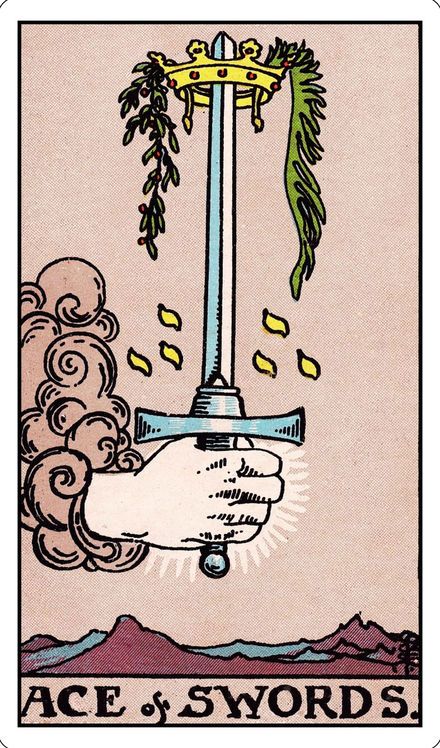
A crown circles the point of the sword.
That small design choice holds a lot. The truth this suit offers does not stop to check whether it suits whoever is in charge. It is handed to you point upward, over a landscape where nothing grows.
What it gives you is an ability, more than an answer. The blade is held still. Every consequence of this card depends on where the person holding it decides to point it.
Ace of Swords upright meaning
Clarity arriving all at once, ready to use.
The Ace of Swords is the moment something becomes clear. A hand from a cloud holds a single sword upright, with a crown around its point, above bare mountains. The whole card is about a truth arriving that you can now act on. It covers realizations, decisions, and the relief of finally understanding what has been going on. Waite's meanings were triumph, conquest, and the triumph of force. He called it a card of great force, in love as much as in hatred. In readings it favors saying the plain thing. Swords are the suit of the mind and of speech, and this Ace is at its most honest and least diplomatic: the conversation you have been avoiding, the boundary stated without softening, the fact named. It is freeing, and it is not gentle. Clarity here is a tool, more than an outcome. The sword is held still. The card gives you the power to cut through something. Where you point it is up to you.
Ace of Swords reversed meaning
Confusion, or a truth used as a weapon.
Reversed, the Ace of Swords goes wrong in two ways. The first is a lack of clarity. You cannot get a clean read on the situation, the information is missing or contradictory, and a decision is being made before the picture is clear. The card often appears when someone is trying to act decisively without enough understanding. That is how confident mistakes get made. The second is the sword misused: truth used to hurt, honesty as an excuse for cruelty, or an argument won so completely that the relationship never recovers. Being right and being helpful are different things, and the reversal is where that gap gets expensive. Waite's reversal was blunt: the same great force, with disastrous results. There is also a version where clarity arrived and nothing was done with it. You know exactly what the situation is, you have known for a while, and you are still just holding the sword.
A reversal is rarely the upright card's opposite. Reversed tarot cards covers the four conditions a reversal usually describes, and how to tell which one a spread is asking for. Every card's reversed meaning sits beside its upright one on reversed tarot card meanings.
Ace of Swords in Waite's 1910 key
The meanings above are Reflecta's reading. These are the ones A. E. Waite gave in The Pictorial Key to the Tarot (1910), the guide he wrote for the deck Pamela Colman Smith drew. He wrote them for fortune-telling, a use tarot took on centuries after it began as a card game in fifteenth-century Italy. Some of his words are blunt, and none of them can tell you what will happen.
- Upright
- Triumph, the excessive degree in everything, conquest, triumph of force. It is a card of great force, in love as well as in hatred. The crown may carry a much higher significance than comes usually within the sphere of fortune-telling.
- Reversed
- The same, but the results are disastrous; another account says, conception, childbirth, augmentation, multiplicity.
Symbolism in the card
- The single upright sword gripped by a hand
- Waite describes a hand from a cloud gripping a sword. It is held upright and steady, still unswung. The card is about the ability to cut. Everything depends on what happens next.
- The crown around the sword's point
- Waite notes a crown circling the point of the blade, and hints that it may mean more than fortune-telling usually reaches. The truth in this suit rises above authority. That is what makes the Ace freeing, and dangerous to hold.
- The bare jagged peaks below
- Nothing grows in the landscape below. Clarity is offered in a place that will not comfort you. That is the honest note the suit opens on.
Ace of Swords in love and relationships
Upright. An honest conversation, a truth said plainly, or sudden clarity about what a relationship is. Waite called it great force in love as in hatred. The card favors being direct, even when it will cost something.
Reversed. Words used to wound, an argument that went too far, or confusion about where you stand. It can also mean knowing exactly what needs saying and still not saying it.
Ace of Swords in career and work
Upright. A decision made clearly, a strategy that finally makes sense, or a problem correctly diagnosed. Strong for anything involving analysis, writing, law, or plain communication.
Reversed. A decision made on bad information, or communication that has done damage. It can also mean being clear for months that you want to leave a job, without acting.
Ace of Swords in money
Upright. Seeing your finances clearly, often for the first time. The card favors looking at the real numbers and deciding from there.
Reversed. Money confusion, or a decision being made without the full picture in front of you. The card leans toward getting the real figures before you commit to anything.
Ace of Swords as feelings
Upright. Feelings that may be worked out, and could be said plainly. The card cannot speak for anyone else. Its territory is clarity, and it rarely describes mixed signals.
Reversed. Confusion about what someone feels, or something cutting said without being fully meant. In this card, the words can come out sharper than the feelings underneath.
Ace of Swords in a reading position
The same card answers differently depending on what the position asked it. These are the readings for the positions people ask about most.
Ace of Swords in the past position
Upright. Something became clear, and that clarity is still doing work. In this position the card is usually the moment a situation finally made sense. People can often date it exactly, and rarely give it credit.
Reversed. A truth used as a weapon, or a decision made before the picture was clear. Confident mistakes like that keep their shape for a long time. That is why they still shape things now.
Ace of Swords in the present position
Upright. You can see it plainly, and the sword is held still. The card gives you the power to cut through something. Where you point it is your choice.
Reversed. The picture is not clear. Information is missing or contradictory. The risk here is acting decisively before you have the whole picture, which is how confident mistakes happen.
Ace of Swords in the future position
Upright. It resolves into something you can say in one sentence. The path leads to the conversation being had and the fact being named. That is freeing, and it is not gentle.
Reversed. The clarity arrives, and nothing is done with it. The risk on this path is knowing exactly what the situation is, knowing it for a long time, and still just holding the sword.
Ace of Swords as timing
The timing systems disagree with each other. One counts Wands as days and Swords as weeks, the astrological decans give a different answer, and reading the card number as a count of weeks gives a third. No single one of them is the tradition, so what follows is read from the picture instead, which can tell you pace even when it cannot tell you a date.
Upright. Suddenly, more often than gradually. The sword arrives upright and whole. Nobody works toward it. So this points to a single realization or decision, and leans toward days more than weeks.
Reversed. Stalled until the picture clears. Reversed, information is missing or contradictory. Any date set now rests on ground that will shift once the rest of the information arrives.
Ace of Swords as reconciliation
Upright. If anywhere, through the conversation that has been easiest to avoid. This card cuts more than it soothes. It offers the plain thing said out loud. That either clears the air or ends it, and both count as clarity.
Reversed. Being right has become the obstacle. Reversed, honesty is being used as a weapon. An argument won that completely tends to leave little of the relationship it happened in.
Past, present and future are the three positions of the three card tarot spread, which explains why the past card is read as a cause and the future card as a direction of travel that can still change.
Is Ace of Swords a yes or a no?
Upright, it leans yes. Reversed, it leans no.
Upright it leans firmly yes, and it is a yes about knowing more than about circumstances. You have the clarity you need to answer this yourself. Reversed it leans no, often because you do not yet understand the situation well enough to act, or because the clarity is being misused.
Every card's leaning in one table, upright and reversed, is on yes or no tarot, along with what a maybe is asking you to do.
Ace of Swords card combinations
- +Ace of Swords and The Magician
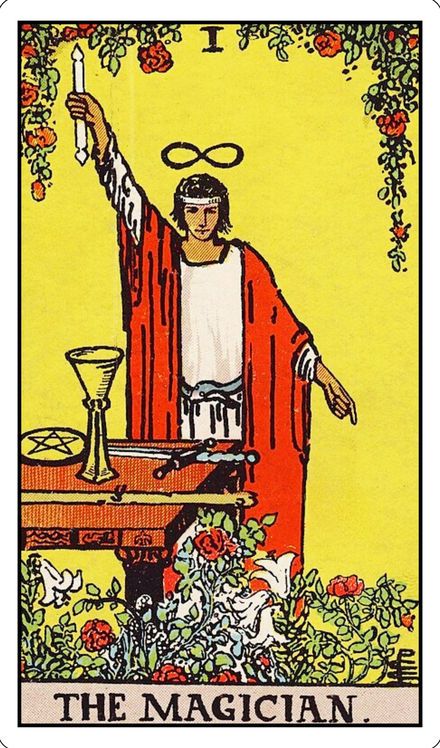
- Clarity meets ability. A strong pair: you know what the situation is, and you have the means to act. That is rarer than either one alone.
- +Ace of Swords and Two of Swords
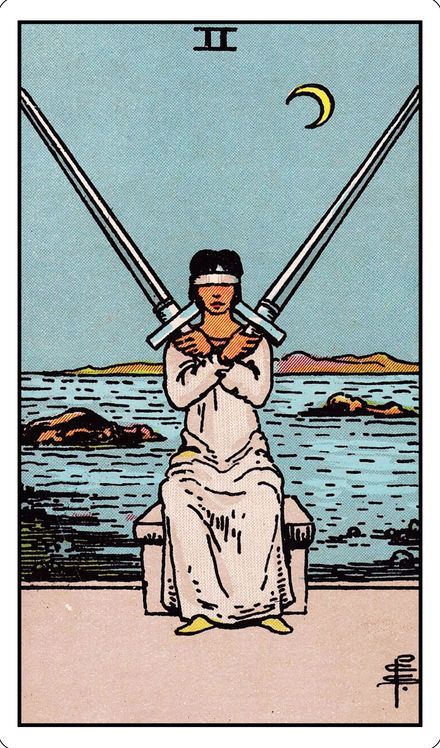
- Clarity available, next to a refusal to look. The pairing is pointed. It usually means the information is already in your hands, and the blindfold is one you put on.
- +Ace of Swords and Justice
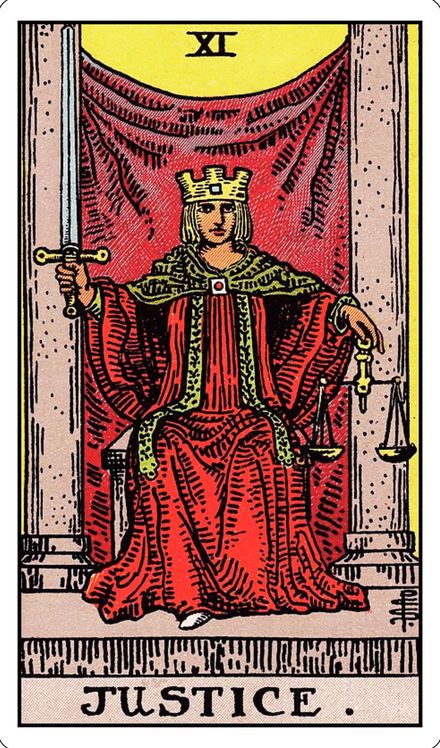
- Truth twice: weighed and spoken. Often formal or legal. It strongly favors full disclosure, and an honest account of your own part.
- +Ace of Swords and The Moon
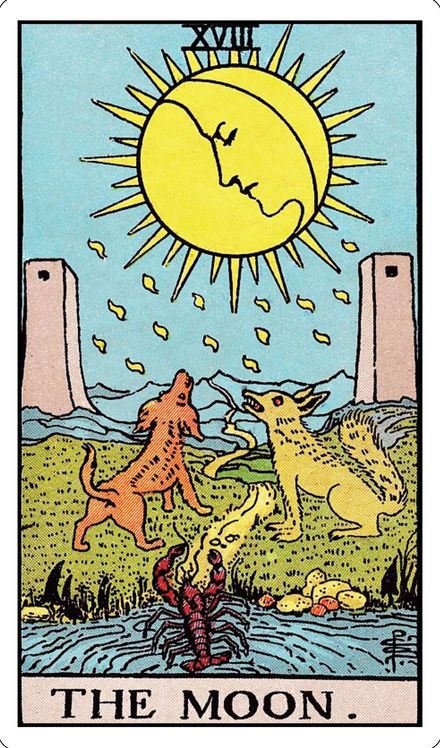
- A direct tension between clarity and distortion. Usually it means the sharp certainty you feel right now deserves checking before you act on it.
Every pairing on this site, Ace of Swords's included, is collected on tarot card combinations.
I can say the true thing plainly.
Ace of Swords: common questions
- What does the Ace of Swords mean?
- It means clarity arriving all at once: a realization, a decision, or a truth finally said out loud. Waite read it as triumph, conquest, and great force. It covers the relief of understanding what has been going on, and it favors plain speech over diplomacy.
- Is the Ace of Swords a good card?
- Yes, though not a comfortable one. Swords cut, and this Ace is the suit at its most honest and least tactful. It is freeing, and it usually costs something, because the thing that finally becomes sayable is rarely the easy thing.
- What does the Ace of Swords mean in love?
- An honest conversation, a truth said plainly, or sudden clarity about what a relationship is. It favors being direct even when it costs. Reversed it points to words used to wound, or knowing what needs saying and not saying it.
- What does the Ace of Swords reversed mean?
- Either confusion, where a decision is made before the picture is clear, or the sword misused, where truth is used to hurt and an argument is won at the cost of the relationship. Waite's reversal was the same great force, with disastrous results.
There is also a page on what Reflecta does with a reading once the cards are down.