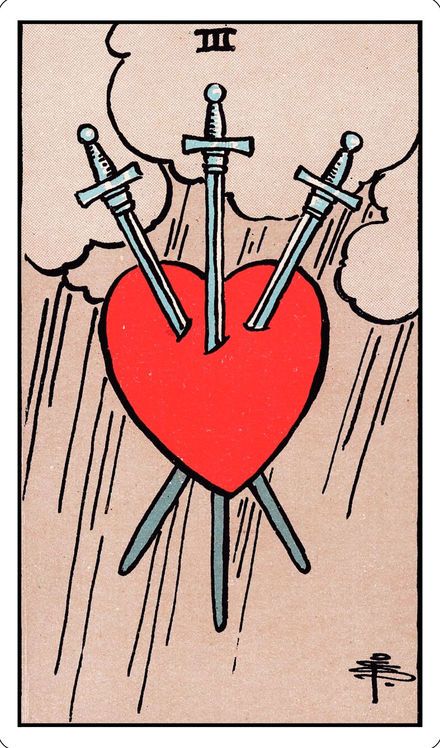
3 of Swords
Three of Swords
- heartbreak
- sorrow
- grief
The Three of Swords means pain caused by something true. Three swords pierce a heart under rain: betrayal, a hard fact, or words that cannot be unheard. Waite listed separation, absence, and division, and said the rest is too obvious from the picture to need listing. Upright it is grief with clarity in it. Reversed it usually means the pain starting to ease, or a hurt held long after the wound has closed.
- Element
- Air
- Astrology
- Saturn in Libra
- Numerology
- 3, the number where two sides produce a third thing
- Yes or no
- no
There is no person in this card. No figure, no face, no scene: just a heart, three swords, and rain filling the whole background.
That absence matters. There is nobody to blame in the picture, and no story attached, which takes away every way of arguing with it. Something is true, it went through, and the weather has set in.
Three of Swords upright meaning
Pain caused by something that turned out to be true.
The Three of Swords is the most direct picture of heartbreak in the deck. It offers no comfort in the image at all: a heart, three swords, and rain. Waite's meanings were removal, absence, delay, division, rupture, and scattering. He said everything else the picture means is too simple and obvious to list. What sets it apart from the Five of Cups is the source. The Five is grief for something lost. This is pain caused by a fact: something said, something discovered, or something that turned out to be true. Swords are the suit of the mind and of truth, and this wound is the wound of knowing. In readings it covers betrayal, rejection, hard news, a difficult conversation, or the moment a story you had been telling yourself stops working. Its one mercy is clarity. Nothing in this card is ambiguous, and that is easier to recover from than uncertainty, even if it does not feel that way at the time. It also does not ask you to look on the bright side, which is a relief when so much advice does.
Three of Swords reversed meaning
The pain easing, or a hurt held after the wound has closed.
Reversed, the Three of Swords usually means recovery. The swords come out, the rain stops, and the sharp hurt turns into something duller and easier to carry. This is rarely fast, and the reversal tends to appear once healing is already underway, more than as encouragement at the start. Its second reading is a hurt kept alive after it has stopped being useful: a wound kept open, a grievance replayed, or an old betrayal that still shapes how you approach new people. The card is not unkind about this. It asks, fairly directly, whether the pain has stopped telling you something and become a habit. A third version is pain avoided instead of worked through. Someone has moved on efficiently, but everything is still there underneath, and others often see it first. Waite's reversed meanings were confusion, error, loss, distraction, and disorder.
A reversal is rarely the upright card's opposite. Reversed tarot cards covers the four conditions a reversal usually describes, and how to tell which one a spread is asking for. Every card's reversed meaning sits beside its upright one on reversed tarot card meanings.
Three of Swords in Waite's 1910 key
The meanings above are Reflecta's reading. These are the ones A. E. Waite gave in The Pictorial Key to the Tarot (1910), the guide he wrote for the deck Pamela Colman Smith drew. He wrote them for fortune-telling, a use tarot took on centuries after it began as a card game in fifteenth-century Italy. Some of his words are blunt, and none of them can tell you what will happen.
- Upright
- Removal, absence, delay, division, rupture, dispersion, and all that the design signifies naturally, being too simple and obvious to call for specific enumeration.
- Reversed
- Mental alienation, error, loss, distraction, disorder, confusion.
Symbolism in the card
- The three swords piercing the heart
- Waite describes three swords piercing a heart. There are three of them. The card describes a fact that hurts from several angles, which is why explaining it once does not make it go away.
- The heart drawn plain and simple
- No figure, no face, no setting. The card gives the pain no story and no villain. That leaves nothing to argue with, and nobody to blame.
- The cloud and rain behind
- Waite notes cloud and rain behind the heart. The rain fills the whole background. This kind of hurt behaves like weather: it lasts for a while, more than a single moment.
Three of Swords in love and relationships
Upright. Heartbreak, betrayal, or a truth about a relationship that cannot be unheard. Waite's extra meanings included a lover's departure. It also covers the honest conversation that ends something, where nobody lied and the facts were enough.
Reversed. Starting to heal after heartbreak, or carrying an old betrayal into a current relationship. The second is worth checking for, since it rarely announces itself.
Three of Swords in career and work
Upright. Harsh feedback, a layoff delivered plainly, or discovering something about a workplace that changes how you see it. Painful, and accurate.
Reversed. Recovering from a blow at work, or a grudge about a past job that still shapes your decisions. Often the grudge limits you more than the original event did.
Three of Swords in money
Upright. A money truth that hurts: real debt, a loss confirmed, or the real numbers after avoiding them. The clarity is the useful part.
Reversed. Recovering financially, or shame about a past money decision still driving decisions now. The shame can cost more than the mistake did.
Three of Swords as feelings
Upright. Hurt, possibly connected to you. The card describes something that landed hard and has not settled. That can look like holding back, when it is closer to recovering. What someone feels is theirs to say.
Reversed. Getting over something, or holding on to a hurt that started before you. If it started before you, reassurance alone may not fix it. That is worth knowing early.
Is Three of Swords a yes or a no?
Upright, it leans no. Reversed, it leans maybe.
Upright it leans clearly no, one of the more emphatic leanings in the deck. The card describes real hurt and does not soften it. Reversed it sits at maybe, because it usually describes recovery underway. That changes the answer over time, more than right away.
Every card's leaning in one table, upright and reversed, is on yes or no tarot, along with what a maybe is asking you to do.
Three of Swords card combinations
- +Three of Swords and The Tower
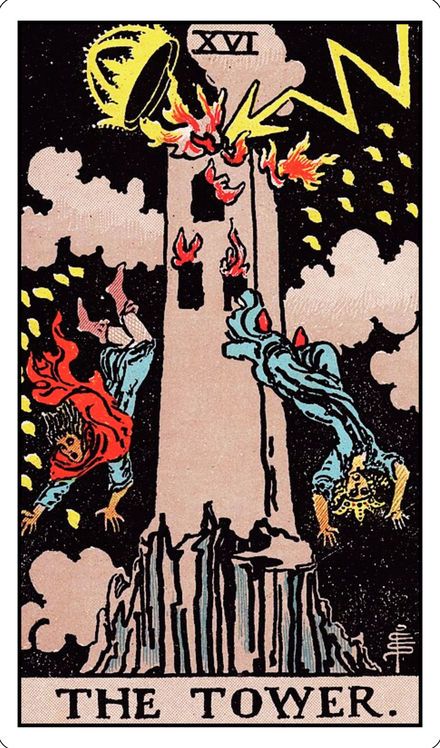
- A hard truth arriving with a collapse. Together they can mean the revelation and the ending are the same event. That is faster and cleaner than the drawn-out version.
- +Three of Swords and The Star
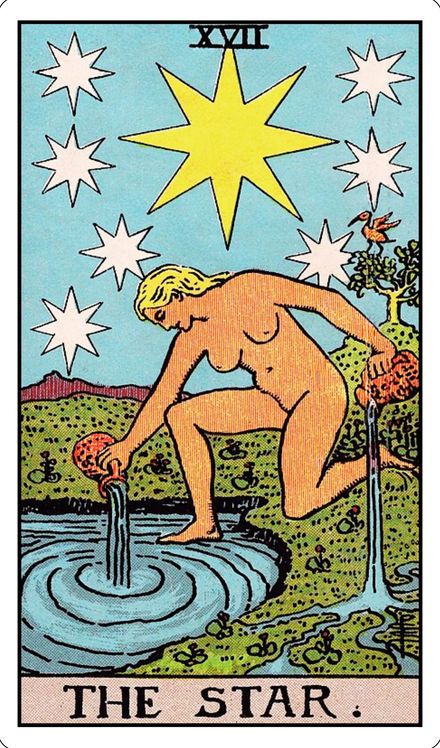
- Heartbreak, then healing. One of the more hopeful sequences in the deck. It suggests the pain is real, and that recovery can last.
- +Three of Swords and Five of Cups
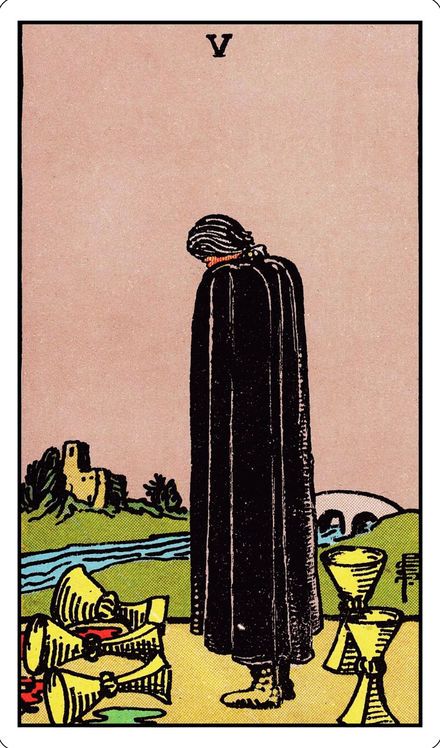
- Two kinds of grief. The Five mourns something lost, and the Three hurts from something learned. Together they can mean both are happening, and you are mixing them up.
- +Three of Swords and Ace of Swords
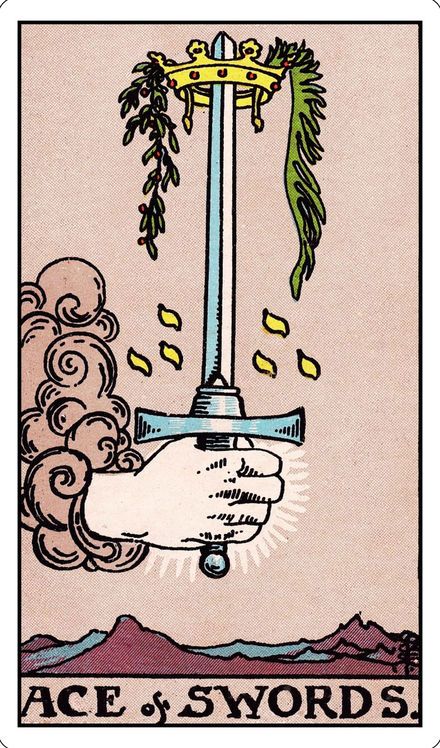
- The truth, and what it costs. Often it means the clarity was worth having and the price was real. The card does not pretend the two cancel each other out.
Every pairing on this site, Three of Swords's included, is collected on tarot card combinations.
This hurt because it was true, and true is survivable.
Three of Swords: common questions
- What does the Three of Swords mean?
- It means pain caused by something true: betrayal, a hard fact, or words that cannot be unheard. Three swords pierce a plain heart under rain. Waite listed separation, absence, and division, and called the rest too obvious to list. It is the wound of learning something, more than of losing something.
- Does the Three of Swords always mean heartbreak?
- Heartbreak is its plainest reading, and it covers any pain that comes from a fact more than a loss: harsh feedback, hard news, or a discovery at work. What they share is that something became known and could not be unknown.
- Is there anything positive in the Three of Swords?
- One thing, and it is real: clarity. Nothing in this card is ambiguous, and clear pain is easier to recover from than uncertainty, even though it does not feel that way. It also does not ask you to look on the bright side, which is a relief.
- What does the Three of Swords reversed mean?
- Usually recovery, arriving slowly, and showing up once healing has begun. It can also mean a hurt kept alive after it stopped being useful, or pain moved past quickly without ever being dealt with. Waite's reversed meanings were confusion, error, loss, and disorder.
There is also a page on what Reflecta does with a reading once the cards are down.