Tarot spread positions
Most tarot spreads offered as new layouts are the same three or five card shapes with the positions renamed, and the positions are what makes a reading work. A set of positions fits a question when every one of them is a question you would say out loud and no two ask the same thing in different words. Eight sets follow, for love, a job move, a recurring argument, a block, a decision, the year ahead, self-knowledge, and one question better asked with a single card.
Search for a tarot spread that fits a particular question and you get a library. Forty layouts sorted by topic, each one a diagram with a different number of cards, and the strong implication that somewhere in the list is the shape that matches what you want to ask.
It is not there. There are about five shapes, they have been the same five for a century, and what separates a love spread from a career spread in any of those libraries is the sentence written under each card. The geometry barely changes.
That is worth knowing, because it means you can stop looking. You already have the five layouts. What you need is a set of positions, and positions are cheap to write and expensive to write well.
What a position has to do
A position is a question, and the card is the answer. Everything that goes wrong with a homemade spread goes wrong here.
The spreads hub states two tests and they hold up. Every position has to be a question you would say out loud, because a position you cannot phrase is one you will fill with whatever the card happens to suggest. And no two positions may ask the same question in different words, which is the common fault: a layout carrying both an obstacle and a challenge will produce two cards that agree, and that agreement is a property of the layout rather than a finding about your life.
There is a third test and it is the one the libraries fail. A position has to be answerable by a card rather than by a fact. “What is the timing on this” is a fact. “Whether he will call” is a fact. A card cannot supply either, so a position that asks for one gets filled by your own hope wearing a card’s clothes. The positions below all ask about something you are doing, avoiding, carrying, or refusing to name, which is the category the deck is good at.
One more thing, which is a preference rather than a rule. The best position in any set is the one you would rather not have to answer. If a spread keeps you comfortable all the way around, it was built to.
Love, as it stands
Five cards, on the relationship layout.
- What I am bringing to this
- What they are responding to
- What the two of us have built that neither of us made alone
- What I keep doing that gets in the way
- Where this goes if nothing changes
The fifth position is where most love spreads say “potential”, and potential is a flattering word for a question nobody wants to ask straight. Where this goes if nothing changes is the same card and a harder read, and it is the one that tells you something, because the honest answer to most relationship questions is that nothing is going to change unless somebody decides to change it.
Position two is deliberately not “how they feel about me”. The cards have never met them. What they are responding to is a question about the situation you are both in, which is something you can observe and the deck can comment on.
A job you are thinking of leaving
Three cards, on the three card layout.
- What the job is, as opposed to how it was described
- What I would be giving up
- What I would still be carrying afterward
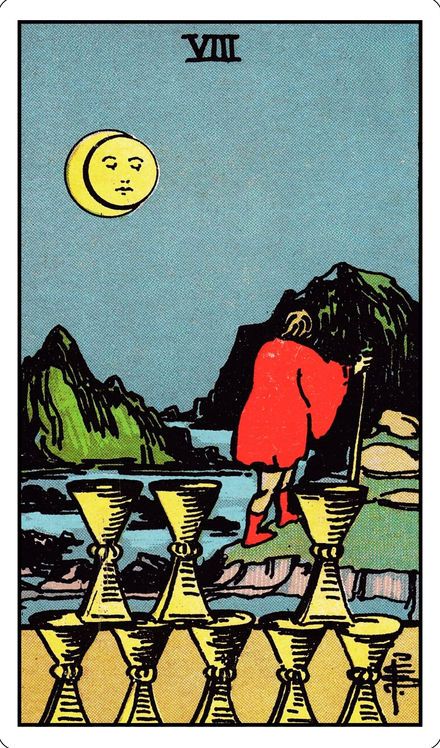
The third card is the whole reason to deal this spread rather than make a list. People leave jobs to escape something, and about half the time the thing is not the job. If the card in position three is the Eight of Cups, the card may be pointing at walking away as the pattern rather than the solution. If it is the Ten of Wands, the load may be yours, and it travels with you.
Three cards is enough here. A ten card version of a job decision reads as thoroughness and functions as delay.
The same argument, again
Five cards, on the relationship layout.
- What I say this is about
- What it is about
- What I think they are defending
- What happens in the ten minutes before it starts
- What would have to be true for it to stop
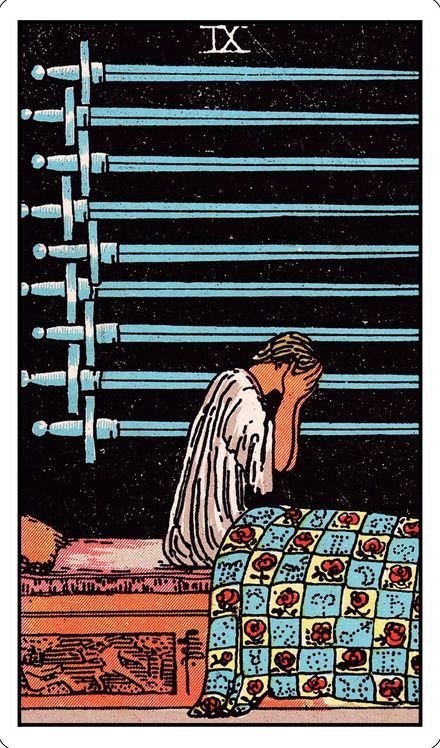
Positions one and two look like the same question and are not, and the gap between the two cards is the reading. Position four is the one people find strange and it is the most useful: recurring arguments have a reliable run-up, and the run-up is the part you can change. The Nine of Swords here is a familiar answer, and it can mean the argument starts hours before either of you says anything.
Do not deal this one about somebody who is in the room. It is a spread about your half.
A block
Three cards, on the three card layout.
- What I am telling myself the obstacle is
- What is stopping me
- What I get out of not starting
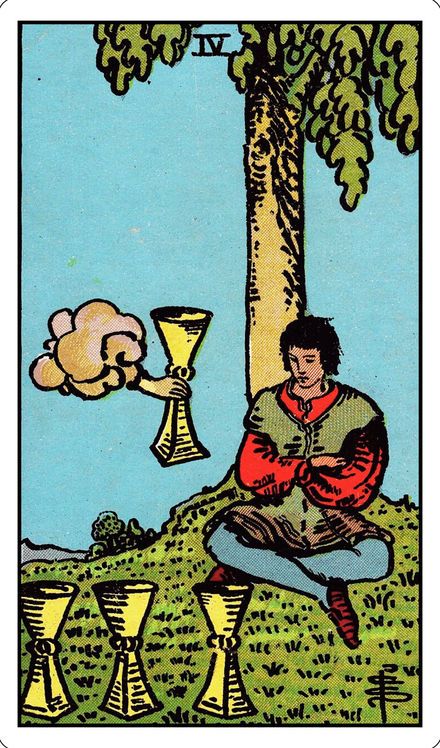
Position three is not in any library spread and it is where the answer usually lives. Not starting pays. It keeps the thing unspoiled, it keeps you from finding out how good you are, and it keeps the day free. The Four of Cups sitting in that position is the clearest version of it: the cup is already being offered and looking at it would mean putting down the sulk.
If positions one and two produce the same card twice in feel, that is a good sign rather than a broken spread. It means you were already being straight with yourself, and the reading is position three.
A decision between two options
Five cards, on the relationship layout.
- What A is offering
- What B is offering
- What I want to be true
- What A costs, a year in
- What B costs, a year in
That layout is called the relationship spread because of the positions it ships with. It is five cards in a shape, and this is the third set here to borrow it, which is the argument of this page made in the most literal way available.
The version of this in most libraries deals three cards for each option and invites you to compare them, which produces six cards and the decision you had already made, because you will read the set you prefer more generously. The set above fixes that by putting the thumb on the scale in position three, out in the open where you can see it, and by asking about cost rather than outcome.
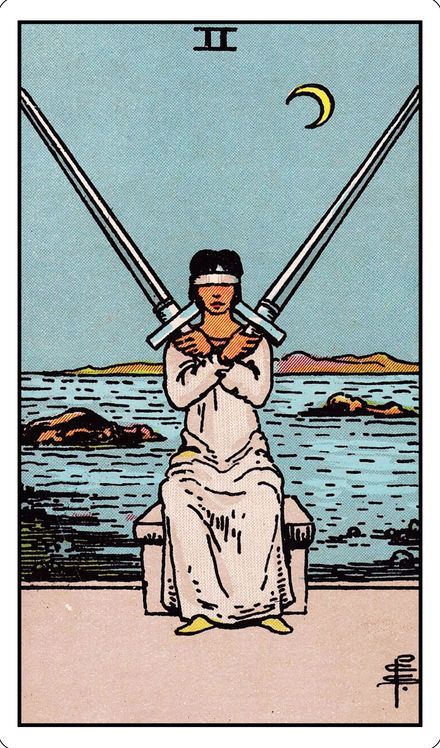
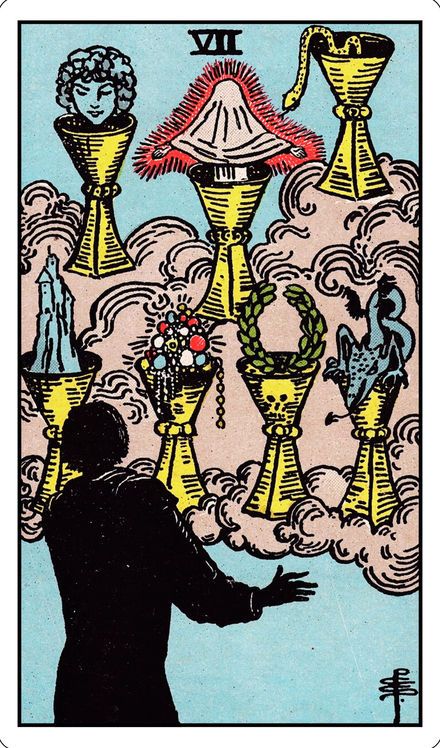
There is no position here for “which should I choose”. Deal one and you will read the card as permission. The Two of Swords turning up anywhere in this spread is the deck describing the blindfold rather than pointing past it, and the Seven of Cups can mean you have more options than you have information.
The year ahead, which is not twelve cards
Three cards, on the three card layout.
- What I am carrying into this year
- What this year is for
- What I will have to stop doing
The twelve card year spread, one card a month, is the single most popular layout in the January libraries and it does not work. Twelve cards is more than anyone can hold in one reading, so it becomes twelve separate one card readings with a month written on each, and by March you have forgotten eleven of them and are over-fitting the one you remember. A card dealt in January for September is being asked a question that does not exist yet.
Three cards for a year is a different spread from the twelve, and it is the one that survives being looked at in June.
Who I am, when nobody is managing it
Seven cards, on the horseshoe layout.
- What I think I am like
- What people meet first
- What I do under pressure
- What I am protecting
- What I am good at and discount
- What I have outgrown and still perform
- What I would do if I stopped minding how I come across
This is the one set here that earns seven cards, because self-knowledge is the one subject where seven positions can be written without any two of them overlapping. Read one and two against each other before you read anything else; if they agree, the rest of the spread is about something other than self-presentation, and that is a useful morning.
Position six is the cruelest and the most worth having. Most people are still performing a personality that solved a problem they no longer have.
What is this really about
One card, on the single card layout.
- What is this really about
The single card spread is the hardest layout on the site and the one people graduate away from too early. With three cards you can always explain a difficult card by pointing at its neighbors. With one card there is nothing to blame and nothing to balance it, so whatever you see in it came from you, which is the point.
Use it when you have already dealt a larger spread and it did not settle. Ask the question in the position above, out loud, then deal once and sit with what comes up before you look anything up.
Sets that are not worth the cards
Four shapes turn up constantly in spread libraries and none of them should be dealt.
A yes card, a no card, and a card for what tips it. Three cards and no decision, because you will read whichever card you prefer as the verdict. One card answers a yes or no question, and if you want to know which way it leans, the yes or no page has the whole deck sorted.
Anything with both an obstacle and a challenge position. They are the same question. So are “hidden influences” and “what you cannot see”, and “advice” and “what to do next”. Two cards answering one question produce an agreement you then treat as confirmation, which feels like certainty and adds none.
A position for what somebody else is thinking. The deck can describe a situation you are in and a pattern you are running. It cannot report on a person who is not holding it. Rephrase it as what you are responding to and the card becomes readable.
A card per month, a card per chakra, a card per house. Any spread whose positions come from a list rather than from the question will have positions in it that nobody wanted an answer to. The number of cards should be the number of real questions you have, and that is usually three.
Where the positions come from
Everything above is one move applied eight times: take a layout you already have, write the positions as questions, then delete the ones you would not say out loud. It takes about ten minutes and it is the step between following spreads and reading them, which is the same step how to read tarot is about from the other direction.
The part that does not survive being done by hand is the record. A position set is worth keeping only if you can go back to the reading it produced, and a notebook of eight custom spreads becomes unreadable at about the fourth. Reflecta keeps the reading with the question attached, so a set of positions that keeps producing something is one you can recognize rather than one you half remember writing down.
Common questions
- What is the best tarot spread for love?
- The five card layout, with positions that describe the connection rather than predict it: what you bring, what they respond to, what the two of you have built, what you keep doing that gets in the way, and where this goes if nothing changes. Every love spread that promises to tell you how they feel is answering a question the cards cannot reach, because the cards have never met them.
- How many cards should a tarot spread have?
- As many as you can hold in your head at once, which for most people is three and for nobody is twelve. A card earns its place by asking something the other cards are not asking. If you cannot say what a position is for without repeating another position, deal one card fewer and read it properly.
- Can I make up my own tarot spread?
- Yes, and it is the fastest way to get better at reading. Take a layout you already use and rewrite the positions as questions you would say out loud, one at a time. The two rules worth keeping are that a position has to be answerable by a card rather than by a fact, and that no two positions may ask the same thing in different words.
- What is the difference between a tarot spread and a tarot position?
- The spread is the shape you deal the cards in. The position is the question each card is answering. Libraries of spreads sort by topic and give you forty diagrams, which is forty versions of about five shapes; the geometry barely changes between a love spread and a career spread, and the wording under the cards is what differs.
- Is there a tarot spread that answers yes or no?
- One card answers a yes or no question, and adding positions to it does not add certainty. A layout with a yes card, a no card, and a card for what tips it will produce three cards and one decision you had already made, because you will read whichever card you prefer as the answer. Ask the single card what you are avoiding instead.
Cards mentioned
There is also a page on what Reflecta is, if the waitlist is a step too early.