Repeated tarot cards
A card that keeps appearing is usually the deck rather than a message. Pulling one card a day, there is a 71% chance some card has already repeated inside two weeks, and a repeat is more likely than not by the eleventh pull. What makes a repeat worth attention is that it beats chance, or that it answers the same question twice.
There is a name for this in the tarot world. A card that keeps turning up is a stalker card, and if one is following you around at the moment, the usual advice is that it carries a message you have not taken in yet, and it will keep arriving until you do.
That is sometimes true. Before it can be true, though, something has to be ruled out, and almost nobody rules it out: a deck of 78 cards produces repeats on its own, far sooner than people expect.
The odds, worked out
Pull one card a day and put it back. What are the chances that by day n, some card has already come up twice?
| Daily pulls so far | Chance some card has already repeated |
|---|---|
| 5 | 12.3% |
| 7 | 24.2% |
| 10 | 45.2% |
| 14 | 71.1% |
| 20 | 93.1% |
| 30 | 99.8% |
A repeat becomes more likely than not on the eleventh pull, at 52.2%. On average the first one arrives around the twelfth. By the end of a month of daily pulls it has effectively certainly happened, and a person who has gone thirty days without one has had an unusual month.
This is the birthday problem, the one where 23 people in a room give you even odds on a shared birthday. It is the same shape with 78 cards instead of 365 days, and it lands about twice as fast: eleven pulls rather than twenty-three people.
If you deal three cards rather than one, faster again. A repeat across three-card spreads is more likely than not by your fourth spread, and past 93% by your seventh.
The other half of the arithmetic is the part nobody mentions. After 90 daily pulls you will have seen about 54 different cards, which means roughly two dozen of the deck you have never once drawn. The repeats are what crowd them out. A deck that seems to be circling a handful of cards and ignoring the rest is a deck behaving exactly as it should.
Which repeats are worth attention
None of this makes a repeated card meaningless. It means most repeats carry no information, so the ones that do are worth separating out.
A repeat inside two or three weeks of daily pulls is chance. Say it kindly to yourself and move on. There is no message in it, because there was no unlikely event to explain.
One named card, several times, over months, is different. A specific card appearing three or more times in 90 daily pulls happens about 11% of the time. That is not a miracle, and it is uncommon enough to be worth sitting with. Note the window: over a year of daily pulls, most cards in the deck will have shown up three times, so the count means nothing without the period attached to it.
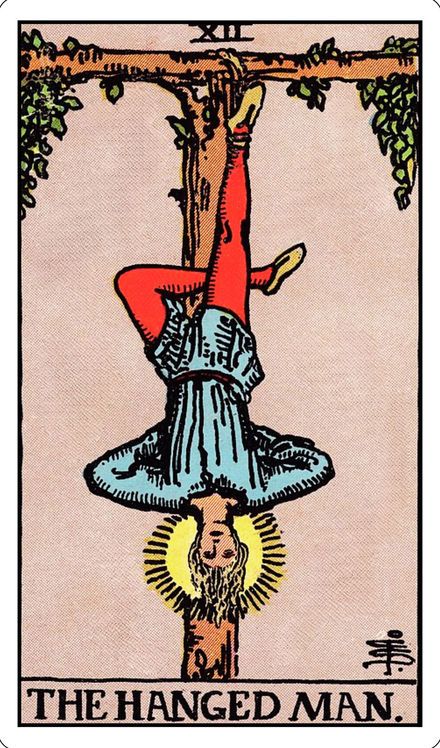
A repeat that lands on the same question twice is worth more than a repeat across unrelated questions, and this is the one that gets ignored. If the Hanged Man comes up on Monday’s question about your job and Thursday’s question about a friendship, the deck repeated. If it answers the same question about your job twice, three weeks apart, the deck did something less interesting than the fact that you asked again. The question repeated. That is the finding.
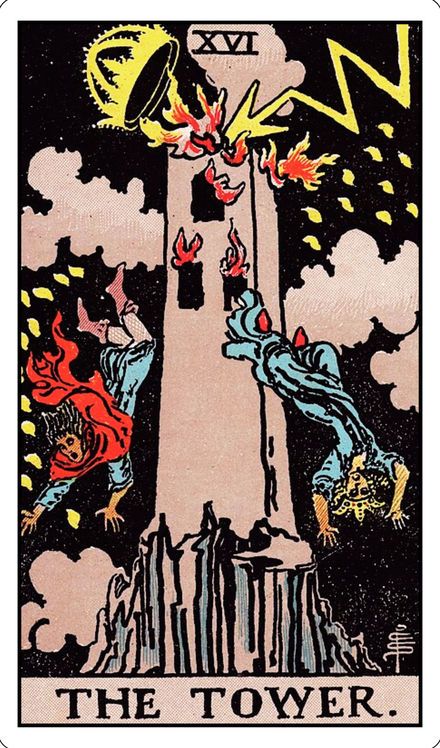
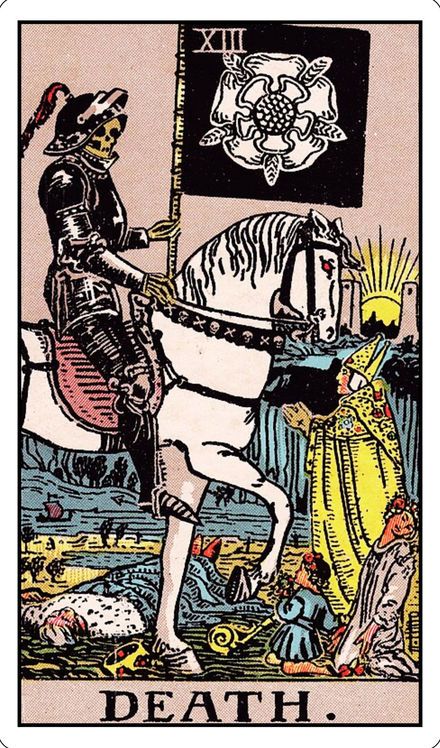
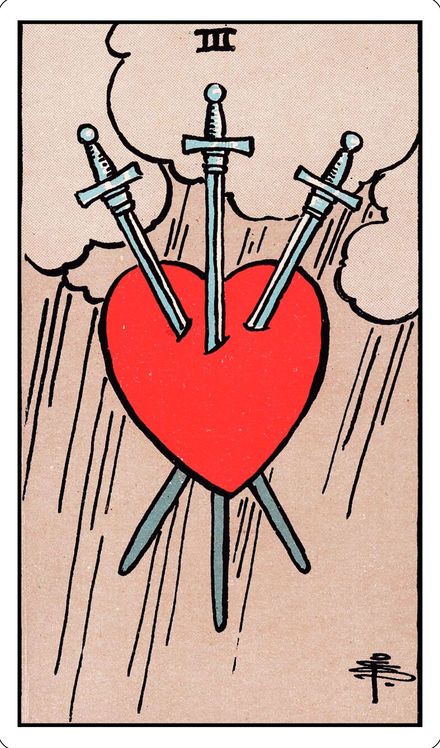
Difficult cards are remembered better than gentle ones. The Tower, Death, the Three of Swords, and the Ten of Swords feel like stalkers more often than the Six of Pentacles does, and they are not drawn more often. They are recalled more often. Any card that made your stomach drop gets stored with the date attached; the Two of Wands does not.
What to do with one you have decided is real
Read it as an answer to a question. The card has already told you what it means. What the repetition adds is emphasis, and the emphasis falls on a question rather than on your life in general.
So: go back to what you asked each time it appeared. If the questions were different and the card was the same, look for the thing the questions have in common, which is usually a situation you are approaching from several angles because you do not want to name it. If the question was the same, you have your answer and you have asked twice, which the how to read tarot guide has a blunter sentence about.
Then stop asking the open question and ask the specific one. A card that keeps arriving in response to “what is going on with my work” will say something much more useful in response to “what am I avoiding about handing in my notice”.
What not to do: remove the card from the deck, redeal until it goes away, or read the repeat as a warning escalating in volume. The first changes the odds and not the situation, the second is shopping, and the third turns a card that was describing something into a card threatening you with it, which is not what the deck is for.
Why you cannot settle this from memory
Everything above needs a number: how many pulls, how long, how many times, which questions. Memory supplies none of them.
Memory keeps the repeats and discards the 76 cards that came up once. It keeps the frightening ones and loses the mild ones. It has no idea whether the Tower turned up three times in three weeks or three times in five months, and those are a strange run and an ordinary one. The feeling that a card is following you is produced by the same mechanism that makes you notice a car model everywhere the day after you consider buying it, and it is not evidence of anything except that you noticed.
The only fix is a record, kept as you go rather than assembled afterward. Any notebook does it if you write down the date, the question, and the cards, every time, including the readings that felt like nothing. Those are the ones that make the count mean something, and they are the first ones people stop recording. Keeping a tarot journal is the how: the four fields worth writing, the two ways the habit dies, and the three passes that make a year of entries readable.
This is the part Reflecta was built to do without asking you to keep a notebook. Every reading stays, so a card that keeps returning is something you can look at rather than something you feel, along with what you asked each time it came back. A repeat is either a run in the data or a question you have asked four times. Both are worth knowing, and neither survives being remembered.
Common questions
- What is a stalker card in tarot?
- A stalker card is the community's name for a card that keeps turning up in your readings, often across unrelated questions and over weeks. It is not a formal part of the tradition and no deck treats it as a rule. It is a description of an experience most people who pull cards regularly have had.
- What does it mean when the same tarot card keeps appearing?
- Most often it means you have been pulling cards for long enough that a repeat became likely. With 78 cards and one pull a day, some card has repeated within two weeks about 71% of the time. A repeat is worth reading as a message when it beats that, which means a specific card several times over months, or the same card answering the same question twice.
- Is it bad if I keep pulling the same card?
- No, including when the card is a difficult one. The Tower turning up three times is one card coming out of a shuffled deck three times, which is a long way from three warnings. What matters is the question it kept answering, and difficult cards tend to be remembered better than gentle ones, which makes them feel more persistent than they are.
- How many times does a card have to repeat before it means something?
- There is no threshold that works without a window attached. One named card appearing three or more times in 90 daily pulls happens about 11% of the time, which is unusual enough to sit with. Over a year of daily pulls the same three appearances happen for most of the deck, so three times is only remarkable if you can say over how long.
- Should I stop pulling a card that keeps coming up?
- No, and removing it from the deck changes the odds rather than the situation. If the repeat is bothering you, the useful move is to stop asking the open question you have been asking and ask the specific one underneath it, then read what the card says about that.
Cards mentioned
There is also a page on what Reflecta is, if the waitlist is a step too early.