Keeping a tarot journal
Keep four things: the date, the question in the words you used, the cards and which way up, and one line of what you thought it meant. The fourth is the only one you cannot reconstruct later and the only one worth anything, because the cards are public and your reading of them is not. Journals die by recording interpretations rather than observations, and by never being read back, which is the more common death.
Most advice about keeping a tarot journal is a list of fields. Date, deck used, moon phase, spread, question, cards drawn, upright or reversed, interpretation, reflection. It looks like rigor, and it is a fair part of the reason most tarot journals are abandoned inside a month.
The list has the problem backwards. Nearly every field on it can be reconstructed later from a photograph and a calendar. One of them cannot be reconstructed from anything, decays within about three days, and is the only reason to keep a journal in the first place: what you thought the cards meant, written down before you knew how any of it turned out.
The four fields, and why only one of them is hard
The date. Not for the astrology. For the arithmetic, which the two-week section below is about.
The question, in the words you used. Not a tidied version. If you asked “is this going anywhere” rather than “what is the trajectory of this relationship”, write the first one, because the vagueness of the question is usually what explains a reading that went nowhere, and a tidied question hides it.
The cards, and which way up. Order matters if you used positions. A photograph does this field better than writing does, and there is no prize for handwriting them.
One line of what you think it means. This is the whole journal. The other three fields are the filing. If the line will not come, ask the card one open question, what is this pointing at this week?, and write the first answer that arrives.
Here is why the fourth field carries all the weight. The cards are public information: all seventy-eight of them have a page on this site with the upright and reversed meanings written out. Nothing you record about what the Five of Pentacles means is information, because a better version of it is already written down somewhere, by someone who had more time.
Your reading of the Five of Pentacles on the particular Tuesday you were worried about rent exists nowhere else, and it will not exist in your head by Friday. You will remember drawing the card. You will not remember that you read it as being about your roommate rather than about money, which is the thing that turned out to be interesting.
One more instruction, the one everybody ignores. Record the readings that felt like nothing. A journal holding only the readings that landed is a highlight reel, and a highlight reel cannot separate getting better at this from getting better at remembering the hits. The flat ones are the control group, and they are the first entries people stop writing.
Four entries, and the line that gets thrown away
These four are illustrative rather than pulled from a real journal, and they are here because the difference between an observation and an interpretation does not survive being described. From the inside the two feel identical. Side by side they stop feeling identical.
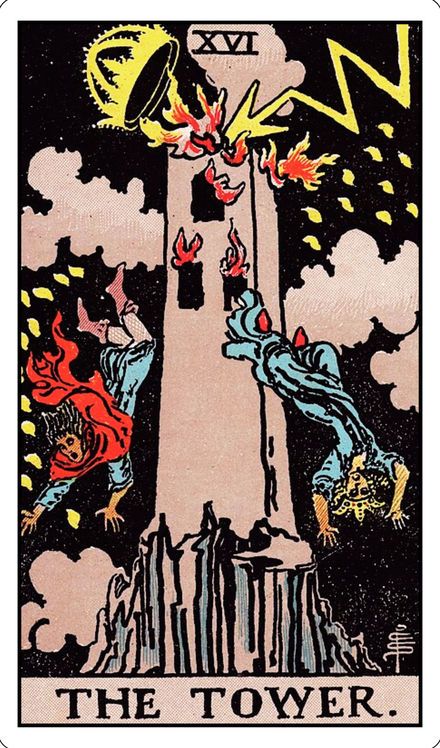
The TowerNo question. Morning pull.
- What usually gets written
- Big upheaval coming. Something is going to collapse. Brace.
- What is worth keeping
- Read it as the contract conversation I keep moving to next week. Expect I will move it again.
The first line could have been written without drawing the card, because it is the card meaning with the reader taken out of it. The second one can turn out to be wrong by Friday, which is the only property that makes an entry worth reading back.
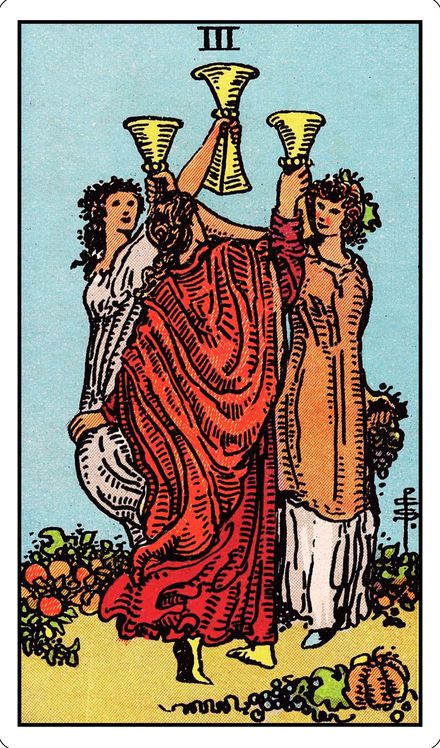
Three of CupsShould I go to the thing on Saturday?
- What usually gets written
- Three of Cups is celebration and friendship, so yes, go.
- What is worth keeping
- Took it as a yes, but noticed I wanted it to say no. Going anyway. Check on Sunday whether I was glad.
The second line records the reading and the reader pulling against it, which is the part worth reading back. Six months of entries like this tell you which questions you ask the deck when you have already decided.
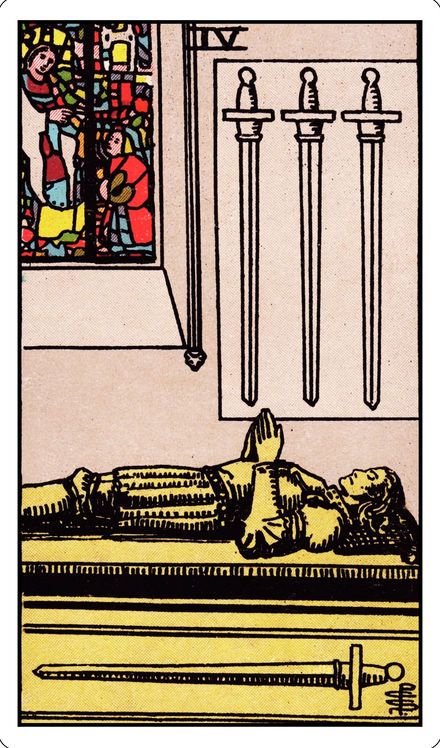
Four of SwordsWhat am I missing about the job move?
- What usually gets written
- Rest. Take a break. Do not rush the decision.
- What is worth keeping
- Read it as: I have not been sleeping since I started thinking about this, and I am reading the offer at 1am. Decide on a weekday, awake.
Same card, same keyword, but the second version names something checkable about the next two weeks. An entry you cannot be caught out by is an entry that teaches you nothing.
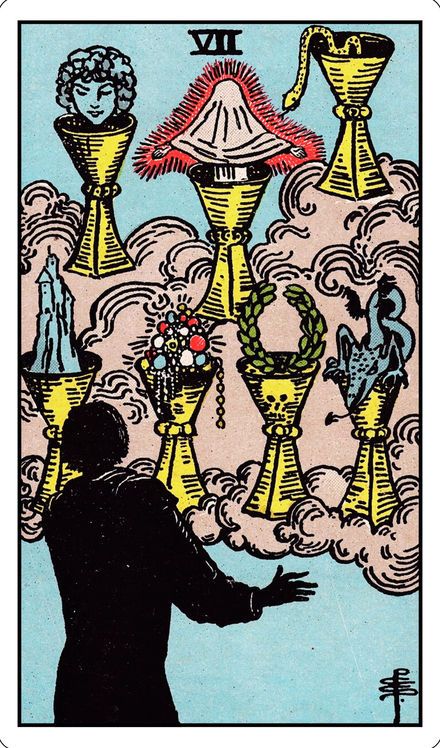
Seven of CupsWhat should I do about the apartment?
- What usually gets written
- Nothing written. The reading did not land, so no entry.
- What is worth keeping
- Nothing landed. Seven of Cups on a question with five options in it and I could not pick which cup was which. Question was too big.
This is the entry nobody writes and the most useful one in the set. Three months later it is the evidence that vague questions produce vague readings, which is a thing you can only learn from the readings that failed.
The two ways a tarot journal dies
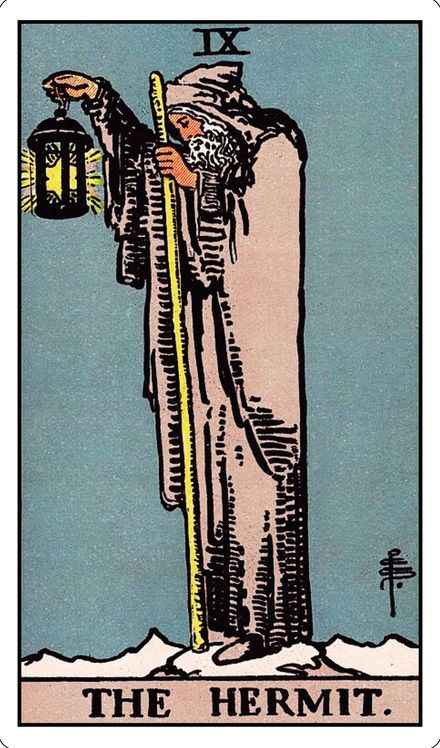
It fills up with interpretations rather than observations. You write “the Hermit means withdrawing to think”, and a year later you have a hand-copied, slightly worse version of a reference book you already own. The entries are all true and none of them is about you.
The test is one sentence long: could this line have been written without my question in front of me? If it could, it is a card meaning. Cross it out and write what you thought the card was pointing at instead, in the smallest words you can manage.
It is never read back. This is the more common death and it is quieter, because the journal is still being written. A journal you do not read is a filing system for an archive nobody opens, and some part of you works that out around week six, which is when the writing starts to feel like homework.
The fix is a date. Put a re-read in the calendar for the first of the month before you write a single entry, because the habit that keeps a journal alive is the reading habit, and it is the one that gets left to chance.
Why two weeks is the shortest useful journal
There are seventy-eight cards. Pull one a day and put it back, and there is a 71% chance some card has already repeated by day fourteen. A repeat is more likely than not by the eleventh pull.
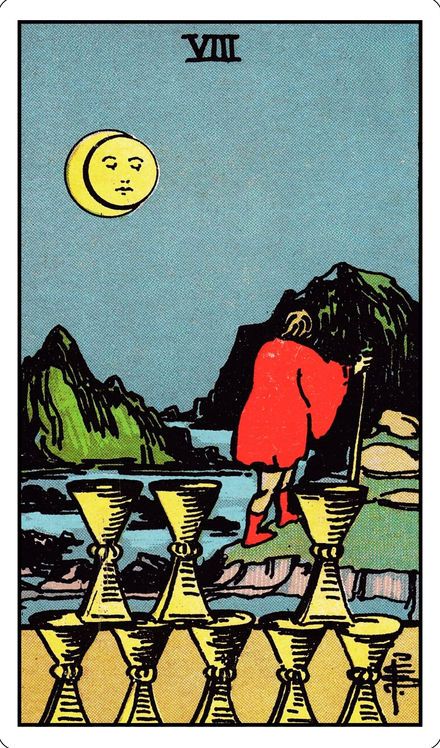
So the Eight of Cups turning up three times in your first two weeks is arithmetic, and reading it as insistence is reading the size of the deck. Repeated tarot cards has the full table and the test for the repeats that do beat chance, and the test needs two numbers: how many times, and over how long. Memory supplies neither. It keeps the repeats and throws away the dates, which is exactly the wrong half.
The same record answers the question underneath it, which almost nobody thinks to ask. After ninety daily pulls you will have seen about fifty-four different cards, so roughly two dozen of the deck you have never once drawn. Without a journal you would swear the deck was circling a favorite handful and ignoring the rest. With one you can see that it was doing what a shuffled deck does.
How to read a year back
This is the part the templates never reach, because a template is a thing you write into. Three passes, and each one answers a question a single entry cannot.
Read by card. Gather every entry where one card appeared and read your own lines in date order. What you are looking for is drift. If The Hermit reads as “I need to sit with this properly” in March and as “I have been avoiding everyone for a month” in October, the deck did not change. You did, and the card caught it. That drift is the most valuable thing a journal produces and it is invisible in any single entry, which is why it belongs to the reading rather than to the writing.
Read by question. Find the question you asked more than twice. Then stop looking at the cards, because the repetition is the finding. A question asked four times across a year is a decision you have been carrying rather than making, and the deck has been answering it patiently each time. What to do about that is in how to read tarot, which is blunt about asking the same thing twice.
Read where you were wrong. Find the entries where the line you wrote does not describe what happened, and read only those. They teach more than every other entry put together. A year of being right is usually a year of writing lines vague enough that nothing could contradict them, and this pass is what the one line rule exists to make possible: a short, specific, checkable sentence can be wrong, and a paragraph of atmosphere cannot.
This last pass is also where the reading-back habit pays for itself, because it is uncomfortable and nobody does it by accident. If a journal has only made you feel understood, it has not been read properly yet. Judgement is the card for the thing this pass does: a whole period becoming legible at once, which is not available while you are inside it.
This is the part Reflecta was built to do without asking you to keep an index. Every reading stays with the question you asked it, so reading by card or by question is a thing you look at rather than a thing you assemble. The writing is still yours to do. It is the reading back that no notebook can help with.
Paper or an app, answered honestly
Paper wins the writing. A pen is slower than a keyboard, which suits a one line entry and is the reason handwritten entries tend to be shorter and more specific. A notebook does not have notifications in it. And there is a real, unmeasurable something in handling the thing: the pause between laying the cards out and writing the line is where most of the reading happens, and a phone shortens that pause.
Digital wins the reading. All three passes above are searches. By card, by question, by outcome. A paper journal can do them for the first hundred entries and then quietly cannot, unless you keep an index at the back, card name and dates, two minutes a week. Almost nobody keeps the index, which is why so many beautiful tarot notebooks have been written in and never read.
So: paper is better for the writing and worse for the reading, and the reading is the point. If you love the notebook, keep the notebook and keep the index. If you know you will not keep an index, keep it somewhere searchable and let the pause happen before you pick up the phone rather than after.
What is not worth recording
Moon phase, deck used, candle, weather, what you ate. Every one of these is fine if you intend to test it. Record the moon phase, and in a year group your entries by it and see whether anything separates.
If you have never once done that, and you are not going to, the field costs you a few seconds every single entry and buys nothing. Those seconds are what the habit dies of. A tarot journal fails from friction far more often than from lack of interest, and the friction is nearly always a field somebody else told you to keep.
The same goes for the spread. If you drew three cards and only read two of them, write down that you read two. The journal is a record of what you did, and tidying it as you go removes the one thing it was for.
Common questions
- What should you write in a tarot journal?
- Four things: the date, the question in the words you used rather than a tidied version of it, the cards and which way up they landed, and one line saying what you thought it meant. The fourth is the one that matters. The other three can be recovered from a photograph and a calendar, and your reading of the cards cannot be recovered from anything, because it stops being available to you within a few days.
- How do you start a tarot journal?
- Open any notebook or note app and write one entry today, with four fields and no template. Do not design the layout first. Almost every abandoned tarot journal was abandoned with a beautifully ruled first page, because the setup absorbed the interest the habit needed. If after a month you find yourself wanting a field you do not have, add it then, to a habit that already exists.
- Is it better to keep a tarot journal on paper or digitally?
- Paper is better for the writing and worse for the reading, and the reading is the point. Writing by hand slows you down, which helps a one line entry, and a notebook does not interrupt you. But a journal earns its keep when you gather every entry for one card, or every time you asked one question, and past about a hundred entries paper cannot do that without an index you keep by hand.
- How often should you write in a tarot journal?
- Every reading, including the ones that felt like nothing. Those are the entries people skip and they are the ones that make the rest mean something, because a journal holding only the readings that landed is a highlight reel and cannot tell you how good you are getting at this. Writing after every reading matters far more than writing every day.
- How do you read a tarot journal back?
- In three passes, each answering a different question. Gather every entry where one card appeared and read your own lines in date order, which shows you how your reading of that card has drifted. Then find the question you asked more than twice, because the repetition is the finding. Then read the entries where what you wrote and what happened came apart, which teach more than the rest put together.
Cards mentioned


There is also a page on what Reflecta is, if the waitlist is a step too early.