Major Arcana · 3
The Empress
- abundance
- nurturing
- creativity
- nature
The Empress points to something growing that needs care. She stands for abundance, creativity, and physical comfort, and for things that arrive in their own time. As a yes or no answer she leans toward a warm yes. Her caution is about timing: yes, but probably slower than you want. Reversed she leans maybe. The question becomes whether you have the energy to keep it going.
- Element
- Earth
- Astrology
- Venus
- Numerology
- 3, the point where two become something new
- Yes or no
- yes
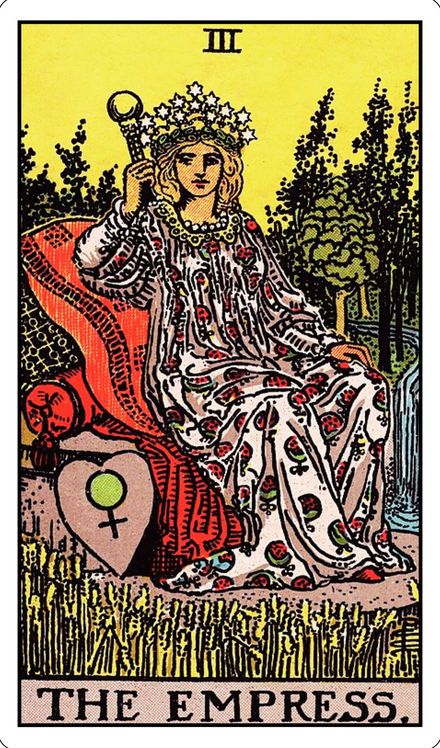
She is sitting back on cushions. It is easy to skip past, and it is the whole point. The Emperor sits stiffly on his throne. The Empress rests in front of a field of ripening grain she has not bothered to harvest. Waite called her universal fruitfulness.
The card makes a claim that is easy to agree with and hard to live by: some things only grow when you stop hovering over them. Most of us accept this about plants and refuse it about everything else.
The Empress upright meaning
Something is growing and needs care more than force.
Waite described a stately figure, a daughter of heaven and earth, and called her above all universal fruitfulness. His meanings were fruitfulness, action, initiative, and long life, with doubt and difficulty on the darker side. The Empress is the card of things that cannot be rushed: a garden, a book, a home taking shape, or a relationship getting serious. She appears when the useful thing to do is look after something instead of pushing it. That is exactly why she is often unwelcome. Most people would rather push. Her second subject is pleasure, taken seriously: food, touch, texture, comfort, and beauty for its own sake. She sees these as things you need. That makes rest part of the work instead of a reward after it. There is also the plainest reading: real abundance. Enough money, enough support, enough time. When she turns up in a spread about scarcity, she often challenges the assumption. What you are treating as scarce may be more available than your worry suggests.
The Empress reversed meaning
Giving more care than you have left, or a block that is really exhaustion.
Waite's reversed meanings were light, truth, and the untangling of complicated matters, or in another account, wavering. Modern readers most often see something else. Reversed, The Empress is most often about running on empty, especially from caring for everything except yourself. This is the parent, the manager, or the friend everyone calls, running on reserves they stopped checking long ago. The card does not see this as noble. It sees a supply problem, and supply problems end the caring whether or not anyone agrees to stop. The creative version looks different but has the same root. A block that looks like having no ideas is often really a lack of input. Nothing new has gone in for months, but the demand for output has not changed. The fix is unglamorous: more input, and less trying harder. Less often, it points the other way, to comfort that has become a way of hiding. Rest stopped restoring you a while ago and turned into avoidance.
A reversal is rarely the upright card's opposite. Reversed tarot cards covers the four conditions a reversal usually describes, and how to tell which one a spread is asking for. Every card's reversed meaning sits beside its upright one on reversed tarot card meanings.
The Empress in Waite's 1910 key
The meanings above are Reflecta's reading. These are the ones A. E. Waite gave in The Pictorial Key to the Tarot (1910), the guide he wrote for the deck Pamela Colman Smith drew. He wrote them for fortune-telling, a use tarot took on centuries after it began as a card game in fifteenth-century Italy. Some of his words are blunt, and none of them can tell you what will happen.
- Upright
- Fruitfulness, action, initiative, length of days; the unknown, clandestine; also difficulty, doubt, ignorance.
- Reversed
- Light, truth, the unravelling of involved matters, public rejoicings; according to another reading, vacillation.
Symbolism in the card
- The grain ripening at her feet
- Waite describes a field of corn ripening in front of her. The grain is ripe, and she is not harvesting it. The card is about enjoying what you already have. Most people find that harder than working.
- Her reclining posture on cushions
- She sits back on cushions, at ease. Here, ease is not laziness. The card says rest is part of how things grow.
- The waterfall behind her
- Waite notes a fall of water beyond the field. Moving water in a card that is otherwise about earth and stillness. Something is being fed all the time. Abundance here is a steady flow that keeps coming. It is not a fixed pile to be divided up.
The Empress in love and relationships
Upright. Warmth, physical affection, and a relationship with room to breathe. The card favors generosity and everyday comforts over intensity. In a new relationship it suggests something that can grow if it is not rushed. In tarot tradition it is the card most linked to pregnancy, though it far more often points to creating something else.
Reversed. Giving more than you get and calling it love, or a relationship where the emotional work falls unevenly. It can also point to smothering: care that has turned into control, or help nobody asked for. Notice which side of that you are on.
The Empress in career and work
Upright. Creative work in a productive phase, or a role where you build and look after something instead of fighting for it. The card favors collaboration and patience. Results here tend to come in their own time.
Reversed. Burnout disguised as dedication. Creative work that has stalled because nothing new has gone in. If you manage people, it may point to doing their work for them, which is care that holds them back.
The Empress in money
Upright. Enough, and maybe more than you have noticed. The card points to money that grows slowly with steady care, the patient kind more than the fast kind. It describes an approach. The specific decisions are still yours and your numbers'.
Reversed. Spending on comfort to fix something comfort cannot fix, or supporting other people beyond what you can afford. It may be worth looking at what leaves your account for other people.
The Empress as feelings
Upright. As feelings, The Empress describes warmth, generosity, and physical ease: wanting to look after someone and enjoy their company, without needing it to lead anywhere. It is one of the most affectionate cards in the deck, though no card can confirm what another person feels.
Reversed. Reversed, it can describe feelings that have turned into obligation, or real care that is too worn out to show well. It may also point to affection that comes across as smothering. The card cannot answer for anyone's heart. It can ask how the care feels to you.
Is The Empress a yes or a no?
Upright, it leans yes. Reversed, it leans maybe.
Upright she leans toward a warm yes, especially for questions about growth, creating something, or home. Her caution is about timing: yes, but probably slower than you want. Reversed she sits at maybe. The answer often depends on whether you have the energy to keep it going, more than on whether it is available. Read it as a leaning, and trust your own judgment.
Every card's leaning in one table, upright and reversed, is on yes or no tarot, along with what a maybe is asking you to do.
The Empress as a birth card
730 of the 36,890 dates between 1925 and 2025, 2.0% of them, give The Empress as a birth card on its own, with nothing under it: a number below 10 is where the reduction stops. It also turns up as the second card beneath The Hanged Man and The World, because 12 and 21 both reduce to 3.
Which card is yours comes from your birthday rather than from the deck. The tarot birth card calculator runs the reduction on a date of birth and shows every step of it. The date stays in the browser.
The Empress card combinations
- +The Empress and The Emperor
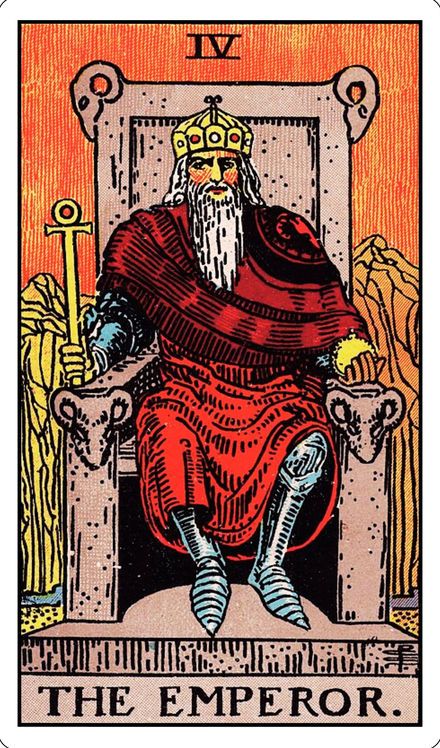
- The deck's classic pair: nurture and structure. The reading almost always turns on which one is missing. Together they are stable and productive. If one is reversed, the imbalance is the message.
- +The Empress and The Hermit
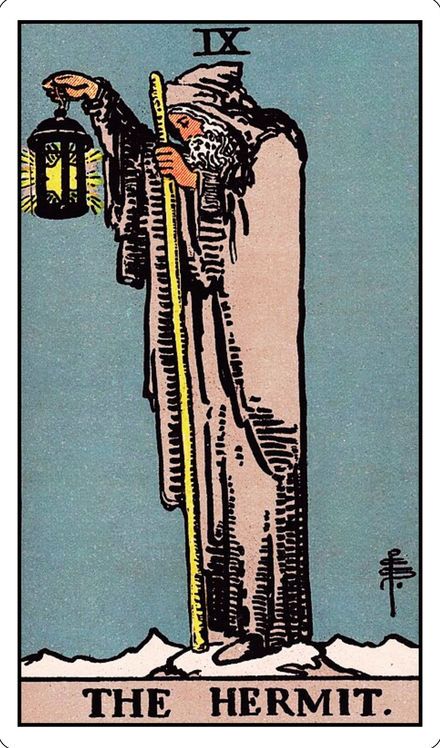
- An unusual and useful combination. Abundance next to withdrawal often suggests the growth needs time alone to continue. After a long stretch of giving, going quiet may be the caring thing to do.
- +The Empress and The Tower
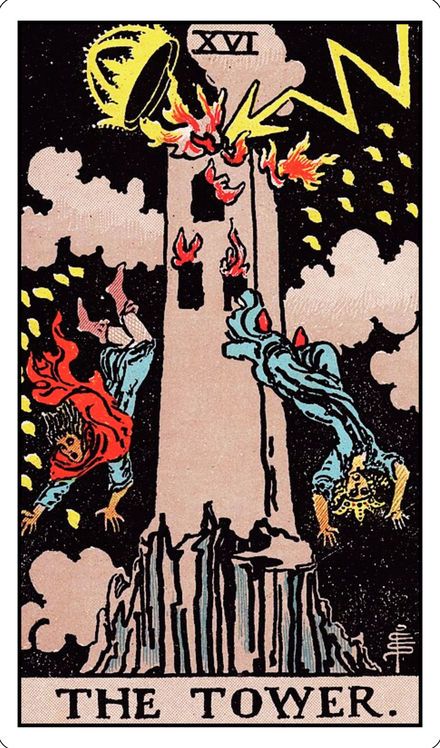
- Something carefully grown falling apart. Painful, but The Empress does not vanish here. What was built with care usually leaves something behind. What was forced often leaves nothing.
- +The Empress and The Sun
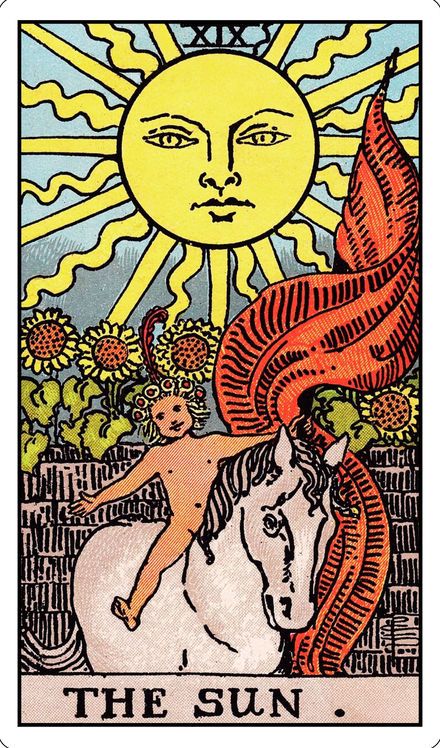
- Growth in full view. One of the happiest pairings in the deck. It is linked to children, creative work that lands, and times when things are simply good and do not need picking apart.
Every pairing on this site, The Empress's included, is collected on tarot card combinations.
I can tend this without forcing it.
The Empress: common questions
- What does The Empress mean in tarot?
- She points to something growing that needs gentle care. She covers abundance, creativity, physical comfort, and pleasure as a real need. Waite's meanings began with fruitfulness and initiative. Upright she favors patience and nurture. Reversed she usually points to being worn out from caring for everything except yourself.
- Does The Empress mean pregnancy?
- She is the card most linked to pregnancy, because she represents growth and creation. In most readings, though, she points to bringing something else to life: a project, a home, or a deepening relationship. Tarot cannot answer a pregnancy question. A test or a doctor is the right source. The card is better read as a question about what you are creating.
- What does The Empress reversed mean?
- Most often running on empty: giving more care than you have left, usually while calling it dedication. In creative work it is a block caused by a lack of input, more than a lack of ideas. Less often it means comfort that has turned into avoidance.
- Is The Empress a good card for money?
- She leans favorable, toward slow money more than fast. She favors money that grows through patience and steady care. She often shows up to question a fear of scarcity, suggesting there may be more available than the worry says. For specific money decisions, the numbers and a qualified advisor come first.
There is also a page on what Reflecta does with a reading once the cards are down.