Major Arcana · 15
The Devil
- attachment
- temptation
- compulsion
- materialism
The Devil points to a trap you are taking part in. It covers compulsion, habit, and situations that feel impossible to leave and may not be. Upright it asks you to look honestly at what you get from the thing you say you want to stop. Reversed it often points to the grip loosening, and the start of getting free.
- Element
- Earth
- Astrology
- Capricorn
- Numerology
- 15, structure turned into a cage
- Yes or no
- no
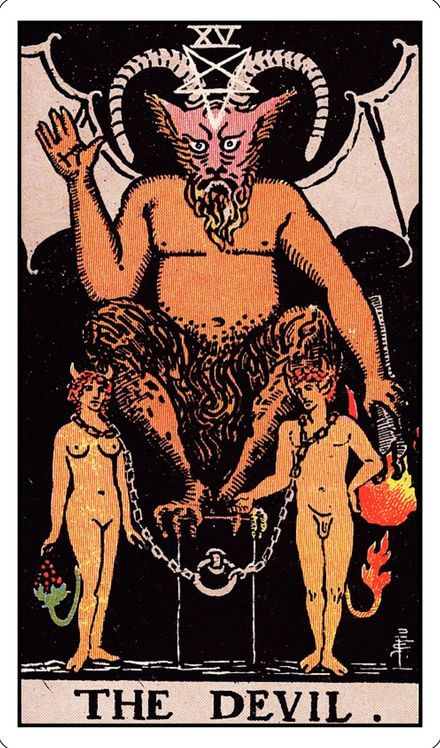
The chains are loose. Both figures could lift them off over their heads in a second, and the drawing lets you see that. Waite wrote that the one above them is not to be their master forever.
So the card is about something more common than being trapped, and more embarrassing: being able to leave and not leaving. The situation is giving you something you would rather not say out loud. Nobody stays for nothing. The card asks what that something is.
The Devil upright meaning
A trap you are taking part in, and could leave.
The Devil is a card about bargains. Waite called it the chain of the material life. His meanings were ravage, violence, force, and great effort, and what must happen, though not evil for that reason. Reading it as a card about evil lets everyone off the hook. It is about the situations we keep going even though they work against us: the habit, the job, the relationship, or the story about ourselves that costs a lot and continues anyway. The chains are loose. That is the whole card. People stay in these situations because leaving would mean giving up something real. The chains themselves are weak. There is usually a payoff, and pretending there is not is what keeps the trap alive. The drink gets you through the evening. The bad relationship means you are not alone. The job you resent pays for the life you have built. The card asks a specific and unwelcome question: what is this giving you? Answer honestly, and the trap becomes a decision. Refuse to answer, and it stays a trap. You cannot renegotiate a bargain you will not admit you made.
The Devil reversed meaning
The grip loosening, and freedom coming back.
Waite's reversed meanings were harsher: an evil turn of events, weakness, pettiness, and blindness. Modern readers usually see release. Reversed, The Devil is often good news, which makes it one of the deck's more useful reversals. The chain may be coming off. A habit loses its hold, a relationship loses its pull, or a compulsion stops feeling inevitable. Often this is quiet. You simply notice the thing does not affect you the way it used to, and that you have been half free for a while. The card often shows up after the hard part. A second reading is worth watching for. Sometimes you can see the pattern clearly, but your behavior has not changed yet. That is a real stage, and no failure. Seeing how the trap works while still inside it is uncomfortable, and it is how most people get out. Less happily, it can point to a craving being forced down without being understood, and that rarely holds. If a compulsion affects your health or safety, the card is only a mirror. Take it to real support.
A reversal is rarely the upright card's opposite. Reversed tarot cards covers the four conditions a reversal usually describes, and how to tell which one a spread is asking for. Every card's reversed meaning sits beside its upright one on reversed tarot card meanings.
The Devil in Waite's 1910 key
The meanings above are Reflecta's reading. These are the ones A. E. Waite gave in The Pictorial Key to the Tarot (1910), the guide he wrote for the deck Pamela Colman Smith drew. He wrote them for fortune-telling, a use tarot took on centuries after it began as a card game in fifteenth-century Italy. Some of his words are blunt, and none of them can tell you what will happen.
- Upright
- Ravage, violence, vehemence, extraordinary efforts, force, fatality; that which is predestined but is not for this reason evil.
- Reversed
- Evil fatality, weakness, pettiness, blindness.
Symbolism in the card
- The chains around the two figures' necks
- Waite describes two chains running from a ring on the altar to the necks of the two figures. He called it the chain of the material life, and wrote that the one above them will not be their master forever. In Smith's drawing the chains are loose enough to lift off over their heads. This is the most important detail in the card. The restraint is real, and the lock is open.
- The figures' small horns and tails
- Waite says the tails signify the animal nature, and the faces still show human intelligence. They have started to look like the thing holding them. This has gone on long enough to change them. That is how a habit stops being something you do and becomes part of who you are.
- The inverted torch pointed down
- Waite describes a great flaming torch held down toward the earth. The torch points at the ground, where it lights up nothing. The knowledge is there, and it is deliberately not used. Most traps work this way. People usually know.
The Devil in love and relationships
Upright. A relationship built on dependency, intensity mistaken for connection, or a pattern that keeps repeating. It can also point to real sexual chemistry. The card does not condemn that. It asks what else is holding the relationship together.
Reversed. Recognizing a relationship pattern and starting to step out of it. Someone stops having the same effect on you, or a dynamic that felt inevitable turns out to be a choice you have been making.
The Devil in career and work
Upright. A job you stay in for the money while it costs you something bigger, or a workplace culture that treats something unhealthy as normal. It can also mean overwork that has become your identity.
Reversed. Leaving a job that had you trapped, or the moment the golden handcuffs stop working. Often it is finally doing the math honestly.
The Devil in money
Upright. Debt, or spending that is about something other than buying things, like using money to manage a feeling. It can also mean arrangements that look like security but feel like a cage. If debt feels unmanageable, a qualified advisor can help in ways the card cannot.
Reversed. Debt being paid off, or a financial dependency easing. The point where money stops dictating what you are allowed to want.
The Devil as feelings
Upright. As feelings, The Devil describes something intense and possessive, closer to need than affection. Chemistry and care are different things. The card cannot tell you what is inside another person. It can ask whether the wanting has much to do with who you really are.
Reversed. Reversed, it can describe an obsession fading on either side: a fixation loosening, or a hold you notice has weakened. Often it is a relief, and sometimes a loss. The card describes the pattern. You decide what it means for you.
Is The Devil a yes or a no?
Upright, it leans no. Reversed, it leans yes.
Upright it leans no, with a warning: what you want may be available, but it comes with a hook. Reversed it is one of the deck's better reversals and leans yes. It often describes a restriction lifting and freedom coming back. Weigh either leaning against what you know about your own life.
Every card's leaning in one table, upright and reversed, is on yes or no tarot, along with what a maybe is asking you to do.
The Devil as a birth card
587 of the 36,890 dates between 1925 and 2025, 1.6% of them, give The Devil as a first birth card, and it never arrives on its own. 15 reduces to 6, so The Lovers is always the card underneath it.
Which card is yours comes from your birthday rather than from the deck. The tarot birth card calculator runs the reduction on a date of birth and shows every step of it. The date stays in the browser.
The Devil card combinations
- +The Devil and The Lovers
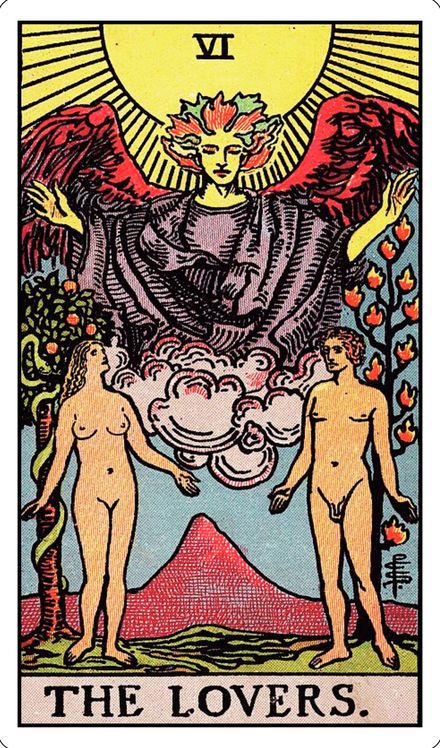
- A sharp contrast: a choice made freely against one made under compulsion. Often a relationship that feels like love but works like a habit. The pairing asks you to tell which is which.
- +The Devil and Strength
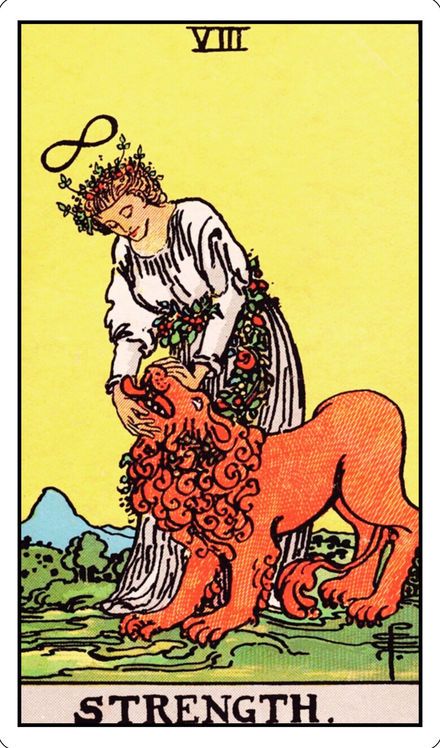
- One of the few hopeful answers to The Devil. Strength works by understanding the craving instead of fighting it. That approach works best against anything compulsive.
- +The Devil and The Tower
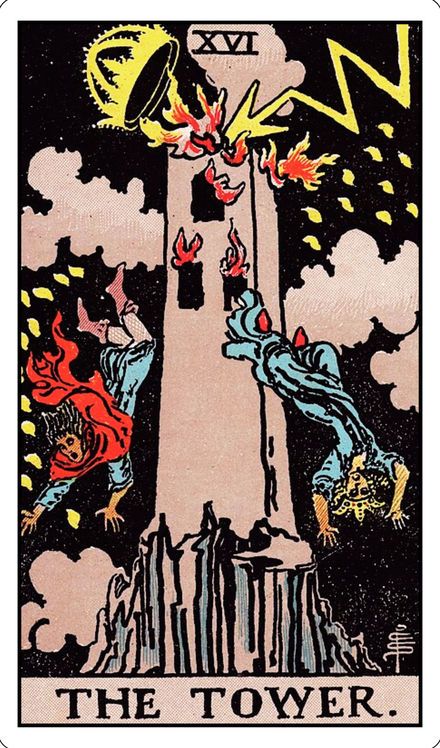
- The trap broken from outside. It is sudden, and sometimes it is the only thing that ends a situation when nothing inside was changing. The Tower removes the trap instead of talking you out of it.
- +The Devil and Temperance
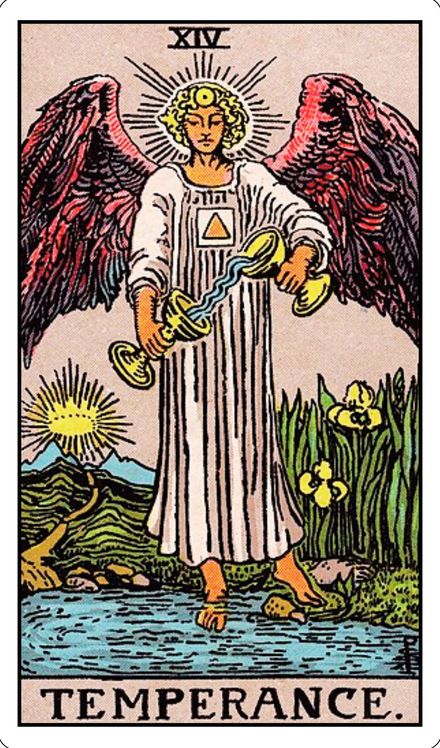
- Compulsion meeting balance. A recovery pairing that points to patience and steady adjustment as the way out. For a real dependency, what that looks like is a question for real support, which the cards cannot replace.
Every pairing on this site, The Devil's included, is collected on tarot card combinations.
I can name what this gives me, and then decide.
The Devil: common questions
- What does The Devil card mean?
- It points to a trap you are taking part in. The card covers compulsion, habit, and situations that feel impossible to leave and may not be. Waite called it the chain of the material life. In the drawing the chains are loose enough to lift off. Upright it asks what the thing is giving you. Reversed it often points to the grip loosening.
- Is The Devil card about evil?
- Reading it that way lets everyone off the hook. It is about bargains we keep even though they work against us: the habit, the job, or the relationship that costs a lot and continues anyway. What keeps it going is a payoff you would rather not name.
- What does The Devil mean in a love reading?
- Often dependency, or intensity mistaken for connection. It can point to a pattern that keeps repeating. It can also point to real sexual chemistry, which the card does not condemn. It asks what else is holding the relationship together.
- Is The Devil reversed a good card?
- Generally yes, and it is one of the deck's more useful reversals. It often points to a chain coming off: a habit losing its hold, or a compulsion no longer feeling inevitable. Sometimes it marks the stage where you can see the pattern clearly but have not changed yet. That is how most people get out.
There is also a page on what Reflecta does with a reading once the cards are down.